Climate change is raising food prices, threatening supply chains, and risking social stability. Experts say shifting towards plant-rich diets can reduce environmental impact, free up land, and make food systems more resilient. Denmark’s policies offer an example, but urgent action is needed to avoid future crises.
Climate change is already affecting our meals by raising prices and restricting supply, therefore impacting what we eat. Agricultural economists' research suggests that in 2023, roughly one-third of the UK's rise in food prices can be attributed to climate change. This greatly fueled general food price increases and made the cost-of-living crisis worse. Rising prices and growing food poverty are posing risks not just for families but also for the stability of communities all around.
Research have revealed an increase in food chain disruptions. As temperatures rise, precipitation patterns change, and severe weather events become more frequent, losses in important worldwide breadbasket regions—those responsible for much of the world's food production—are predicted to grow. Because some effects, including damage to crucial infrastructure and the spread of crop pests, are challenging to simulate, these forecasts usually underestimate the whole magnitude of the issue. Actually, the results could be worse than what current predictions imply.
Projections point to a steep yearly increase in food prices over the next ten years. Food business specialists are cautioning that the scope and complexity of weaknesses in the world food system are never before seen. According to some studies, in the long run, one-third of all existing agricultural land might not be fit for food production because of climate change. This has inspired sustainable food system experts to investigate situations in which global food supply networks are impacted by extreme stressor even collapse.
These developments might have negative societal effects. According to one survey, 40% of UK-based food professionals think that food-supply-related civil disturbance could happen in the following ten years. This increases to eighty percent across a fifty-year period. Climate-driven food price inflation could cause problems even in wealthy countries if we don't act quickly. Long-term inflation could cause problems for governments and public institutions. The political and financial stresses evident in the UK's 202223 cost-of-living problem have already shown how rapidly such conflicts might surface.
Although the danger is real, specialists emphasize that it is not inevitable. According to scientific agreement, cutting meat and dairy intake and raising the proportion of plants in our diets can help to lessen food-related environmental effects most effectively. Such a change could help food systems to better withstand storm surges and floods during climate shocks. Compared to animal-based diets, which need a lot of land and crops to feed animals, plant-based diets are better at giving you the calories and nutrients you need.
Studies have revealed that adopting plant-rich diets in the UK might liberate territory roughly equivalent to Scotland's size. Farmland now used for animal feed may instead be given over to direct human consumption crops as rising temperatures put pressure on the system. If the appropriate policies are followed, this would nonetheless leave significant portions open for nature restoration and biodiversity conservation. Such changes to land use may additionally enhance public access to green areas, therefore promoting community well-being and mental health.
Importantly, diets high in plants do not have to be totally vegetarian or vegan. Models indicate that, especially in affluent nations, modest cuts in meat and dairy—say, having a burger just once every two weeks— can greatly reduce environmental effects. Making plant-based meals usually uses fewer resources and costs less than making meals high in meat. Reducing the total size of agriculture in this way may also make room for more crops to grow, absorb floodwaters, and lower consumer prices.
Adopting different agricultural techniques offers rural communities fresh opportunities and may ignite cultural and economic changes. It might support initiatives to restore nature and strengthen flood prevention strategies. Still, this would call for concerted effort with consumer demand and government backing. For livestock farmers who are struggling with financial difficulties or mental health issues because of the demands of their job, financial incentives like subsidies for plant-based farming or ecosystem restoration may be a good alternative.
The benefits of transforming food systems extend beyond environmental sustainability. If societies shift food and agricultural practices in the right climate direction, we might see improvements in food security, natural resource conservation, and healthy behaviours. Advocates for reducing meat consumption, increasing crop diversity, and increasing organic food production see the uptake of more plant-rich diets as a significant step toward all of the above. This also supports other land-based efforts, such as increasing timber production, supplying biofuels, restoring ecosystems, building homes, and producing 'bioplastics'.
Some countries have already made moves in this direction. Denmark, one of the world's major pork producers, has started enacting policies to shift food and agricultural practices toward plant-rich diets throughout the entire food supply chain. These policies encourage chefs to come up with new environmentally positive dishes in addition to ensuring that all government food procurement prioritizes organic food, which usually means increased consumption of fruit and vegetables because organic meat is, generally speaking, more expensive.
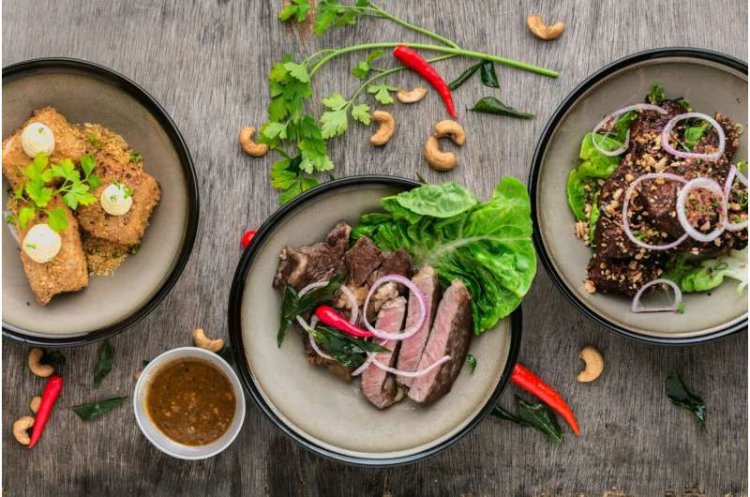
This possible transition is not about foregoing delicious foods but it's about designing choices that align human appetites with planetary realities. Changing word-of-mouth composition from meat and dairy to a more plant-based food culture can help improve diets of many (as well as the environmental landscape), and add diversification options to farm systems, supporting the possibility of short-term adaptations to climate-induced disruptions. Once changes become normalized and integrated into private and public life, they are likely to be recognized, embraced, and welcomed as part of everyday routine living.
The choice is now whether to allow climate change (especially climate extremes) to determine the world-view of food systems; or if societies adjusts food systems to manage and reduce risk, and utilitising all the strategies and opportunities necessary to bolster resilience. If society acts with haste, this change may replay as an age of creativity, cooperation, and regeneration. If not, the world will soon be facing an upward trajectory of food crises and instability with far-reaching consequences well beyond what pieces are served (party or otherwise).
What's Your Reaction?