


We are in the business of giving hope. And we wanted to give that hope where it felt most distant, says Sri Guru, Chairman of N R Foundation
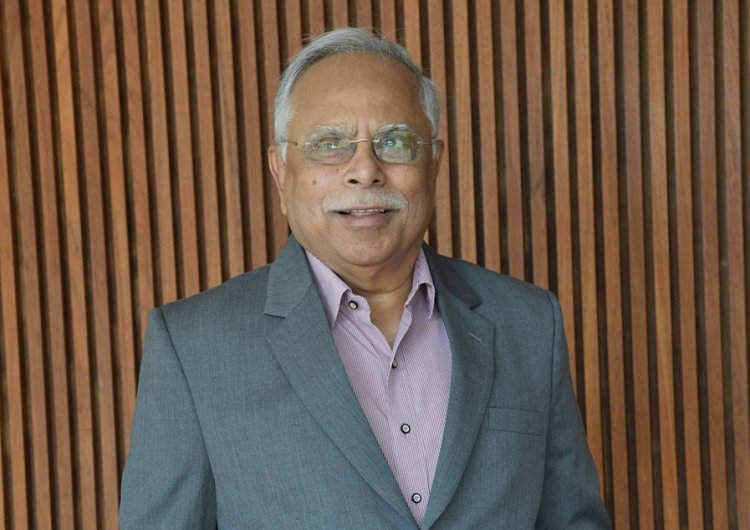
In Mysuru, a quiet school for visually impaired girls has been running with steady dedication since 1988. Set up by the N R Foundation, it’s more than just a place to study—it reflects the values of its founder, R. Guru.
As the Chairman of the Foundation and eldest son of the late N. Ranga Rao—the man behind the Cycle Pure Agarbathi empire - Guru belongs to a generation of business leaders who have kept purpose woven closely into profit. His journey has seen the family-run group grow into the world’s largest agarbathi manufacturer, with ventures spanning electronics, aromatics, and home fragrance. But it’s what happens quietly in the background—away from manufacturing lines and boardrooms—that defines the heart of the enterprise.
“We are in the business of giving hope,” he says simply. “And we wanted to give that hope where it felt most distant.”
That’s how the Ranga Rao Memorial School for Differently Abled (RMSD) came to focus exclusively on visually impaired girls—particularly from rural and underserved areas. Here, education is just one part of the offering. Vocational training, life skills, emotional resilience, and community integration are equally emphasised. Several alumnae are now pursuing doctorates; one is a college professor. These are not outliers—they are part of a growing story of self-determination.
For Guru, success is not defined by metrics. “It’s measured by confidence, by independence, by how many of these girls are now giving back to their own communities.”
This view of development—slow, steady, and human-centred—echoes through the Foundation’s work in other areas too. From scholarships for employees’ children to decade-long community empowerment programmes in Mysuru’s slums, the Foundation’s work is patient and consistent.
But this ethos is not limited to its philanthropic arm. Mr. Guru insists that community and business are not parallel paths—they’re overlapping ones.
“Our business does not exist in isolation. It grows when the communities around us grow.Our close engagement with community development has significantly shaped our business philosophy at Cycle Pure,” he says. This thinking has led Cycle Pure to embed social impact into its business strategy in ways that feel organic rather than performative. Whether it’s through investing in eco-conscious packaging or empowering rural women-led supply chains, purpose is not a footnote—it’s a thread that runs throughout.
When asked what challenge remains most under-discussed in livelihood creation, he doesn’t hesitate: employability. “Training alone isn’t enough. Skills must match market needs. Without that alignment, even the best-intentioned programmes don’t deliver long-term change.” It’s a sober insight, grounded in decades of ground-level work.
He says that one of the most overlooked challenges is bridging the gap between skill-building and actual employability. While many programme focus on training, they often fail to align with current market demands. This misalignment means that even well-trained individuals may find it difficult to secure sustainable livelihoods.
True impact requires more than just skill development. It demands a supportive ecosystem that includes access to markets, mentorship, and ongoing upskilling. Without this, even the most well-intentioned efforts risk falling short of driving lasting change.
Through it all, Guru and his team find themselves consistently learning—from the very communities they hope to serve. The girls at RMSD, he says, have taught him more about leadership than any business school ever could. “They have reminded us that real leadership begins with empathy, and that resilience comes not from resources, but from the human spirit.”
It’s a lesson the Foundation seems to have absorbed deeply. The corporation perceives social responsibility not as an afterthought but as a value etched into the very DNA of their organization. Whether it is sustainability, sourcing, or cultural conservation, their decisions all boil down to an uncomplicated principle of doing the right thing.
[email protected]
What's Your Reaction?

















