Dr Rajeena Shahin explains that focusing on healthy food and lifestyle, instead of only medicines, can reduce disease, hospital load, and environmental damage in India.
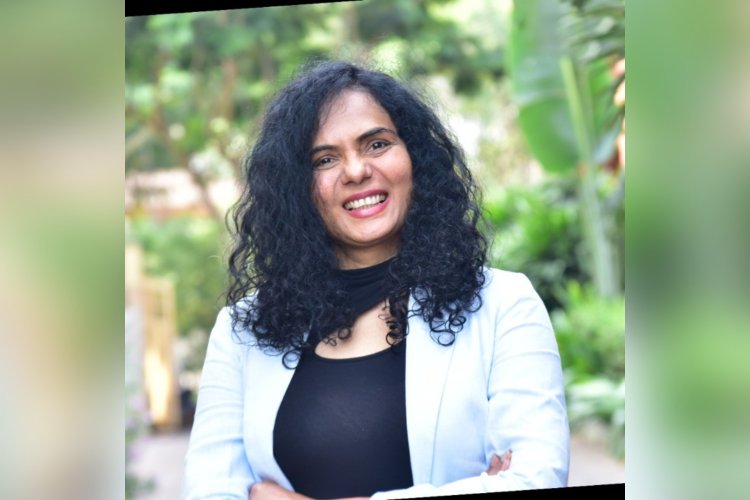
In an interview with ResponsibleUs, Dr Rajeena Shahin, Co-founder & Director, Invest on Health (P) Limited and plays a major role in Phisicians Association for Nutrition India (PAN), explains why shifting healthcare from treatment to prevention is critical for India, how therapeutic lifestyle interventions can reduce pressure on hospitals, medicines and natural resources, and why doctors, not patients, are the starting point for this change.
Excerpts
You often speak about shifting healthcare from treatment to prevention. From your experience, how can this shift reduce pressure on hospitals, medicines, energy use and medical waste?
One aspect I would like to broaden on is that prevention is a large part of our focus, but therapeutic lifestyle intervention, especially nutrition, can also heal or manage diseases, either as a standalone approach or sometimes is complementary with medicine.
So, this part of it, the therapeutic aspect of nutrition, has come into the picture maybe 15 years ago. Now, there are multiple trials which are going on and which are showing tremendous, you know, potential in using nutrition and nutrition intervention as the single line of therapy, like diabetes prevention, diabetes management. They call it diabetes reversal. It’s diabetes remission. You can achieve diabetes remission by doing a nutrition intervention. So, it has two parts, prevention and management.”
Ultra-processed is highly consumed by people. But what do they really cost us in terms of health outcomes and in environmental damage?
There is a True Health Initiative, which is targeted by many scientists and similar kinds of people across the globe. There was a symposium on health misinformation. This is one of the areas they are also trying to address. It's a huge thing. The marketing has gone into a level where a banana is more identified with banana chips than true bananas; that's the way it is moving. They're already putting a lot of things on the resources, especially the climate thing, which contributes to around 18% of the talk. Climate is already affecting our health. So that is something which we are addressing by using the term called whole food, plant predominant eating pattern.”
Plant predominance is one aspect, where we ask people to go for more healthy and sustainable eating pattern, more fruits, more vegetables, more legumes, more whole grains, more nuts, seeds and stuff and reduce all the other things that come from animal products because of health reasons and how the climate is affected by animal husbandry. Another thing we address is whole, any food in its whole form, whole processing is avoided, refinement is avoided, which also reduces oil and other things consumption.
Why is integrating lifestyle medicine into the healthcare system so important right now, especially in India?
If you look at India today, the disease burden is massive. Pre-diabetes, diabetes, and hypertension together affect nearly 35–50% of the population. Obesity is also rising rapidly, especially among young people. The way diabetes is increasing, it is simply not possible to treat everyone in a hospital-based system.
When we speak to doctors, the first thing they tell us is, “Where do we get the time?” Even if you train them, unless the system supports this approach, it won’t work. We already have proven scientific strategies for preventing and managing diseases through lifestyle interventions. The solution is not to create a parallel system, but to integrate lifestyle medicine into mainstream healthcare so that the overall effectiveness and compliance improve.
You focus a lot on system-level change. Why is that more sustainable than only focusing on individual behavior change?
Behavior change is difficult to sustain. Out of 100 people, maybe only 30–40 will maintain lifestyle changes for three to five years. The rest go back because the environment around them is not supportive.
That is why system-level change is essential. We need to change food systems, hospital environments, and medical education so that healthy choices are easier and sustainable for people.
You work extensively with doctors rather than directly with patients. How does this help create sustainable impact at scale?
Doctors still have a strong influence. If a doctor is seeing 1000 patients and the first thing 80% of the patients, ask is what can I eat?” Every doctor says the same thing, and the influence of the people. If I talk to or talk in a public forum to 1000 people, I am only influencing those 1000 people, maybe some of their families. I may be influencing 5000 people. On average doctor influences more than a thousand. That is why training doctors is the most effective and sustainable way to create system-level change.
Modern healthcare depends heavily on medicines. Do you see this model as sustainable in the long run, medically, economically, and environmentally?
Yes, that was one of the main challenges we experienced when we started this journey. For me personally, when I began, people often belittled me as a nutritionist in the education space. I was a doctor, but many felt I was practising something mediocre. Even common people would not share their medical reports with me—that was the level of acceptance then.
About five years down the line, as a lifestyle physician, nearly 25% of my clients were doctors themselves. When we began training doctors seriously, we started seeing large numbers joining in. Today, in many places, PAN itself does not need much introduction.
This shows that it is not only because of PAN’s activities. There is a natural demand in the market. People want a holistic way of looking at health. They do not want to just pop pills; they want to genuinely get better and healthier through multiple approaches.
Can lifestyle intervention really reduce medication dependence in chronic disease patients?
Yes. Management has two parts—prevention and treatment. Treatment can be with or without medications. For example, someone with 10–11 years of diabetes who is on multiple medications, when they adopt lifestyle and behavioural changes, can often be brought down from 10 medicines to three or four.
This potential is huge, but it is still under-recognised. Realisation is increasing now, which is why more doctors are joining. However, we still lack systems that support these changes over a lifetime.
I always say this sentence to doctors. So, if you're not introducing a whole food plant-based or plant-predominant or phytonutrient-rich fibre-rich diet to your client as a primary line of management, you're taking a large, huge privilege out of your patient. Because if he does that, he's not only managing his condition, but his overall energy also goes better, his mental state gets better, he becomes more like thriving than just depending on some medication and surviving.
Do doctors in India recognise the link between health, climate, and sustainability?
In Europe, climate and environmental sustainability are part of medical discussions and conferences. Many countries are already directly impacted.
In India, that awareness is still catching up. Medical students and doctors in India are still catching up on these issues. Many of them are not fully aware, and when data is shared, their first reaction is often shock.
What I have noticed is that they operate within a cocoon. They are used to a fixed setup where a patient comes in, medicines are prescribed, the patient gets temporary relief and then returns. They are not thinking beyond this healthcare framework. Pharmaceutical companies run these programs for continuing medical education; their focus is mainly on the drugs and their mechanism of action, and they give them some entertainment and networking facilities. They're not addressing any of these things. Even the education system must address climate issues and environmental sustainability. But if you look at WHO and UN, they're already talking about climate change, but it's not really going into the doctors, which is a sad state. This gap, frankly, is a very concerning situation.
Healthcare itself generates waste and uses a lot of resources. From your perspective, can shifting from treatment to prevention reduce this burden?
Currently, our focus is on prevention. As I mentioned, when you focus on prevention, the burden on the healthcare system automatically comes down. The idea is to educate every doctor to practice nutrition intervention or lifestyle intervention as the primary line of management for diseases. This does not need to be addressed only within the hospital environment. It can be addressed in corporate settings, hospitals, and community environments as well. So, the idea is to optimise the use of drugs, procedures and hospital environment for managing diseases. Naturally, that itself will reduce the burden on the healthcare system by having only the needy go to the hospitals.”
What challenges did you face when introducing lifestyle medicine into mainstream healthcare?
Initially, many felt it was not scientific. Some organisations saw it as a threat. Others believed nutrition was only a nutritionist’s job. There was also fear that healthier patients would stop coming.
Over time, demand has grown. Hospitals now realise that without integrating prevention, they risk losing relevance. Pharmaceutical companies and CSR funds are also supporting this shift because sustainability and responsibility matter.
From years of work, what is the one lifestyle change that delivers the biggest health and environmental benefit?
Lifestyle is the root cause of most diseases. In India, as per ICMR and NIN, around 56% of the disease burden is diet related. Reports from the US and other countries show similar trends. Nearly 70% of diseases are linked to lifestyle factors, with diet forming the major part. So, correcting the dietary pattern is the primary line of management in that when you say a diet, which is predominantly whole food, plant-based, can impact not only human health, public health, but also improve the planetary sustainability. As you know, a large share of emissions, around 85%, is due to our food systems, with animal husbandry. So, once we start correcting those, we'll have a better future
If you had to name one realistic change that would make India’s healthcare system more sustainable, something realistic, what would it be?
This I feel that integrating evidence-based nutrition intervention into the core of the healthcare system, where every hospital has a unit and cell which practices evidence-based nutrition and into the core of the healthcare system. Integrating evidence-based nutrition into the core of the healthcare system in every hospital is the best way to manage, you know, better healthcare and better planetary sustainability.
What's Your Reaction?