He says that commitment to engineering rigour, safety-oriented practices and modular project delivery not only eliminated waste and improved results but also established systems
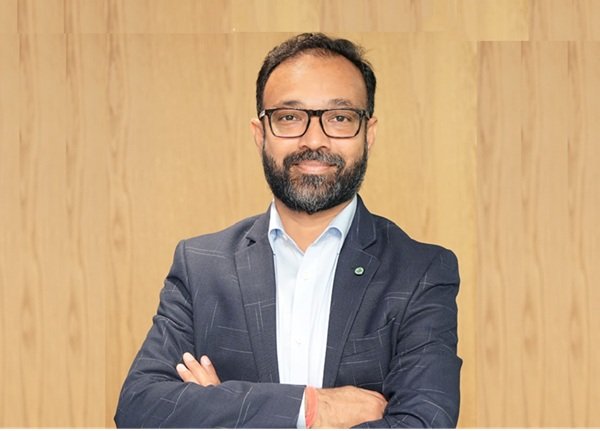
In an interview with ResponsibleUs, Ratan Bokadia, Managing Director, Oswal Energies, explains that in 2013, when Oswal Energies began there, it was not sustainability but the lack of execution discipline that was the key factor in the oil and gas sector with its prevalent delays, cost overruns and sporadic quality. He argues that commitment to engineering rigour, safety-oriented practices and modular project delivery not only eliminated waste and improved results but also established systems that were already sustainable before the term even became part of the everyday discussions in the energy sector.
The company started in 2013, when sustainability was not the talk of the town. What challenges did you face at the time that led you to adopt a more sustainable approach?
The biggest hurdle was not sustainability but rather the reliability of execution. The entire sector experienced projects being routinely deferred, budgets being overrun, and variable quality of results. Our strategy to tackle this issue was to introduce discipline in engineering, reinforce safety-led execution, and apply modularised delivery models that are flexible and predictable to improve control. As a result, we were able to bring about significant changes in the areas of operations with surface facilities, early production facilities, and oil and gas pipelines as we became very efficient at doing things right. Consequently, we were able to cut waste and rework, thus producing results that were acknowledged as being sustainable even before the term became common.
Oswal has worked deeply in oil and gas EPC. How has your perspective evolved as climate risk and the energy transition have become increasingly difficult to ignore?
Working at the core of oil and gas EPC places one directly at the intersection of rising energy demand and growing environmental responsibility. The realisation over the years has been that climate risk and the energy transition are not just some abstract concepts or future problems, but rather operational realities. Our view has thus developed from simply building fast to building with social responsibility. The present priority is on developing infrastructure that will remain environmentally friendly in a gradually phased-out manner, while also supporting energy security, recognising that the shift is not a choice but a necessity.
Engineering companies are usually judged on cost and timelines. Where does sustainability fit when clients are still price-sensitive?
Sustainability today is no longer separate from cost or timelines. Efficient design, modular execution, and lifecycle-based planning often lower total project costs while reducing execution and operational risk. While clients remain price-sensitive, there is growing recognition that short-term savings achieved at the expense of quality, safety, or environmental performance can lead to far greater long-term liabilities.
Oswal is now exploring areas like green hydrogen, waste-to-energy, and carbon capture. Which of these do you believe can realistically scale in India, and which still need policy or market push?
Some segments are clearly closer to scale than others. Waste-to-energy and specific applications of green hydrogen can grow realistically in India because they are tied to existing industrial demand. Carbon capture and certain green hydrogen pathways are still earlier in the curve. They will require stronger policy clarity, clearer market signals, and supporting infrastructure to move from pilots to commercial scale. With the right regulatory frameworks and demand-side support, these technologies will transition steadily from experimentation to mainstream adoption over time.
After 25 years in the sector, what environmental or social risks do you feel the industry has historically underestimated?
After years in the sector, it’s clear that the most underestimated risks are not technical but are environmental and social. Environmental liabilities in the long run are often mostly overlooked, as future cleanups, emissions exposure, and resource stress are the issues that barely get any attention. These risks eventually turn into regulatory, financial, and reputational problems. Social acceptance is the other risk that has been underestimated. Not only are projects getting rejected due to a lack of proper technical design, but also the communities are not involved, their local concerns are not paid attention to, and they are the ones who struggle the most. Right now, environmental responsibility and community trust come to the forefront when it is a matter of successfully executing and sustaining a project.
How do regulations and ESG expectations today compare with what you dealt with a decade ago? Are they helping or slowing execution?
The regulatory framework a decade ago was mostly compliance-oriented, as just the minimum was required to be done. The situation now is quite the opposite, as the regulations are much more outcome-oriented, and they look for proper environmental, social, and governance performance that can be measured. The increased scrutiny and the rigorousness of the project execution have come along with this, but at the same time, the system is clearer and more disciplined. In the long term, these expectations are advantageous for serious players because they create a more even playing field and discourage taking shortcuts in quality, safety, or sustainability.
What kind of questions are clients asking now that they simply weren’t asking earlier about emissions, materials, or lifecycle impact?
Today, clients ask about lifecycle emissions, material sourcing, water usage, and future regulatory exposure, which were rarely discussed earlier. Instead of only dealing with the questions that have regulatory or cost impact, the clients' inquiries suggest that they are gradually aligning their concerns with the traditional metrics of cost and timelines, but are already thinking about long-term risk, the environment, and overall sustainability of operations.
Mid-sized EPC firms often don’t get the spotlight. Do you see this as a constraint or an advantage in adapting to cleaner energy models?
Having the stature of a mid-sized EPC firm gives certain benefits that are distinct. Our capacity to be agile enables us to react promptly to the changes in the market and regulations, and at the same time, we maintain close ties to the ground execution of our projects. We are free to test new technologies or operational procedures without the lag that is typical of larger firms, thus quicker learning and adaptation to the industry are coming from cleaner energy solutions.
What does “responsible energy” mean to you in practical terms on a project site, not in a presentation?
In practical terms, on a project site, to be “responsible energy” means to create safer work environments, to minimize waste, and to use resources in an efficient and environmentally friendly way. It also means to acknowledge the existence of local communities and to be accountable for the real outcomes, which are not limited to the production of plans, drawings, or presentations. It is all about the integration of sustainability and responsibility at every level of execution so that the project not only meets its technical objectives but also brings about environmental and social benefits.
How was 2025 for the sector in terms of policy and other changes, and what are you expecting from 2026?
The year 2025 was primarily a time of policy signals and transition planning. On the one hand, some states implemented green hydrogen policies, but on the other hand, many states had not yet given clear indications, resulting in a mixed situation for project developers and EPC contractors. Looking towards 2026, we are expecting more illumination, particularly concerning hydrogen, storage, and carbon markets. More explicit frameworks will probably assist in turning the policy intent into large-scale actions, thus making it easier to establish and get hydrogen projects with a green label widely accepted while delivering the regulatory certainty needed for investors and developers to shift from planning to implementation.
What's Your Reaction?