Signature Global Foundation is expanding its CSR work beyond education to healthcare, women's empowerment and environmental initiatives, reaching over 37,000 students and 4,000 rural patients
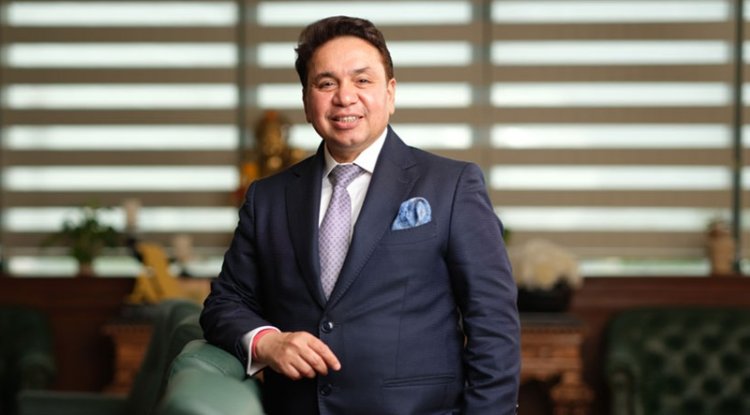
Ask most real estate developers about corporate social responsibility, and you'll usually hear about cheques signed, plaques unveiled, the occasional school renovated for a photo op. Pradeep Kumar Aggarwal, Founder and Chairman of Signature Global, tells a different story — one that started with a single government school and, several years on, has grown into a foundation touching education, healthcare, women's empowerment and environmental work across dozens of communities.
"We began with one government school, and witnessing the positive transformation in children's lives reinforced our belief that meaningful change is built through sustained engagement," Aggarwal says. It's a line that sounds almost too tidy for a company whose core business is building homes — until you realise that's exactly the point he's making. "While real estate is about creating homes, we also see it as an opportunity to help build stronger communities through education, healthcare, dignity and opportunity."
Why education came first — and why it didn't stay alone for long
When the foundation was in its initial period of deciding the sector, education was the first thing that needed more development. "Every child deserves an equal opportunity to learn," Aggarwal says. But it didn't take long for the Foundation to realise that a child who's hungry, or whose family has no access to clean water, isn't going to benefit much from a better classroom alone.
"As we engaged more closely with communities, we realised that education alone is not enough," he says. "Good health, women's empowerment, sanitation and environmental wellbeing are all connected. If one of these is missing, overall development suffers." That realisation is why the Foundation now works across four areas instead of one — not because someone drew up a five-year plan, but because the problems on the ground kept pointing in new directions. "We will continue to evolve based on what communities need most rather than following a fixed formula," he adds.
37,000 children, and counting toward a lakh
The Foundation has already reached over 37,000 children across 78 government schools, with its sights set on 1,00,000 students. Getting there, Aggarwal says, isn't simply a matter of adding more schools to the list. "It is definitely both," he says, when asked whether scaling up means more schools or deeper support per child. "More schools means we reach more children, but the real impact is in the quality of the support we give in each school." That support, he's careful to point out, goes well beyond uniforms and stationery — the Foundation is pushing for digital classrooms, libraries, and science labs, the kind of infrastructure that shifts what a child believes is possible for themselves. "Success for us isn't just about the number of children we reach but also about the confidence, opportunities and a brighter future we help to create for them."
One detail worth noting: the Foundation also rewards merit among low-income students, and Aggarwal is conscious of a trap that a lot of "star student" recognition programmes fall into — rewarding the same handful of high achievers every year while everyone else stays invisible. His answer is to lean on the people closest to the students. "We work closely with school authorities and teachers who understand each student's individual progress and can identify those who have demonstrated meaningful improvement," he says. The goal, as he frames it, isn't to crown winners — it's to make every child believe consistent effort is worth something.
Perhaps the most delicate part of the Foundation's work involves adolescent health programmes that have now reached over 6,500 girl students — a subject that, in many of the communities Signature Global works in, still carries real stigma. Aggarwal doesn't pretend this was easy. His answer leans on a familiar but genuinely difficult formula: awareness, trust, and time.
"By working closely with schools, teachers, healthcare professionals and families, we have been able to create a supportive environment where girls feel comfortable seeking information and guidance," he says. He's honest, too, about where the Foundation's tracking currently stands — when asked whether it follows these girls afterward to see whether the programme actually changes outcomes like school retention or delayed marriage, his answer suggests this is still a work in progress rather than a finished system. "Our programmes are designed with the objective of creating lasting improvements in girls' health, confidence and educational opportunities," he says, adding that meaningful impact "is reflected not only in the number of girls we reach but in the positive difference these programmes create in their lives" — an answer that reads more like an aspiration than a metric, and one the Foundation seems aware it still needs to build out.
A mobile clinic, and the patients who show up first
Medical treatment was another priority for the foundation, as it is the need of the hour. To ensure medical facilities reach rural areas on time, it has partnered with Artemis Hospital to run mobile medical units, which have now treated over 4,000 patients. Ask Aggarwal, who is always with vans, and the picture he paints is less about emergencies and more about access that simply wasn't there before. "A large number of our patients come for routine health check-ups, consultations and treatment for common illnesses," he says. "For many, the mobile medical unit is their first point of contact with a qualified doctor."
Running a mobile healthcare operation is, by most accounts, a logistical headache — routes, staffing, equipment, all of it has to work in sync. Aggarwal's takeaway from running Aarogyarise is less about logistics and more about relationships: "Successful mobile healthcare is built on strong partnerships, careful planning and consistent community engagement," he says, crediting the Foundation's dedicated doctor and its partnership with Artemis for building the kind of trust that keeps people coming back rather than treating the van as a one-time stop.
Mass weddings as CSR — an idea that raises eyebrows, on purpose
If there's one initiative in this conversation that doesn't fit the usual corporate foundation playbook, it's this: Signature Global organises mass marriages for underprivileged women, covering costs that would otherwise be crushing for economically weaker families. It's an unusual choice, and Aggarwal knows it.
"At Signature Global Foundation, we believe dignity is as important as development," he says. "Marriage is a significant milestone in many families, but for economically weaker households, the financial burden can be overwhelming." What's notable is that he doesn't oversell the programme's impact. Asked how the Foundation measures whether these weddings actually change anything beyond the day itself, he's candid that this is still an open question. "The true impact lies in understanding how these women progress in the years that follow," he says. "Strengthening this long-term assessment is something we see as an important part of our journey ahead" — an admission that the Foundation is further along on delivery than it is on measurement, at least for now.
The same honesty shows up around the Foundation's skill-building programmes for women's financial independence. Pressed on hard numbers — how many women have actually started businesses or found stable income after training — Aggarwal doesn't offer a figure. Instead: "Beyond the number of women trained, what matters most to us is how many are able to use those skills to create sustainable income and improve their economic independence." It's a values statement more than a data point, and it points to an area where the Foundation's ambitions currently outpace its tracking systems.
A developer's peculiar relationship with the environment
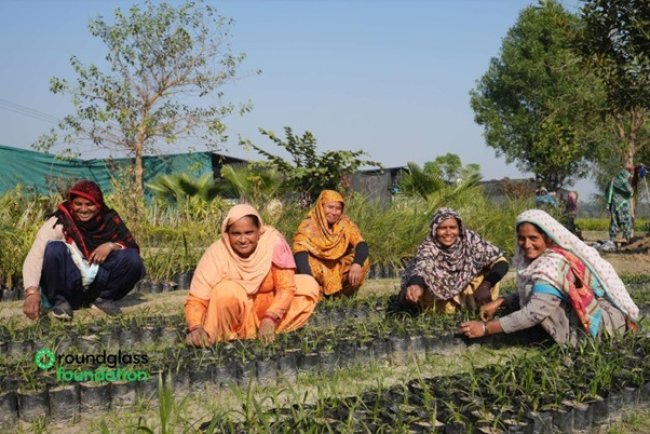
Real estate occupies an unusual position when it comes to environmental responsibility, Aggarwal argues — different from, say, an FMCG company whose environmental footprint is mostly about packaging and supply chains. "Each project we build impacts land use, water resources, green spaces and the quality of life of future generations," he says. That's the reasoning behind the Foundation's water conservation work, public toilets, and sanitation infrastructure — projects that Aggarwal describes as inseparable from what it means to build responsibly in the first place. "Sustainability is not an add-on activity, it is part of responsible development."
On the toilets and water tanks specifically, he's realistic about what can and can't be measured yet. Cleanliness and public health outcomes, he says, take time to show up in data, and depend on far more than infrastructure alone — community habits, maintenance, ongoing awareness. "What encourages us is seeing these facilities being used by local communities and becoming part of their daily lives. That tells us we are moving in the right direction."
SDGs: a framework that arrived after the work, not before it
Laid out together, the Foundation's initiatives map neatly onto several UN Sustainable Development Goals — poverty, health, gender equality, clean water. But Aggarwal insists that wasn't the starting point. "We began our journey with communities and not with frameworks," he says. "The needs came first, but as we grew, the SDGs provided a useful framework to understand how our initiatives contribute to broader national and global development priorities."
Asked whether any one SDG takes priority right now, or whether the Foundation benchmarks itself against India's official SDG targets versus its own internal yardsticks, Aggarwal resists picking a single lane. "We view all our initiatives as interconnected," he says, arguing that education, healthcare, women's empowerment and environmental work reinforce each other rather than compete for resources. Success, in his telling, isn't a scorecard against a national target — it's simpler than that. "Success is reflected in the positive difference we create in people's lives and our continued commitment to building stronger communities."
What's Your Reaction?