Six solar-powered health centres improve healthcare access for over 200,000 people across rural Karnataka.
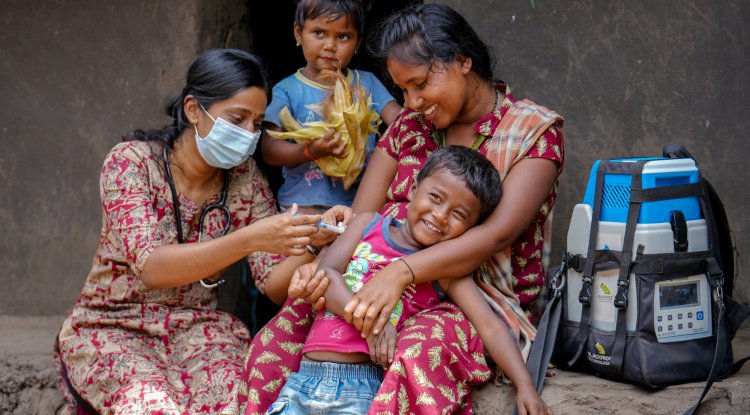
Six solar-powered health facilities with energy-efficient medical technologies have provided access to reliable healthcare for over 200,000 residents in rural areas of the Indian state of Karnataka via the Zayed Sustainability Prize's Beyond2020 initiative. In partnership with the non-profit organization SELCO Foundation based in Bengaluru, the initiative is set to enhance healthcare resilience in the remote areas where the lack of reliable power and medical facilities continues to impact healthcare delivery.
The project showcases the increasing significance of Zayed Sustainability Prize, Beyond2020 initiative, solar-powered health centres, rural health care in India, and SELCO Foundation contributing to the access to quality healthcare services by sustainable energy solutions. The deployment is part of the UAE-led effort to help communities integrate renewable energy with vital public services.
The installation of solar-powered facilities enhances access to healthcare services.
The deployment took place in six health care centres in the state of Karnataka, where provision of specialized healthcare and predictable power supply are some of the infrastructure issues that rural communities are still experiencing. The new facilities are being built to deliver continuous healthcare services more near to the patients' homes, thereby avoiding long-distance trips to urban hospitals.
Solar PV systems ranging from 2-15 kWp have been installed in each health centre. The systems are complemented by off-grid solutions and lithium-ion battery banks that can supply backup power for a maximum of 1.5 – 2 days, ensuring continuity of healthcare services even in the event of a power outage.
Stable electricity is anticipated to help electrical power run critical medical devices, vaccine storage solutions, and diagnostic services, frequently compromised in rural health care facilities due to power outages.
New technologies were introduced in the medical field. Innovations in the medical field were introduced.
In addition to renewable energy infrastructure, materials such as energy-efficient medical technologies have been installed to support improving maternal, neonatal and primary health care services.
For the care of the newborn and mother, the facilities now comprise portable baby warmers, phototherapy units, foetal monitors and assisted ventilation equipment. Immunisation carriers are also now available that are capable of maintaining the quality of vaccines in the process of transport and storage.
The centres have been provided with digital stethoscopes, spirometers and other portable diagnostic equipment to enhance the diagnosis and management of non-communicable diseases. Digital technology systems such as Tele-dermatology systems, digital microscopes, telemedicine units and other portable health technologies have also been installed to help reach patients in remote communities, and support healthcare professionals in conducting and participating in remote consultations and diagnostics.
UAE Highlights Global Cooperation Through Beyond2020
Commenting on the initiative, H.E. Ahmed Ali Al Sayegh, UAE Minister of Health and Prevention, said:
“Through Beyond2020, the UAE continues to champion solutions that improve lives, strengthen resilience and advance global cooperation. The sustained impact of this deployment in India reflects our shared commitment to advancing sustainable development and expanding equitable access to essential healthcare services. Guided by Sheikh Zayed’s legacy of compassion and action, we remain dedicated to supporting communities and forging partnerships that deliver meaningful, lasting impact.”
The Zayed Sustainability Prize was founded in the United Arab Emirates to take the impact of past prize-winning innovations and spread it to unserved areas of the world, with the Beyond2020 initiative being its flagship programme.
SELCO Foundation views Energy as a Healthcare Enabler
SELCO Foundation, who received the Zayed Sustainability Prize in 2018, led the deployment in India. The Bengaluru based organisation aims to champion sustainable energy solutions in order to eradicate poverty and enhance environmental sustainability.
Reflecting on the deployment, Dr. Harish Hande, CEO, SELCO Foundation, said:
“Energy is a catalyst for better healthcare. By redesigning health facilities through solar innovation, we can make care both accessible and aspirational, bringing quality services to even the most remote communities. Our broader goal is to expand this model nationwide so that sustainable energy continues to drive improved health outcomes for those who need it most.”
The foundation also partnered with the Swami Vivekananda Youth Movement, a non-governmental organisation focused on rural healthcare, to deploy a mobile health clinic that continues to extend healthcare services to remote communities and strengthen the long-term impact of the initiative.
Solving Healthcare Infrastructure Issues.
India has over 30,000 Primary Health Centres and 1,50,000 Sub Centres, many of which are located in geographically remote and inaccessible areas. Low infrastructure and electricity availability, combined with longer distances to access specialist care, can impact healthcare delivery in these areas.
Even in the states where expenditure on healthcare is below the national average like Karnataka, vaccines and other critical medical equipment may fail to run because of irregular energy supply, diagnostic procedures may be affected and storage of vaccines may be disturbed. Incorporating renewable energy sources into healthcare facilities is becoming a viable approach to bolstering healthcare provision in remote and less-developed areas.
The project aims to enhance the reliability of the services provided, minimize operational downtime, and increase access to quality healthcare for rural communities by integrating the use of clean energy and medical technology.
Beyond2020: Expanding the global impact.
Beyond2020 is backed by a consortium of partners such as Abu Dhabi Fund for Development, BNP Paribas, Mubadala Energy, Masdar and Abu Dhabi Commercial Bank.
So far, it has been deployed in 19 countries in the energy, health, water and food sectors, impacting over 429,800 people in Nepal, Tanzania, Uganda, Jordan, Egypt, Cambodia, Madagascar, Indonesia, Bangladesh, the Philippines, Rwanda, Peru, Lebanon, Sudan, Ethiopia, Vietnam, Malaysia, Costa Rica and India.
As the programme grows, it has found Colombia to be the home for its 20th international deployment to reach those communities currently underserved by sustainable development solutions.
What's Your Reaction?