Solar Ship Pioneers Sustainable River Travel
A solar-powered ship launched in Germany is redefining river transport with zero-emission travel along the Rhine. Equipped with 192 solar panels, the vessel carries 150 passengers and cuts CO₂ emissions by 80%, showcasing potential for sustainable tourism and clean mobility. While ideal for India’s 14,500 km of waterways, high costs, limited charging infrastructure, and low solar output in monsoons hinder adoption. With support from government schemes like the National Waterways Mission, solar ships could transform eco-tourism in regions like Kerala and Assam—if infrastructure, funding, and scalability challenges are addressed.
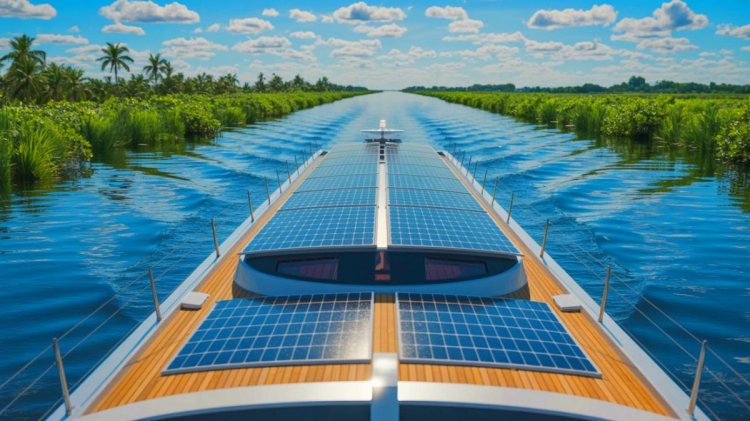
A solar-powered ship with 192 panels is transforming inland river travel, offering a zero-emission alternative to diesel vessels. This innovation sets a precedent for sustainable transport, though adoption faces significant hurdles.
Launched in 2025 in Germany, the 40-metre ship carries 150 passengers along the Rhine River, generating 50 kW daily to power electric motors. Costing €2 million, it reduces emissions by 80% compared to diesel ships, saving 20 tonnes of CO2 annually. The panels, integrated into the deck, provide shade and energy, with batteries storing excess power for night trips. The design aligns with the EU’s Green Deal, targeting 55% emissions cuts by 2030. India, with 14,500 km of navigable waterways, could adopt similar vessels in Kerala or Assam to boost eco-tourism.
High costs and limited charging infrastructure are major barriers, with only 10% of European rivers equipped for electric vessels. In India, 90% of inland vessels use diesel, and retrofitting costs $500,000 per ship. Posts on X highlight enthusiasm for green travel but note scalability issues due to low solar output in monsoon seasons. Regulatory delays and crew training further complicate adoption.
The ship’s success relies on subsidies and port upgrades, with Germany investing €500 million in green maritime infrastructure. India’s National Waterways Mission, with ₹1,000 crore allocated, could support similar projects, but critics argue that solar ships are less viable for freight-heavy routes, which dominate India’s waterways.
This solar ship pioneers sustainable river travel, offering a model for India’s waterways. Overcoming cost and infrastructure challenges is critical to scaling green transport solutions.
Source: Sustainability Times
What's Your Reaction?