The investment decision marks a major milestone in enabling permanent removals and will help Sweden and the EU reach their long-term climate goals
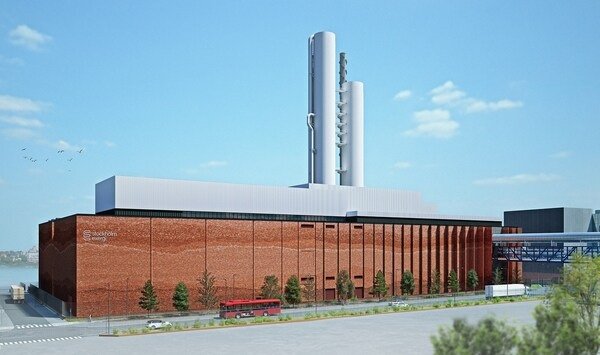
Stockholm Exergi, on Thursday, said that it will build one of the world's largest facilities for capture and permanent storage of biogenic carbon dioxide.
The investment decision marks a major milestone in enabling permanent removals and will help Sweden and the EU reach their long-term climate goals. The investment amounts to SEK 13 billion. Construction will begin immediately, with the goal of having the facility operational in 2028.
"We have worked purposefully for many years to make bio-CCS a reality, and today's decision means that we are moving from plans to action. With this, we assume global leadership in the industry for permanent removals," said Anders Egelrud, CEO of Stockholm Exergi.
The investment decision is made possible through a combination of public support and private purchases of negative emission certificates from companies with ambitious climate targets.
The facility will be built in the energy port nearby Värtaverket in Stockholm Once completed, it will capture and permanently store 800,000 tonnes of CO2 annually—more than the emissions from Stockholm's road traffic over the same period. The technology for capturing CO2 has been in use since the 1970s, and Stockholm Exergi has operated a test facility since 2019. The storage method is also well-proven and closely monitored to ensure the CO2 is permanently stored in bedrock beneath the seabed where it mineralises over time.
Bio-CCS will play a crucial role on the path to net-zero, and we are proud to support an initiative of global importance, says Carlo Maddalena, Senior Director at APG and Chair of Ankhiale.
Nearly 120 years after the inauguration of Värtaverket, Stockholm Exergi continues to deliver heat and electricity—and while now also reduce CO2 levels in the atmosphere.
Alongside emissions reductions, bio-CCS will be a critical part of reaching the goal to make Stockholm a climate-positive territory by 2030. We must accelerate the transition, and we are determined to do so, says Emilia Bjuggren, Chair of Stockholms Stadshus AB.
This investment decision now enables Northern Lights to expand its capacity—an important step for future negative emissions projects and the foundation for what could become a new industry, positioning the Nordics and Europe as global leaders in this field.
What's Your Reaction?