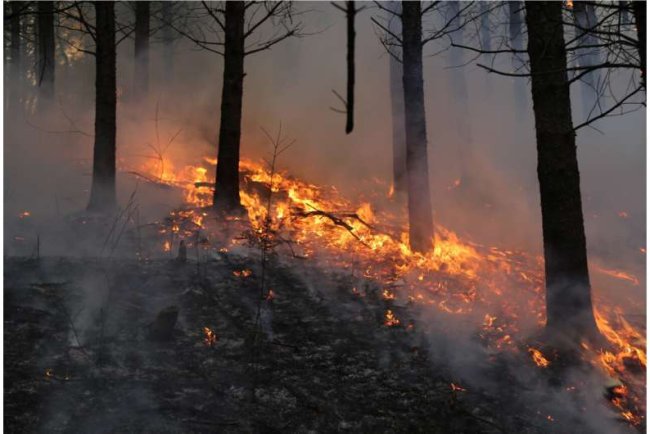
A new study warns that climate change and land-use pressures are shrinking habitats for tropical mountain wildlife, increasing the extinction risk for many endemic species by 2050.
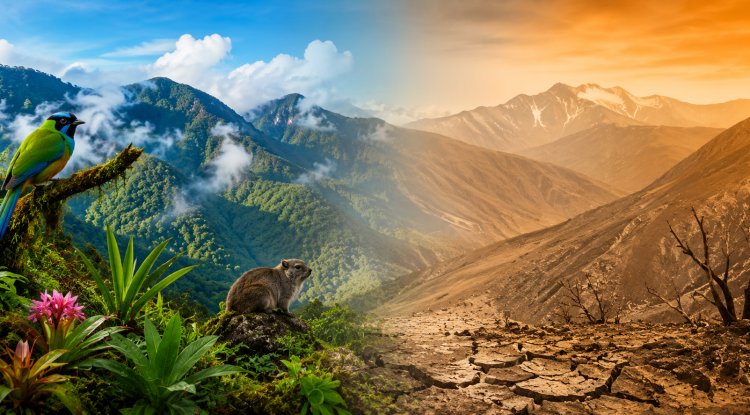
Climate change poses an ever-increasing risk to the survival of tropical mountain wildlife as species struggle to find new suitable habitats as the climate warms, a new study published in the journal Conservation Biology reveals.
Researchers analysed existing global data for 395 mountain-dwelling species, including 361 birds and 34 mammals, and mapped where they are likely to survive by 2050 under both high and low greenhouse gas (GHG) emissions scenarios. They discovered that 16 per cent less wildlife habitat would be lost under a low-emissions scenario than under a high-emissions scenario.
Co-author Chiara Dragonetti said: "It is a large number for mountain species. Most of the species are endemic. Many of these species are found on just one mountain or a small range of mountains, so even a small amount of habitat loss can considerably increase their extinction risk."
One of the greatest challenges is faced by tropical mountain species. Many can survive only under very limited climatic conditions, and although higher altitudes may provide cooler temperatures, the habitat might not be suitable. Animals already living at high elevations have nowhere higher to move. Scientists describe this process as an "escalator to extinction."
Land-use change adds to the complexity, as it restricts the movement of animals. Land-use pressure is projected to be much higher in tropical mountain regions than in the mountains of Europe and North America. Models that included land-use data found that mountain wildlife in Central and South America and Oceania will be the most vulnerable.
Birds that can move around more readily are predicted to be more resistant by 2050, according to the study. It was stressed by the researchers that the mountain ecosystems need protection now, and their results could contribute to finding locations where the species could survive in the face of climate change, or climate refugia.
What's Your Reaction?