The Global Carbon Council and three partner organisations have signed an MoU to strengthen cross-border carbon market cooperation, urban climate methodologies and carbon credit transparency across Asia.
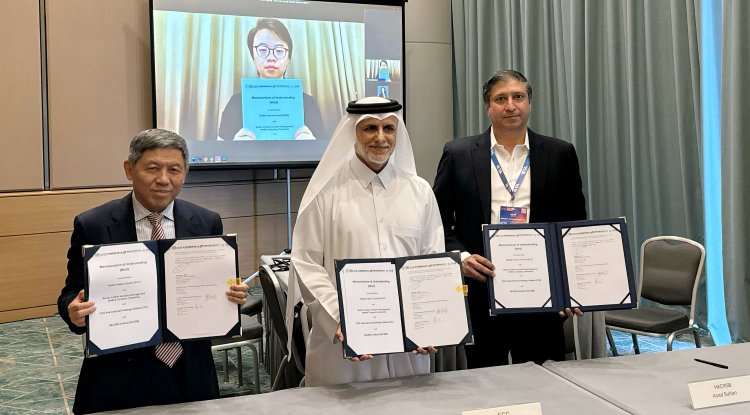
The Global Carbon Council (GCC) has signed a four-party Memorandum of Understanding (MoU) with Wuhan Carbon Inclusion Management Ltd Company (Tanpuhui), CGS International Holdings Ltd (CGI), and HKCRSB Limited to strengthen cooperation on urban climate methodologies and cross-border carbon markets in Asia.
The agreement was signed during the IETA Asia Climate Summit 2026, held from 7–9 July at the Hong Kong Convention and Exhibition Centre. The summit brought together stakeholders from the carbon market and climate policy sectors to discuss regional climate action and market development.
The MoU establishes a cooperation framework covering voluntary emission reduction methodologies, registry coordination, carbon credit registration, and carbon finance facilitation. It also aims to improve transparency, traceability and alignment with international climate objectives while supporting efforts to prevent double counting across participating registry systems.
Dr. Yousef M. Alhorr, Founding Chairman of the Global Carbon Council (GCC), said:
Under the agreement, the parties will collaborate on the recognition and development of carbon methodologies, with GCC-approved methodologies serving as the international benchmark. The cooperation is expected to support the development of methodologies for urban climate action, initially in Hubei Province, with the experience intended to be shared in other regions, subject to applicable regulatory approvals.
The MoU also supports the development of locally applicable methodologies through relevant review and approval processes. In addition, the parties will cooperate on project registration, registry operations, and the exchange of non-confidential project information.
A cross-border methodology committee will also be established to review, recommend and periodically publish approved methodologies. According to the agreement, the committee is intended to support methodology development, improve local applicability and encourage alignment with international practices in voluntary and compliance carbon markets.
As part of the framework, carbon credits generated from projects in Wuhan will be registered through the Wuhan Carbon Inclusion registry system in accordance with applicable local regulations, while HKCRSB will function as a registry and carbon finance facilitation platform. The agreement also provides for the sharing of non-confidential project metadata, issuance status and cancellation records to improve transparency and help prevent double counting.
In the next phase of cooperation, the parties will explore data-sharing arrangements and cross-border methodology channels between GCC's Carbon Market Infrastructure (CMI) and the Wuhan Carbon Inclusion registry system. The proposed cooperation may include project metadata visibility, synchronisation of registration status and the sharing of cancellation records to improve traceability, transparency and the international visibility of Wuhan Carbon Inclusion emission reductions.
The MoU also provides for the future exploration of pathways related to Article 6.2 of the Paris Agreement, including the potential transfer of Internationally Transferred Mitigation Outcomes (ITMOs) through GCC's Carbon Market Infrastructure and national registry solutions, subject to applicable national policies, regulatory requirements and future agreements.
What's Your Reaction?