A new study suggests that Tamil Nadu's textile industry could save up to ₹3,250 crore annually while reducing emissions through greater use of renewable energy.
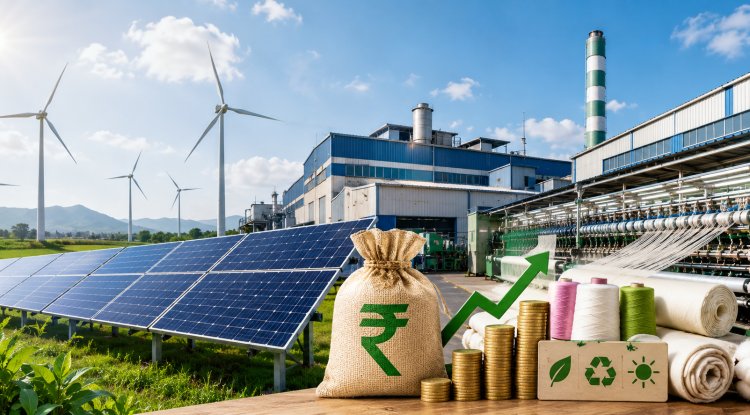
New research has found that Tamil Nadu's textile industry could gain significant economic and environmental benefits by phasing in renewable energy by switching to a renewable energy-based power mix, potentially saving up to ₹3,250 crore annually. As per the report 'Fashioning a Net Zero Future for Tamil Nadu’s Textile Sector' by Climate Risk Horizons, decarbonisation is not merely an option but a necessity that will bring the benefit of one of the few manufacturing hubs in the nation.
The textile industry is an important part of both Tamil Nadu's and India's economy since it contributes about one-fourth of India's textile production and almost 27% of the exports from the country. Profit margins, however, have come under pressure due to the increase in Energy Costs as Total fuel expenditure rose by nearly 47% from FY 2020-21 to FY 2023-24 while fuel cost intensity increased by about 17% in the same time frame. These pressures come as global competitors have become more competitive and export growth has remained relatively limited.
The study suggests that a complete switch to 100 per cent renewable energy (RE) like solar and wind energy could save from ₹2,320 crore to ₹3,250 crore, depending on the pricing model. Additional savings could be achieved by electrifying industrial heating processes using clean energy, e.g. electric boilers which are powered with clean energy.
The environmental benefits are also significant. India's textile sector has a higher carbon footprint than several competing textile-exporting countries with 12.5 kg of CO₂e per kg textile whereas the main competition countries are Vietnam, Bangladesh, and China while countries such as Vietnam, Bangladesh and China have carbon footprints below 10 kg CO₂e per kilogram of textile produced. As sustainability becomes increasingly important for global supply chains, particularly in Europe particularly due to regulations such as the Carbon Border Adjustment Mechanism (CBAM), transitioning to renewable energy is becoming increasingly important for maintaining export competitiveness.
The report identifies cost hurdles for full transition like open-access charges, grid transmission issues, and financing challenges faced by smaller manufacturers and MSMEs. To address these, it calls for policy measures from the State, improving access to renewable energy, concessional financing, and joint renewable procurement by the textile value chain.
The transition to renewable energy in Tamil Nadu could help protect jobs, strengthen India's sustainable manufacturing capabilities as global demand for low-carbon textiles continues to grow.
What's Your Reaction?