A 2024 subglacial flood in Greenland, triggered by ice melt, highlights the escalating climate crisis, with risks of sea level rise and ecosystem disruption affecting millions.
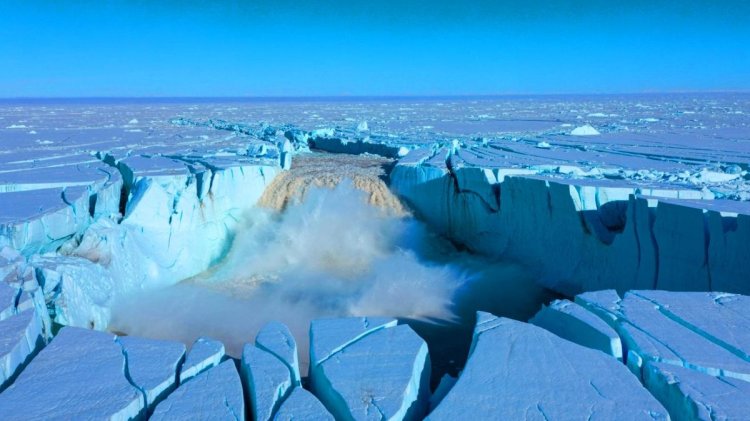
A massive subglacial flood in Greenland, caused by melting ice, has unleashed explosive force, highlighting the escalating global climate crisis and its far-reaching impacts.
A subglacial lake in Greenland, buried beneath 2 km of ice, released a catastrophic flood in 2024, triggered by rapid ice melt from rising global temperatures. The flood carved a 15-km-long canyon, moving billions of cubic metres of water and sediment in hours. This event, one of the largest recorded subglacial floods, underscores the accelerating impacts of climate change on polar regions, with implications for millions worldwide.
Greenland’s ice sheet, losing 270 billion tons annually, contributes significantly to global sea level rise, projected to reach 70 cm by 2100. Subglacial floods destabilise ice sheets, accelerating melt and threatening coastal communities. The event disrupted local ecosystems, altering river systems and sediment flows, with potential impacts on Arctic biodiversity. Scientists warn that such floods could become more frequent as temperatures rise, driven by greenhouse gas emissions.
The flood’s explosive force highlights the fragility of polar ice systems. Unlike gradual melting, subglacial floods release water suddenly, increasing risks of infrastructure damage in nearby regions. While Greenland’s remote location limits immediate human impact, the broader climate crisis affects millions through rising seas and extreme weather. Global efforts to cut emissions, such as the COP28 target to triple renewable capacity, are critical but lagging.
Research into subglacial systems is expanding, with satellite monitoring and ice-penetrating radar improving flood predictions. However, funding and international cooperation remain limited. Addressing these events requires reducing emissions and investing in climate adaptation to protect vulnerable populations.
In conclusion, Greenland’s subglacial flood is a stark warning of the climate crisis’s intensifying effects. Urgent global action to curb emissions and enhance monitoring is essential to mitigate the risks of such catastrophic events.
Source: Sustainability Times
What's Your Reaction?