Climate Change Threatens Global Staple Crop Yields Despite Adaptation Efforts
A new Nature study warns that global staple crop yields may drop over 11% by 2098 under moderate climate change, even with adaptation. Losses are highest in major breadbaskets like the US and Europe. Adaptation reduces some impacts but is not fully protective, raising global food security concerns.

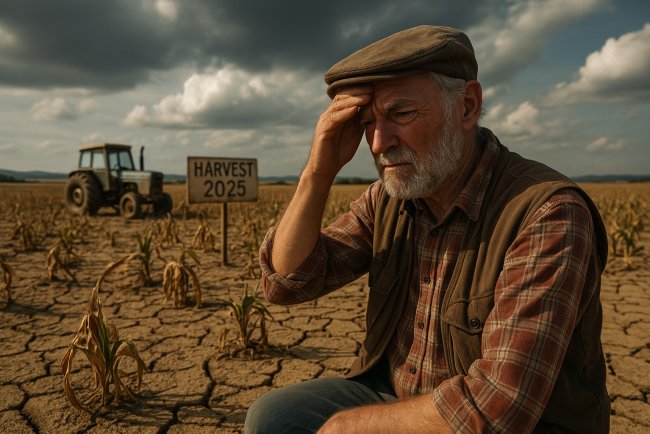
A new study in Nature threatens that worldwide production of the four most important staple crops may decrease by over 11% towards the latter part of the century on a mid-range climate change scenario even after farmers have taken adaptation measures. The study examines six of the major crops—cassava, maize, rice, sorghum, soya bean, and wheat—and employs data-based analysis that considers how farmers may react to increasing temperature and extreme weather conditions.
Unlike the earlier models that either left out farmer reactions or made unrealistic perfect adaptation assumptions, this research incorporates realistic behavioral habits. Adjustment measures like changing crop type or shifting irrigation schedules are incorporated into the analysis. The results show that they were able to cut losses by as much as about 12%, but overall production losses still persist. The research estimates a global mean yield reduction of 12.7% by 2098 with medium emissions, reduced to 11.2% with adaptation. For 2050, it's reduced from 8.3% to 7.8%.
The analysis covers more than 12,600 sub-national areas in the world. Through correlating the changes in the crops' yields with exposure to hot days, the researchers created a method of detecting the existence or non-existence of adaptation. The areas that suffered little loss under corresponding exposures to hot conditions were considered to have better adaptation strategies. The method does not pre-specify pre-defined adaptations but allows real-world outcomes to lead the evaluation.
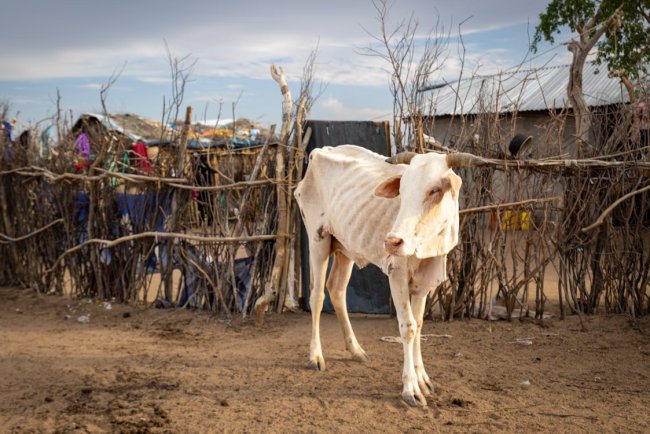
There were large regional variations. For Africa, staple crop losses can be up to 16% by 2098 under no adaptation but decrease to 11.6% with adaptation. In North America, there is hardly any variation with adaptation, where losses decrease from 21.0% to a mere 20.8%. This is indicative of how overly optimised, industrial-scale agricultural systems have no margin for error, but regions already having constraining conditions are more adaptable.
Of the six crops, soya bean is estimated to suffer the most loss of 22.4% by the year 2098. Rice suffers the lowest loss of approximately 1%, which may be attributed to temperature-based advantages when nights are warm. Differences in sensitivity of the crops to heat and water levels account for the variation. These shifts in production have implications for global food systems, especially in large food-exporting countries such as the US and Europe, where scale operations are more focused on maximization of production than climatic change adaptation.
The research also adds that the effects are not just economic but nutritional as well. By multiplying yield projections for all six crops together, the scientists estimate a reduction of global caloric production of 554 trillion kilocalories per 1°C warming. That's a reduction of about 120 kcal per person per day per degree Celsius—a little less than not eating breakfast every day in a 3°C warmer world. This decline sparks concerns of food security and geopolitics, particularly in nations that are already at risk of malnutrition and hunger.
Interestingly, although wealthier areas experience yield loss at scale from not having flexible farm systems, the poorest decile experiences most loss, particularly those who live off climate-sensitive crops such as cassava. The study confirms that adaptation does not exist everywhere and comes at a cost. With high-yield agricultural systems, to adapt to stronger crops would mean lower short-run loss but also decreasing average productivity. This adaptation money or yield cost is the main barrier.
The article also emphasizes the need for policy-guided support systems in facilitating the adaptation process. Drivers like the availability of resilient seeds, irrigation facilities, climatic forecasts, and farming education play a vital role in enhancing adaptive capacity. Based on the research, future agriculture planning must address both resilience and productivity.
Its weakness is in the utilization of historical observations, and it might therefore not capture the entire range of future situations. Yet, its empiricist quality provides badly needed complexity to projections of agriculture impacts. It is useful insight for governments, policymakers, and global agencies planning for food system shocks under climate change.
As temperatures keep rising globally, agriculture will inevitably be one of the most vulnerable sectors. There is some adaptation protection effect, though, and the results confirm that climate change will cause irrepressible challenges to global food production, particularly in major breadbasket countries. Greater resilience in the way of improved planning, investment in infrastructure, and research will be critical in ensuring future food supplies.
Source:
Adapted from Carbon Brief
What's Your Reaction?