UNEP and Chatham House report reveals that global food system transformation is blocked by three barriers: the cheap food paradigm, market consolidation, and investment path dependencies. Report urges structural reform ahead of UN Food Systems Summit +4.
A recent Chatham House and United Nations Environment Programme (UNEP) report, Unlocking Sustainable Transition for Agribusiness, identifies three systemic obstacles that still undermine reform of the planet's food system into a healthier and sustainable one. Published before the UN Food Systems Summit +4 Stocktake that will be held 27–29 July 2025 in Addis Ababa and Rome, the report brings to focus the economic and structural barriers to meeting global food, health, and environmental objectives.
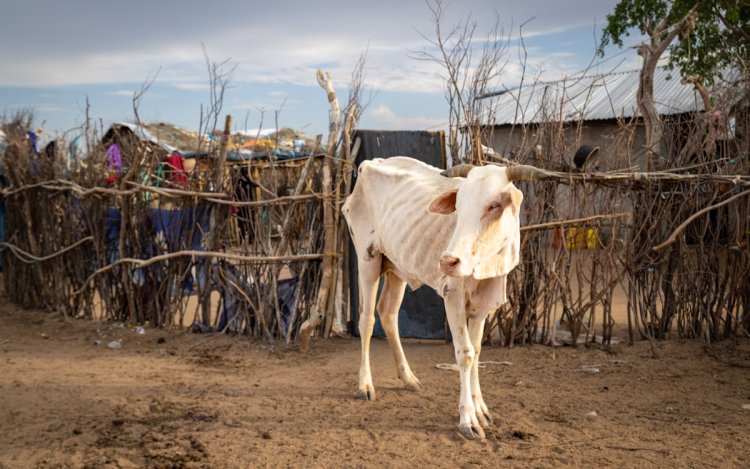
Despite being essential for supporting the world's inhabitants, the food system continues to be a source of significant environmental degradation, climate change, and poor health. The study reveals that over 800 million individuals across the world are already undernourished, and between production and consumption, at least 30% of all the world's food is lost. One in five preventable deaths globally is caused by poor diets, and the hidden costs of today's food system to human health and the environment are potentially as high as US$20 trillion every year.
The most primitive and first of the barriers that have been recognized is the "cheaper food paradigm." The paradigm assumes that food must be produced and sold at low cost, no matter the long-term environmental or health impact. It prefers short-term affordability to sustainability, and promotes behavior towards abuse, waste, and depletion of ecosystems. The report calls for further regulation and increased research funding by the public to shift incentives from cost-cutting to long-term health and sustainability.
The second is consolidation of the market. The report affirms that the food industry is characterized heavily by a few large agribusiness companies and investors, hence constraining competition, innovation, and farmer autonomy. The powerful market players will tend to resist changes that are able to de-stabilize them, which means smallholders will have few options and bargaining capabilities. Transformation is thus hindered through restricted diverse participation and resistance to disruptive designs.
The third barrier, or investment path dependency, is the overlying historical trends and financial arrangements that have become modern agribusiness over the last 80 years. While these trends created efficiency through scale and mechanization, this was accomplished at the expense of reliance on seeds, pesticides, and computer-led systems controlled by giant corporations. These dependencies limit farmers' freedom to choose sustainable practices and lock capital into older, destructive production systems.
To eliminate these obstacles, the report calls for tax system reform, subsidy reform, and standards reform to cover the overall environmental and health costs. Recommendations involve shifting subsidies from unsustainable agriculture, increased public R&D spending, and incentives to support regenerative farming and healthy diets.
Additionally, the report holds in contempt the increasing influence of consumer activism and civil society. Grassroots activism is increasingly making agribusinesses and investors transparent, reducing emissions, and providing enhanced quality and nutritious food. All these are deemed to be crucial in driving popular momentum toward reform and putting pressure on policymakers and business to take action.
The paper also explains how the food system can be transformed to minimize its fossil fuel and agrochemical input dependency. It promotes diversification to knowledge-intensive, diversified farm production that caters to local ecosystems. This is through encouraging plant-based products and high-welfare animal products as opposed to industrial livestock production.
Rethinking food systems around the world is central to solving the interconnected crises of climate, biodiversity, and pollution. Politically, agreements like the Global Biodiversity Framework in theory exist, but the real change is being sabotaged by entrenched economic and institutional interests.
The UNEP and Chatham House report lays out a process for governments, the private sector, financial institutions, and civil society to collaborate to break existing lock-ins. It is system-changing rather than patching in piecemeal and emphasizes redesigning incentives to make them more transparent and empowering consumers and farmers.
As the second UN Food Systems Summit +4 offers a watershed moment for global stocktaking, the report is a timely reminder that a change in structure, and not political will, is needed in order to transition towards a food system that benefits people, the planet, and future generations.
Source:
UN Environment Programme (UNEP), 6 July 2025
Report: Unlocking Sustainable Transition for Agribusiness
Published in association with Chatham House
What's Your Reaction?