Japan has issued a contingency plan for a potential Mount Fuji eruption, emphasizing preparedness and emergency response. A large-scale eruption could result in widespread volcanic ashfall, infrastructure damage, and economic losses. The plan advises residents on sheltering, stockpiling essentials, and evacuation strategies.
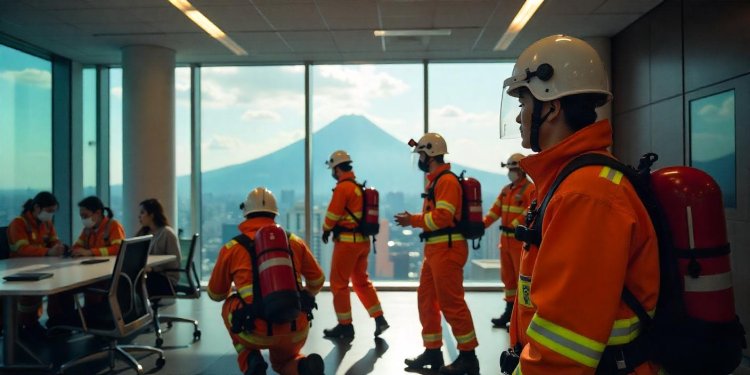
The Japanese government has published a massive contingency plan in preparation for the possibility of Mount Fuji erupting, an active volcano dating back thousands of years located near the capital city of Tokyo. Though there are no signs that the volcano is likely to erupt soon, officials are going ahead and taking preventive measures to avoid potential destruction and provide safety to people. There may be catastrophic consequences from a complete eruption, including widespread volcanic ashfall, infrastructure destruction, and massive economic loss. The approach is founded on preparedness, inviting individuals to prepare with essential items and setting up evacuation procedures in case of worst-case situations.
Mount Fuji last erupted in 1707, during the Edo period, and experts recommend that a similar event today would be catastrophic for the region. Government of Japan is cooperating with volcanologists in trying to establish the threats and develop a strategy to act with little impacts on cities, transportation networks, and public health. The response strategy also has advice to inhabitants for home isolation, establishing measures for food and water provision, and taking precaution against the harmful effects of permanent exposure to ash.
An official government report estimates the amount of volcanic ash in a huge eruption at as much as 1.7 billion cubic meters of which nearly 490 million cubic meters of ash would cover roads, buildings, and other constructions. That's roughly ten times the size of the 2011 earthquake and tsunami debris, suggesting the scale of destruction that could be wrought. Ash on the ground can render roads unusable, destroy buildings, and disrupt vital services such as power and water supply.
The financial effect of an eruption of Mount Fuji will be spectacular. The likely financial loss is estimated at a maximum of 2.5 trillion yen ($16.6 billion) by specialists in the form of property, business destruction, and the cost of disaster relief. Besides that, the impact on tourism, which is among the largest economic powers in Japan, would also be extreme since Mount Fuji attracts millions of tourists every year.
During an eruption, Tokyo and the surrounding areas can experience a black sky filled with volcanic ash, making cities dark even during the day. The fine particles of ash are harmful to human health, especially for individuals suffering from respiratory diseases. Authorities advise the use of masks and goggles to avoid overexposure.
Structural failure is another key concern. Wooden houses of low load-bearing capacity will collapse if ash accumulates more than 30 centimeters (12 inches), necessitating evacuations. Comprehensive evacuation procedures, emergency medical care, and temporary shelters are included in the contingency plan.
Japan has learned the hard way to cope with natural disasters, and the government response plan is replete with such experience. By letting residents be in charge of emergency supplies and inform them officially, the authorities attempt to reduce panic and offer an organized response. The approach also deals with ash disposal because the volume of ash that might pile up could hamper cleanup and extend the recovery process.
Though the immediate danger of eruption is minimal, scientists emphasize being ever vigilant. Japan's meteorological and geologic agencies closely monitor seismicity around Mount Fuji, and early detection systems are employed to detect potential signs of volcanic unrest. Safety protocols and evacuation drills are also being conducted to educate residents.
The risk of eruption of Mount Fuji is a serious threat to Japan, particularly the destruction of infrastructure, loss of economic production, and loss of lives. The emergency plan of the government aims to counter such risks through preparedness, public information, and coordinated emergency response measures. Though none loom on the horizon currently, planning for the future taken so far seems to indicate how much of a positive it is to plan ahead if there are natural disasters. Ongoing information and readiness, the residents can buffer the effect of a potential eruption and be ready for an improved response whenever it happens. Source and Credits:
Provided by Outlook Planet Desk and AFP.
What's Your Reaction?