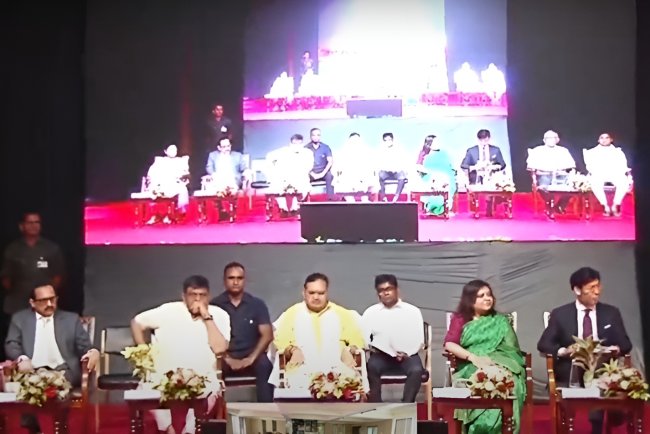
SAEL has begun work on an ₹8,200 crore integrated solar manufacturing facility in Jewar, Uttar Pradesh, to strengthen domestic solar production, create jobs and support India's renewable energy goals.
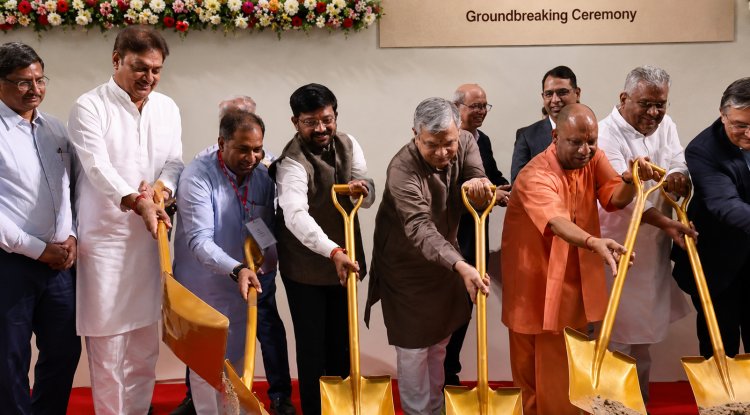
Uttar Pradesh Chief Minister Yogi Adityanath laid the foundation stone for an ₹8,200 crore integrated solar manufacturing facility by SAEL Industries in Jewar, Gautam Buddha Nagar, marking one of the largest investments in India's domestic solar manufacturing sector. The project is expected to strengthen the country's renewable energy supply chain, generate employment and support India's long-term clean energy targets.
The manufacturing complex is planned to be set up at the upcoming Noida International Airport at Jewar, which is developing into an important center for industry and logistics. It is hoped that the ideal location would provide better connectivity through highways, cargo railway and air cargo services for transporting raw material and finished goods.
The plant will produce key parts that are important in the solar value chain, which includes solar cells and solar modules. Building up the capacity to manufacture in India is believed to reduce dependence on foreign machines as well as boost manufacturing capability in the country. The industry experts believe that this move will also help build supply chain resilience.
The investment comes at a time when India is aggressively expanding its capacity of renewable energies in India. There is an existing installed capacity of over 240 GW of non-fossil energy-based electricity generation capacity in India. There are also plans to increase this figure to 500 GW by 2030. Amongst renewable energies, solar energy is the fastest growing sector in India.
The government has estimated that there is an increase in the amount of solar energy capacity that has been developed in India. From 2.8 GW in 2014, there is now more than 110 GW in 2026. While there has been some development in this area, India still needs to depend on imports when it comes to producing solar panels.
To address this dependency, the Central Government has put forth several policies which include the Production Linked Incentive (PLI) scheme for high efficiency solar PV modules, Approved list of models and manufacturers (ALMM) and phased domestic manufacturing norms for government projects. This will promote companies to set up manufacturing facilities in the country itself and support the "Make in India" campaign.
As per industry experts, projects like that of SAEL's factory could be useful for India to overcome module assembling and manufacture more valuable parts in the country itself. This manufacturing environment would eventually bring down the cost of production and enable the country to become a manufacturing hub for renewable energy products in the world.
Apart from strengthening domestic manufacturing, the project is also expected to generate substantial employment opportunities during construction and operations. Large-scale solar manufacturing facilities require skilled professionals across engineering, production, quality control, logistics, research and maintenance, while also creating indirect jobs through ancillary industries and local supply chains.
It will definitely be another feather in the cap for the ecosystem that is evolving at Jewar. Besides the presence of the Noida International Airport, this region is seeing a lot of investment in electronics, logistics, data centers, warehouses, and high-tech manufacturing making it one of the fastest growing industrial corridors in North India.
According to experts, growing manufacturing activities domestically have become very essential in view of the geopolitical uncertainties faced by global supply chains coupled with changing transportation charges and trade barriers. Increased production of solar equipment inside India would enable the country to enhance its energy security and facilitate its plan for energy expansion.
The SAEL project is in keeping with the general change in India's energy policy from an emphasis on renewable energy generation to the creation of a manufacturing system that will enable the energy transition and create jobs for the nation.
What's Your Reaction?