Thailand Unites Public, Private and Global Experts at ESG Symposium 2025 to Drive Low-Carbon Future
Thailand hosted ESG Symposium 2025 at SCG Headquarters, uniting global experts, government, private sector, and civil society to accelerate the country’s transition to a low-carbon economy. The event focused on energy transition and just transition for SMEs, aiming to build inclusive and sustainable environmental policies across the ASEAN region.
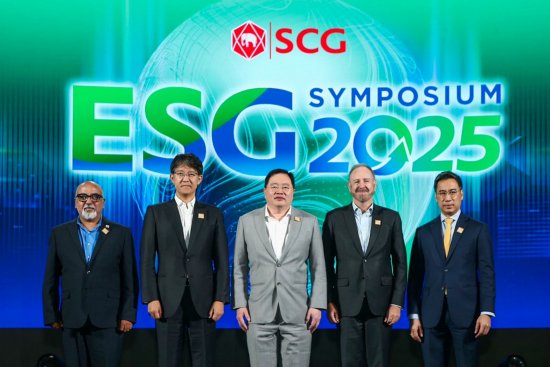
The ESG Symposium 2025, held at SCG Headquarters in Bangkok, marks a significant stride toward promoting a sustainable, low-carbon future for Thailand. Over 300 attendees from the public sector, corporate sector, civil society, and worldwide sustainability specialists gathered at the event. The forum functioned as a group workspace to speed up the nation's green transition and enhance the preparedness of the ASEAN region for a shifting global economy and climate.
The symposium, which was based on the theme Green Breakthrough Amid the Perfect Storm, sought to stimulate conversation, promote knowledge sharing, and develop common plans for developing a fair, inclusive, and sustainable low-carbon society. Participants looked at how nations like Thailand may match environmental goals with economic resiliency in reaction to growing climate risks, changing energy needs, and growing worldwide expectations for environmental, social, and governance (ESG) performance.
Discussions mostly centered on two main goals. Energy Transition, the first project, looked at ways to change Thailand's existing energy systems to help it meet its Net Zero goals. Participants examined obstacles involved in decarbonising the energy supply, growing renewable infrastructure, and guaranteeing access to clean, reasonably priced energy across areas. Growing urgency across Southeast Asia to lower reliance on fossil fuels and move toward more environmentally friendly substitutes that are both scalable and sustainable is reflected in this plan.
The second plan, Just Transition for SMEs, stressed the need to increase access for small and medium-sized businesses (SMEs) to ESG regulations and mechanisms targeted at climate change. The majority of the private sector in Thailand and ASEAN consist of these companies, and their involvement is essential for attaining general climate resilience. The symposium looked at how knowledge, tools, and money could help small and medium-sized businesses change their processes, cut emissions, and meet sustainability targets without hurting their ability to grow.
High-level intellectuals and speakers from universities and global organisations provided insightful comments. Notable attendees included researchers from Massachusetts Institute of Technology (MIT), the Regional Director of the UN Development Coordination Office for Asia-Pacific, and the President and CEO of Toyota Motor Corporation. These professionals showed examples, models, and inventions from many industries all around the world that showed how various countries are becoming more environmentally friendly without compromising their competitiveness.
Among the subjects covered were risk management, urban resilience, climate change adaptation plans, and the future part that green technologies may play in underdeveloped nations. In the face of growing environmental and market turbulence, regional leaders including the Governor of the Bank of Thailand also spoke to national priorities for economic stability and resilience. Achieving systematic and fair change depends on cross-sector cooperation, proactive policy-making, and public-private partnerships, according to their viewpoints.
The 2025 ESG Symposium is evidence of a developing understanding both in Thailand and throughout ASEAN that environmental sustainability has to be included into every kind of economic development plan. The green shift now calls for broad involvement across industries, from energy suppliers and financial institutions to local community groups and SMEs; it is not limited to environmental agencies or major multinational companies.
The event also underlined how closely environmental initiatives and economic prospects are linked. Investing in renewable energy, encouraging green companies, and developing climate-resilient infrastructure not only tackles worldwide warming but also generates employment, improves public health, and draws in sustainable investments. It situates nations like Thailand to be more competitive in a world market that is placing growing emphasis on sustainability and climate responsibility.
Another frequent topic was the part civil society plays in helping to enable inclusive climate action. For a fair transition to be successful, participants felt it has to consider sensitive groups and provide equal access to information, resources, and economic possibilities. In ASEAN's varied socioeconomic scene, where many communities still suffer from poverty, urbanization, and poor access to clean energy, these values are very important.
Apart from expert lectures and panel debates, the conference promoted inter-sector active participation. Networking possibilities and breakout sessions let participants create fresh relationships, investigate joint projects, and match objectives for next cooperation. Events like these are crucial for improving local resilience and guiding unified policy responses as the consequences of climate change grow more severe.
Thailand's leadership in organizing such a high-level meeting indicates its will to be more involved in the worldwide sustainability movement. The ESG Symposium 2025 set the scene for policy innovations, joint initiatives, and region-wide low-carbon development action plans by bringing together powerful people and decision-makers under one roof.
As more ASEAN countries try to balance economic recovery with climate action, this impetus is likely to keep going. The connections made and lessons learnt during the symposium are likely to affect Thailand and nearby nations' future investment plans, business operations, and climate-related policy structures.
Environmental activists, companies, and policy specialists all will be closely observing the results of ESG Symposium 2025 as the drive for worldwide sustainability gets stronger. It reminds us that the road to a low-carbon future needs to be shared, inclusive, and based on working together at all levels of society.
What's Your Reaction?