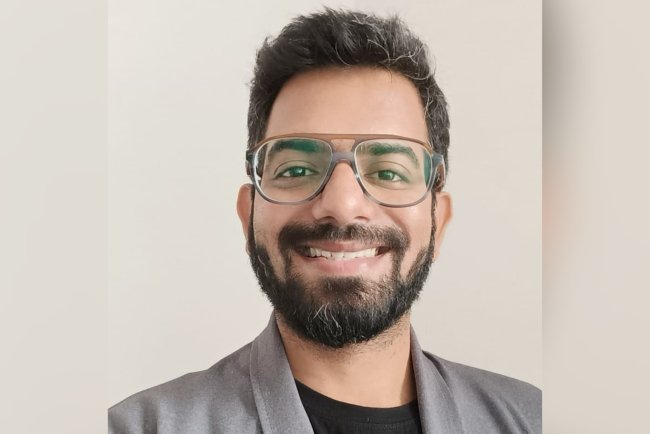
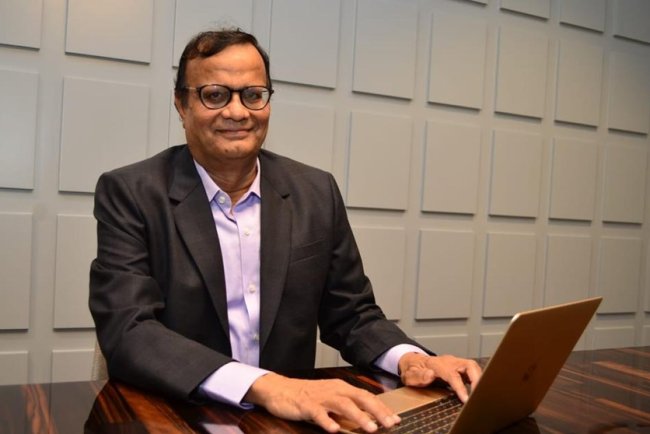
He spoke about how INDEA is building sustainability into the core of design education, what an Indian design DNA actually means in practice, and why the end of a vehicle's life should be on a designer's mind from the very first sketch
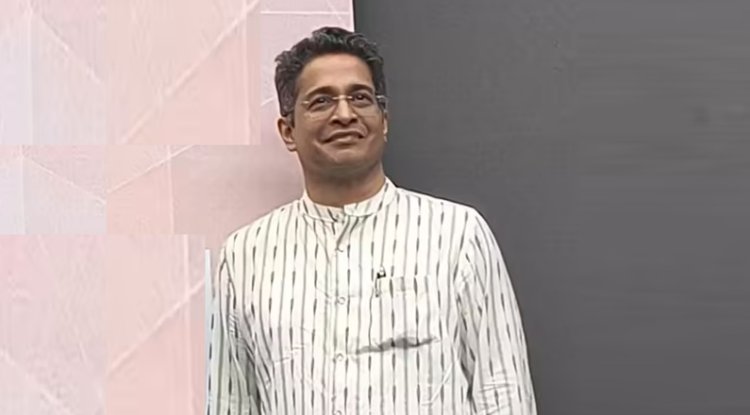
Avik Chattopadhyay, Chairperson XADM and Founder of INDEA, has spent over two decades inside the global automotive industry — at Maruti Suzuki, Volkswagen, Apollo Tyres, Stellantis, and ExxonMobil, among others — long enough to understand both what the industry gets right and what it has consistently refused to question. In 2014, he co-founded Expereal, a brand strategy consultancy, and has since turned his attention to something more foundational: how India trains the designers who will shape its mobility future.
As Chairperson of XLRI's Centre for Automobile Design and Management and founder of INDEA — the Indian School for Design of Automobiles — Avik is making a case that is straightforward but still surprisingly rare in Indian automotive circles: that this country needs to design vehicles from its own context, its own roads, its own climate, its own cultural inheritance, rather than borrowing a brief written for someone else's world.
We spoke to him about how INDEA is building sustainability into the core of design education, what an Indian design DNA actually means in practice, and why the end of a vehicle's life should be on a designer's mind from the very first sketch.
How is INDEA rebuilding the curriculum so that sustainability is not a module students sit through — but the lens through which every design decision gets made?
Sustainability in purpose, design thinking, design engineering, productionizing and vehicle lifetime management are integral in the curriculum. They are not just classes on sustainability but actually working on sustainable designs, with sustainable materials and also within a sustainable environment which is what the school eco-system will be. Quite frankly, no one can teach design today without having sustainability as one of the key pivots of the curriculum.
India's EV ecosystem is growing fast, but most of the design conversation around electric vehicles is still borrowed from the West — the same language, the same user assumptions, the same aesthetic references. Indian roads, Indian climates, Indian usage patterns, and Indian infrastructure gaps are a completely different brief. How is INDEA preparing designers to solve for sustainability in a context that global automotive design schools were never built to address?
Quite frankly, there is no “global” automotive design school. The ones in Italy think from the Italian perspective and sensibilities while the ones in Japan think from theirs. The one in California thinks the California way while the one in Berlin thinks the Berlin way. This is how today’s most reputed design schools have evolved. Very much like film making. So, INDEA is going to look at things from the Indian perspective. It is about time we did so as an industry and a nation. It is for this reason that one of the institute’s larger goals is to help develop the “Indian Design DNA” in the mobility eco-system.
The faculty collective at INDEA reads like a who's who of twentieth-century automotive design. But the cars these designers are most celebrated for — the Golf, the 7 Series, the XF — were designed for a world that ran on fossil fuels and measured success in horsepower.
What does a sustainable mobility future ask of designers of that generation, and what is the conversation inside INDEA about where global design wisdom ends and a genuinely new thinking needs to begin?
Let us not try to straight-jacket design and designers. It’s a bit different from engineers. The latter think in terms of power output and propulsion systems. Designers ideate and create with certain finites given to them or available in the larger ecosystem. They also create for new energy systems. Just like Jelani Aliyu, one of the visiting faculty, had designed the Chevy Volt concept car way back in the late 1990s. So, truly impactful and timeless design is not constrained by centuries.
INDEA approaches mobility design as one that is for the greater good. It has to be desirable, relevant, inclusive and sustainable. That is the way design will be thought of and thought out in the design school.
The first INDEA Debate asked whether India needs its own automotive design DNA — a distinctive visual and cultural language rooted in Indian heritage. That is a compelling identity question. But there is a harder sustainability question underneath it: can India use this moment of building its design identity from scratch to embed environmental responsibility into that DNA from the start, rather than retrofitting it later the way the West is now desperately trying to do?
Design identity is not built from scratch. The identity exists all around us, in various contexts, forms and shapes. In attire, in cuisine, in architecture, in furniture, in literature, in jewellery, in utensils…basically everywhere. Therefore, for India to build its own automotive design DNA, it has to take inspiration from life around us and juxtaposing it on sustainable materials and technology inputs. And the West not really retrofitting, it is recalibrating.
A car is one of the most material-intensive, resource-heavy objects a person will ever own. End-of-life vehicle waste, battery disposal, rare earth dependencies in EV components — these are design problems as much as engineering ones. Is INDEA teaching students to think about what happens to a vehicle at the end of its life from the moment they begin designing it at the beginning?
Absolutely. It is integral in the curriculum. Unless one can build-in end-of-life solutions in the form of recycling, repurposing and disposal, the automobile will be a sore thumb in an otherwise active and aware society.
What is the one structural change in India's automotive and policy landscape that would most accelerate that ambition — and is it happening fast enough?
The one key structural change is the policy pressure on ESG compliance and the required investments and internal restructuring within the industry to meet the same. With every passing year, we will see mobility solutions that are definitely going to be cleaner, safer and sustainable.
What's Your Reaction?