


Sunil Khanduja of Ingersoll Rand says climate change is already affecting India and argues that sustainability, energy efficiency and digital technologies must become part of how industry operates
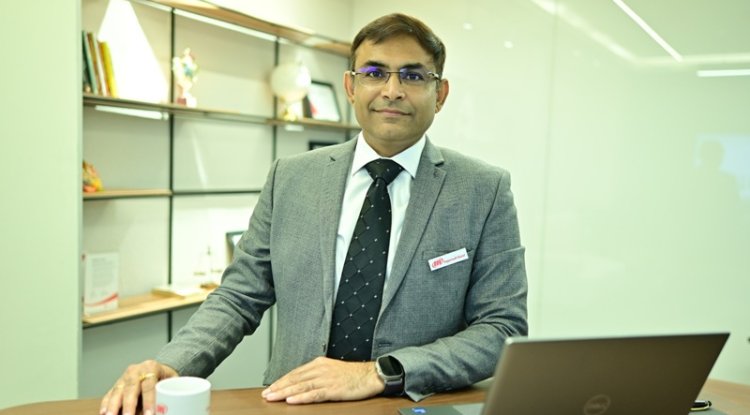
Sunil Khanduja, Managing Director – Compression Systems & Services, Ingersoll Rand (India) Limited, has been travelling a lot lately. Kolkata, Una, Mumbai, Odisha — city after city, state after state. And everywhere he went over the past few weeks, the same thing hit him the moment he stepped outside. The heat. Relentless, suffocating, impossible to ignore. "It is a challenge that is affecting the entire country," he says, without drama, without the careful corporate hedging that usually accompanies this kind of observation from a managing director. "Climate change is no longer a future concern. It is something we are already experiencing."
Sunil leads Ingersoll Rand India's Compression Systems & Services business, one of the country's leading industrial technology businesses, known for its compressed air systems, services, and related industrial solutions. If it makes headlines at all, it is often for engineering and manufacturing. But speaking with Sunil quickly makes it clear that he no longer sees engineering and sustainability as separate conversations. For him, they are one and the same.
The Cost Question Nobody Is Asking Right
Indian manufacturing is caught in a familiar trap. Cut emissions. Improve efficiency. Meet global standards. Stay cheap. Do all of it simultaneously. For large companies with deep balance sheets, this is a stretch. For small and medium enterprises, it can feel impossible.
Sunil's answer to this is not idealism. It is arithmetic. "The key question is whether we focus only on the upfront investment or on the long-term benefits," he says. At Ingersoll Rand, they call it Total Cost of Ownership — a framework that asks customers to look beyond the price on the invoice and consider what a piece of equipment actually costs over its working life. High-efficiency motors. Variable frequency drives. IoT-enabled systems. These things cost more on day one. But the payback, he says, often comes within approximately two to three years depending on usage — and the savings keep coming long after that.
Indian manufacturing is caught in a familiar trap. Cut emissions. Improve efficiency. Meet global standards. Stay cheap. Do all of it simultaneously. For large companies with deep balance sheets, this is a stretch. For small and medium enterprises, it can feel impossible.
Sunil's answer to this is not idealism. It is arithmetic. "The key question is whether we focus only on the upfront investment or on the long-term benefits," he says. At Ingersoll Rand, they call it Total Cost of Ownership — a framework that asks customers to look beyond the price on the invoice and consider what a piece of equipment actually costs over its working life. High-efficiency motors. Variable frequency drives. IoT-enabled systems. These things cost more on day one. But the payback, he says, often comes within approximately two to three years depending on usage — and the savings keep coming long after that.
"Sustainability is the future. Whether we accept it or not, the shift is happening." He says it without rhetoric. It sounds less like a mission statement and more like someone reading the room and telling you what he sees.
A Factory That Runs on Sunlight
Four years ago, Ingersoll Rand installed solar panels at its Naroda facility in Gujarat. At the time, state regulations capped industrial solar generation at 50% of power requirements. The ambition was there. The policy wasn't yet.
Four years ago, Ingersoll Rand installed solar panels at its Naroda facility in Gujarat. At the time, state regulations capped industrial solar generation at 50% of power requirements. The ambition was there. The policy wasn't yet.
Today, that ceiling is gone. And Sunil is investing in captive solar capacity that will power both Naroda and the company's new Sanand plant. Within a year, the company is targeting significant solar adoption and moving towards a high renewable energy share across both facilities.
It is the kind of transition that sounds straightforward when you read it in a press release. It is considerably less straightforward when you are actually doing it — navigating regulatory changes, managing capital expenditure, convincing a board that the investment makes sense, and building the internal capability to operate differently.
The fact that Ingersoll Rand has a platinum-certified manufacturing plant — one of only a handful in India to have achieved that distinction — suggests the company has been serious about this for longer than the current sustainability wave has made it fashionable.
When a Gas Shortage Becomes an Opportunity
Supply chains are where sustainability commitments tend to get quietly abandoned. The economics get difficult, the pressures pile up, and the path of least resistance is to keep buying from whoever is cheapest and worry about the rest later.
Supply chains are where sustainability commitments tend to get quietly abandoned. The economics get difficult, the pressures pile up, and the path of least resistance is to keep buying from whoever is cheapest and worry about the rest later.
Sunil is honest about the complexity. Around 75% of Ingersoll Rand India's sourcing comes from Indian suppliers, and many of them still depend on fossil fuels and thermal power. That is not a problem he can solve unilaterally. But he describes something interesting that happened recently in Maharashtra — a gas shortage that forced several suppliers to make a choice they had been avoiding. "Because suppliers had contractual commitments to maintain deliveries, some of them invested in electrification to ensure continuity," he says. "That is where challenges also create opportunities."
It is a small story. But it points to something larger — the way that constraint, more than persuasion, often drives the transitions that feel impossible until they aren't. Since COVID, Ingersoll Rand has operated a one-plus-one supplier strategy — never dependent on a single source for any critical component. It was a resilience decision first, but it has become a sustainability lever too, creating space to make choices about suppliers that a single-source dependency would never allow.
The Machine That Thinks
The most animated Sunil gets during the conversation is when he talks about what comes next for energy efficiency — not the hardware, but the intelligence sitting on top of it. EcoPlant is Ingersoll Rand's AI-driven optimisation platform. If a customer is running multiple compressors with different usage patterns, EcoPlant studies those patterns through cloud-based monitoring and synchronises the machines for maximum efficiency. The system does automatically what would take an engineer hours to calculate manually — and it does it continuously, adjusting in real time.
The most animated Sunil gets during the conversation is when he talks about what comes next for energy efficiency — not the hardware, but the intelligence sitting on top of it. EcoPlant is Ingersoll Rand's AI-driven optimisation platform. If a customer is running multiple compressors with different usage patterns, EcoPlant studies those patterns through cloud-based monitoring and synchronises the machines for maximum efficiency. The system does automatically what would take an engineer hours to calculate manually — and it does it continuously, adjusting in real time.
"This is where we see the future," Sunil says. "AI will play an increasingly important role in helping industries reduce energy consumption and improve overall system performance." It is a future he is already building toward. Helix, the company's remote monitoring platform, currently tracks over 10,000 installed machines — watching for alarms, performance dips, maintenance windows, and operational anomalies across a distributed network of customer sites. Predictive maintenance is replacing reactive repair. Visibility is replacing guesswork. For industries where downtime means real money lost, this is not an environmental argument. It is a business one. And Sunil is comfortable making both at the same time.
The Heat From Below
The new Sanand facility is built differently from the old Naroda plant. Where Naroda relies on air-conditioning — effective but vulnerable — Sanand is designed around passive cooling. Higher roofs. Industrial fans. Exhaust systems optimised for natural airflow. Thermal coatings on the building structure that reduce heat absorption before it ever enters the space.
The new Sanand facility is built differently from the old Naroda plant. Where Naroda relies on air-conditioning — effective but vulnerable — Sanand is designed around passive cooling. Higher roofs. Industrial fans. Exhaust systems optimised for natural airflow. Thermal coatings on the building structure that reduce heat absorption before it ever enters the space.
The target is to keep workplace temperatures below 30°C even during peak summer — a commitment that matters more each year as Indian summers push further into territory that was once considered extreme.
Sunil goes further. He is watching geothermal cooling with genuine interest — a technology he first encountered in Europe and later in Korea, where a warehouse in Belgium left him impressed enough that he hasn't forgotten it a decade later. Geothermal cooling works from below the floor level, reaching people more effectively than overhead air distribution. Installation costs are still high in India, and suppliers are few. But he thinks that will change. "As climate challenges increase, I believe more companies will start exploring such solutions."
The Skills Nobody Is Training For
India produces engineers in enormous numbers. Sunil respects that pipeline and does not dismiss it. But he is direct about the gap between what engineering colleges produce and what modern manufacturing actually needs.
India produces engineers in enormous numbers. Sunil respects that pipeline and does not dismiss it. But he is direct about the gap between what engineering colleges produce and what modern manufacturing actually needs.
"India does not have a shortage of people. What we have is a shortage of skilled people." Modern machines are not purely mechanical or electrical. They are software systems wrapped in metal, generating data continuously, requiring people who can read that data and act on it. IoT. Automation. Digital diagnostics. These are not skills that most engineering graduates arrive with — and they are not skills that can be developed in a few weeks of onboarding.
Ingersoll Rand's answer is to hire for aptitude and build the skill internally. It is a patient approach in an industry that is tempted to hire ready-made capability and frustrated when it can't find enough of it. The company's retention numbers are strong enough — there are third-generation employees on the floor — that the model appears to be working.
Every Day
Near the end of the conversation, the question turns to World Environment Day. What does he want people to take from it? He pauses, then says something that sounds simple and is not. "To be honest, every day should be World Environment Day."
Near the end of the conversation, the question turns to World Environment Day. What does he want people to take from it? He pauses, then says something that sounds simple and is not. "To be honest, every day should be World Environment Day."
In Ahmedabad, temperatures are hitting 45°C to 46°C. Simple outdoor activities have become genuinely difficult. And he knows — he says it without being prompted — that most people in India do not have the protection of an air-conditioned office to retreat to.
"Many Indians do not have access to air-conditioned homes, offices or transport. That reality makes it even more important for businesses and policymakers to focus on sustainability, climate resilience and improving living conditions for communities."
He runs a company that makes industrial equipment. He talks about geothermal cooling and AI optimisation and platinum certifications and solar-powered factories. But underneath all of it, the thing that seems to drive him is something more human than any of that — the recognition that the heat he felt stepping off planes in Kolkata and Odisha is the same heat that millions of people have no way to escape. That, he thinks, is the argument for sustainability that no business case can improve on.
What's Your Reaction?










Leave a Comment







