Transmission Expansion Trails Behind Renewable Energy Growth in India: Urgent Reforms Needed
India’s renewable energy growth is outpacing transmission infrastructure expansion, leading to stranded capacity and increased costs. A new report calls for urgent reforms including streamlined approvals, coordinated planning, flexible allocation models, and increased private sector involvement to unlock transmission bottlenecks and support India’s clean energy goals by 2030.
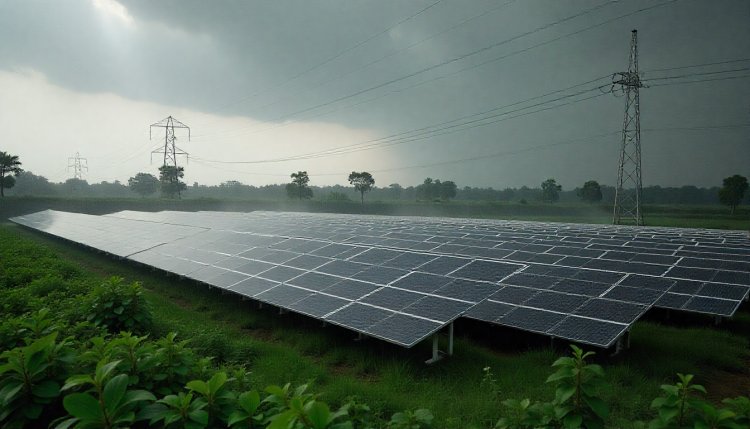
Rising Capacity, Stranded Power
India’s renewable energy transition is facing a critical bottleneck as transmission infrastructure struggles to keep pace with rapidly expanding generation capacity. According to a joint report by the Institute for Energy Economics and Financial Analysis (IEEFA) and JMK Research & Analytics, more than 50 gigawatts (GW) of renewable capacity remain stranded across the country as of June 2025. The result: project delays, higher transmission costs, and restricted integration of new clean energy assets.
Lagging Transmission Expansion
In FY2025, only 8,830 circuit kilometres (ckm) of new transmission lines were commissioned — 42% short of the 15,253 ckm target. Inter-State Transmission System (ISTS) additions are at their lowest level in a decade, with 71% of ISTS corridors operating at below 30% utilisation. While some underutilisation reflects future-proofing of grid capacity, systemic inefficiencies are compounding the problem.
Key Structural Hurdles:
-
Right-of-way disputes and prolonged land acquisition timelines
-
Equipment procurement restrictions and multi-agency approval bottlenecks
-
Speculative hoarding of transmission capacity, raising access costs for genuine renewable developers
Mismatch Between Supply and Demand
The intermittent nature of renewables is intensifying the challenge. Solar generation peaks in the afternoon but drops off in the evening when demand remains high. This mismatch leaves transmission corridors underutilised at certain times while constraining grid reliability at others. The report stresses the need for:
-
Flexible transmission planning beyond static five-year cycles
-
Energy storage integration to smooth out renewable variability
Regional Stress Points: Rajasthan’s Case
Rajasthan is among the worst-affected states, with nearly 8 GW of projects stranded. Almost half of solar output is curtailed during peak hours due to transmission bottlenecks and regulations such as mandatory underground cabling to protect Great Indian Bustard habitats.
Accelerating Transmission: The Way Forward
The report calls for a multi-pronged strategy to bridge India’s transmission gap:
-
Institutional reforms to align generation and transmission planning
-
Single-window approvals with enforceable timelines
-
Performance-based incentives and penalties tied to asset utilisation
-
Public-private partnerships and asset monetisation to mobilise private capital
Policy Foundations and New Reforms
Government programmes like the Green Energy Corridor (GEC) and the General Network Access (GNA) framework have enabled 27.45 GW of renewable capacity, with another 36 GW in progress. The recent GNA Third Amendment, which flexibly allocates solar and non-solar transmission capacity based on actual generation profiles, is unlocking previously underused grid assets.
Conclusion
India’s clean energy ambitions — with renewables expected to exceed 50% of installed capacity by 2030 — are increasingly at risk due to transmission delays. Unless reforms accelerate expansion and optimise utilisation, transmission will remain the weakest link in the renewable value chain. Strengthening this backbone is essential to ensure reliable, cost-effective integration of renewables and to keep India’s energy transition on track.
What's Your Reaction?