Trump’s Support for Seabed Mining Draws EU Criticism
U.S. President Donald Trump’s order permitting deep-sea mining by American companies in international waters has received global criticism, particularly from the EU, for undermining international cooperation and violating UNCLOS frameworks.
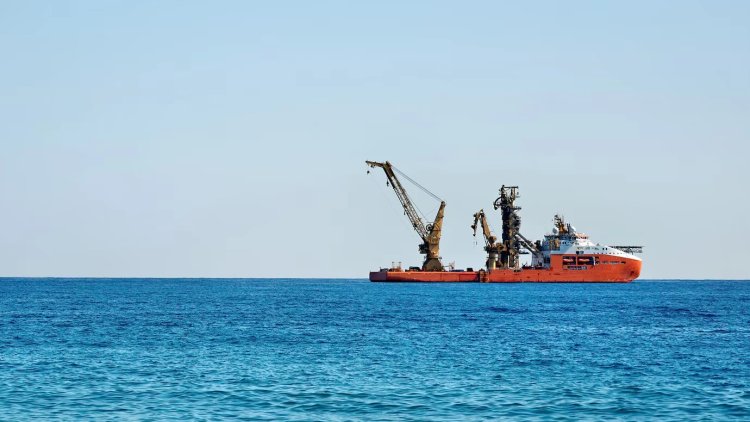
The recent action by U.S. President Donald Trump to allow American companies to begin deep-sea mining in international oceans has drawn adverse criticism from the European Union and other global players. The action defies the existing global negotiations under the United Nations' International Seabed Authority (ISA), where the environmental and legal implications of such unilateral actions are in question. The EU has opposed the development in strong terms, calling it a threat to global consensus regarding ocean governance and a challenge to ongoing climate action.
The U.S. executive order by its administration permits its companies to mine crucial raw materials from the seabed beyond national borders. The development is made at a time of global uncertainty, with the ISA still struggling to agree on rules to govern seabed mining. Though not yet technically prohibited, deep-sea mining is placed into de facto standstill pending full international protocols. Trump's pledge to push ahead in disregard of the regulatory process already in progress has not been greeted with comprehension by countries directly participating in ISA-negotiated proceedings.
The one of the core points of contention is that long-standing US refusal to sign United Nations Convention on the Law of the Sea (UNCLOS). Although the treaty has been ratified by 168 countries and the European Union, the U.S. is outside the treaty due to mainly political opposition within its government. Despite this, the EU maintains that UNCLOS is a generally accepted, legally binding treaty to which everyone must conform, including non-signatories.
The U.S. action has been labeled by the European Commission as done in deep regret, as it erodes international efforts to arrive at a sustainable and fair way of harvesting resources from the ocean. In the eyes of EU regulators, to move beyond agreed common standards may risk not just oceanic biodiversity but also global capability to hold on to common action in environmental protection.
The EU is not the sole entity that has been retaliating against America. Many other nations, including China, have taken exception to the action by America. They think that without an international, legally enforceable accord, any utilization of ocean resources would lead to ecological harm and unregulated use. Trump's action also further isolates the U.S. from the rest of the world regarding climate and sustainability talks.
The timing of the executive order also comes under scrutiny, particularly because increasing ocean health issues are concerning. New evidence from science reveals that the world's natural sinks, land, and sea absorbed no carbon dioxide in 2023. That puts further urgency on maintaining marine ecosystems' natural ecological processes that could be deranged by industrial activities such as deep-sea mining.
Trump's policies, including his refusal to engage in global environmental treaties, are considered destabilizing by most countries. As the ISA continues to deliberate without a completed rulebook, most countries have exercised caution and restraint. The U.S., however, appears to be going it alone and diverging from the rest of the international community. Critics argue that this not only jeopardizes environmental damage but also erodes the sense of cooperation inherent in global climate efforts.
Within the overall context of resource security and technological progress, deep-sea mining is contemplated as a possible future answer for harvesting rare earth minerals. Such substances are required to produce renewable energy technologies and digital infrastructure. However, with weak international law, the danger of unsustainable use is imminent. In the lack of agreed measures of protection, the U.S.'s green light directive becomes all the more contentious.
As geopolitical and environmental pressures intensify, the global community remains sharply polarized on the regulation of ocean mining. While the European Union is adamant on a legally binding rulebook, calling for transparency, sustainability, and accountability, the Trump administration seems bent on advancing economic and strategic interests over consensus.
Even as negotiations continue at the United Nations and between ISA member countries, actions by the U.S. under Trump's presidency are a moment of reckoning. The future of ocean governance is possibly decided now by how quickly and well the international community can manage unilateral action and bring all concerned parties into an integrated, rule-based framework.
Source/Credits: Euronews, KnowESG
What's Your Reaction?