Türkiye Secures €2.4B Green Funds For Rail Project
Türkiye gets €2.4B green financing for key railway link to Azerbaijan, boosting trade and regional connectivity.
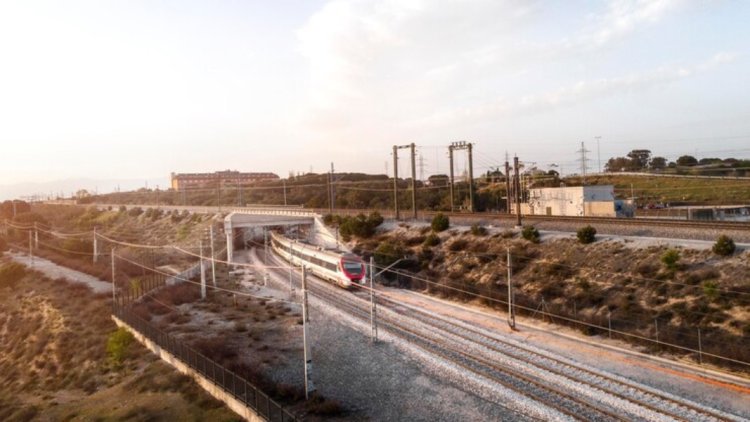
Türkiye has gone one step ahead in regional connectivity and green infrastructure development by obtaining €2.4 billion (around $2.8 billion) green financing for the construction of the Kars-Iğdır-Aralık-Dilucu Railway Project. The announcement was made by Treasury and Finance Minister Mehmet Şimşek, highlighting the strategic value of the railway as a part of Türkiye's overall regional development program and economic vision.
The railway link will join eastern Türkiye with the Nakhchivan Autonomous Republic, an Azerbaijani landlocked exclave, establishing a bilateral transport connection between the two nations. The railway project will stimulate cross-border commerce, maximize logistical effectiveness, and promote economic integration among Türkía and Azerbaijan. It also complements Türkiye's Medium-Term Program, which focuses on infrastructure investments that promote sustainable economic growth, environmental safeguarding, and international competitiveness.
The railway financing transaction is not only significant in scale but also since it has been labeled as "green financing," i.e., the financing is to be spent on environment- and sustainability-compatible projects. The terminology reflects the project's compatibility with international climate targets and Türkiye's desire to develop its infrastructure in a sustainable, environmental-compatible fashion.
The MUFG Bank of Japan led the financing syndicate, reflecting the global interest in the project. Further coverage was to be supplied by Sweden's Export Credit Agency (EKN), Austria's Oesterreichische Kontrollbank (OeKB), and the Islamic Corporation for the Insurance of Investment and Export Credit (ICIEC), a member of the Islamic Development Bank Group. These entities are furnishing vital guarantees that reduce the financial risk by half and induce wider investor participation. Besides these export credit agencies, international institutions and banks also participated in the funding, reflecting a broad and sound financing base.
Project implementation will be managed by the Ministry of Transport and Infrastructure of Türkiye's General Directorate of Infrastructure Investments. The agency will manage the international-quality railway being constructed as well as ensuring it satisfies the green financing requirements, which may involve energy efficiency solutions, emissions reduction, and encouraging low-carbon transport options.
Strategically, the Kars-Iğdır-Aralık-Dilucu line is less a transport project than an attempt to present Türkiye as a middle or interior logistics link between Europe and Asia. Linking to Nakhchivan and by extension to the wider South Caucasus, the line will open up new avenues of trade and counter-dependence on longer or more politically exposed transit routes. This corridor will be more beneficial for production centers in the region to source out international markets with faster, more streamlined supply chains.
Minister Şimşek stressed the practical and symbolic value of the deal, contending that it attests to international confidence in the economic vision of Türkiye. He added that these wide-ranging international partnerships demonstrate the ability of Türkiye to maintain good relations with international financial institutions as well as have the capability of implementing projects that raise national productivity and competitiveness levels. His statement also resonated with the government agenda of marrying infrastructure development with sustainability concepts, a line that is in harmony with national and global climate goals.
This funding is part of a larger context of Türkiye's infrastructure investment. With this railway development, the nation's total foreign project-based financing for 2025 came close to $6 billion. This figure demonstrates the reach of foreign backing that Türkiye has been able to command for its infrastructure objectives, cementing the nation's place in regional economic integration.
In the context of ongoing projects, this project is part of other funding projects with a green focus, such as the $450 million funded by the World Bank for industry greening in Türkiye. Such projects overall indicate a move toward environmentally friendly methods of development also to suit economic and geopolitical aspects.
Ultimately, the Kars-Iğdır-Aralık-Dilucu Railway Project is a testament to Türkiye's commitment to bringing sustainability to its development plan and strengthening its geopolitical and economic presence in the region. With global consensus support and unambiguous strategic intent, the project will remain an exemplar of how green finance can power infrastructure that not only links regions but also serves global environmental goals.
What's Your Reaction?