Mother Dairy and Polymateria launch degradable milk pouches, advancing sustainable packaging through UK-India FTA.
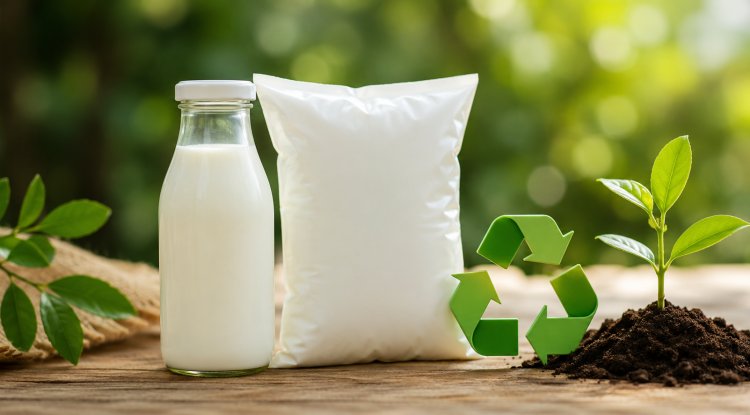
The UK-India Free Trade Agreement (FTA) has finally taken effect, marking a historic partnership between the two nations.The UK-India Free Trade Agreement (FTA) has officially come into effect, ushering in a new era of collaboration between the two countries. Celebrating the occasion, UK Business & Trade Secretary Peter Kyle pointed to the collaboration between UK materials technology company Polymateria and Indian dairy company Mother Dairy, as a good example of how India's closer economic relations can help drive innovation. This partnership has yielded the world's first eco-friendly milk pouch (100% degradable in natural environment) which is now being distributed throughout Mother Dairy's network of milk vendors all across India.
The new milk pouch uses Polymateria's proprietary biotransformation technology, which allows for the natural breakdown of conventional plastic packaging in the open environment in about two years. The company claims the degradation process doesn't create microplastics or toxic chemicals that remain in the environment and is compatible with current recycling technologies. The development is a solution to a huge environmental problem in India, as it is estimated that 100-120 million plastic milk pouches are disposed of each day. Besides, Mother Dairy has announced that consumers will not have to pay any extra amount for the new packaging.
Four Years of Joint Research Led to Commercial Rollout
The biodegradable milk pouch was the result of four years of joint research and development efforts carried out by the teams in Delhi and London, and two years of scientific validation in India. The companies claimed there was extensive testing done to certify packaging performance, safety and environmental requirements prior to commercialization.
The project is not a short term product development project, but rather a long term cross border research project. The partnership hopes to bring together British materials science skills with India's vast network for distributing milk to large-scale consumers, to provide an eco-conscious packaging solution with minimal changes to the production or recycling processes.
Innovation potential under FTA is emphasised by UK Business Secretary.
In a statement on the occasion of the launch, UK Business & Trade Secretary Peter Kyle said that the partnership was a testament to the opportunities brought about by the recently inked UK-India Free Trade Agreement. It was heartening that British firms were bringing research to fruition in the form of commercially viable products with the help of Indian firms, he added.
Kyle mentioned that he is particularly interested in seeing more UK companies leveraging the new and improved trade deal to increase their innovation collaboration and take UK research-based technologies to market in global markets.
Mother Dairy stresses on environment safety.
Dr. Meenesh Shah, Chairman of National Dairy Development Board and Mother Dairy, said that the development of a biodegradable milk pouch is a significant step towards sustainable packaging. The project has been a successful collaboration by Indian and British teams, he said, adding that the product has been subjected to rigorous scientific testing before coming to the consumers.
The packaging was also tested to look at its implications on soil ecology, which Shah says showed the process of breakdown doesn't pose a problem to the health of the soil. The company feels that the solution can help reduce the environmental footprint caused by single-use plastic packaging, without compromising safety and affordability of the product.
Polymateria Says New Opportunities in Trade Agreement.
The UK-India Free Trade Agreement is a major step forward for innovation partnerships between the UK and India, said Richard Horne, CEO of Polymateria. The Mother Dairy project is an example of the possibilities that can be realized with ongoing cooperation between companies from different markets, he added.
The new trade deal is designed to pave the way for future commercial development by easing restrictions. Polymateria believes that the agreement will help to create revenue of up to £90 million over the next three years due to the increased market opportunities.
The company is also rolling out its technology to other countries around the world. It has previously announced a partnership with Nigeria which is projected to incorporate its biotransformation technology into over 500,000 tonnes of plastic over five years, highlighting its strategy of joining existing manufacturers, which will not be creating new packaging systems.
The broader implications of sustainable packaging are explored.The wider significance of sustainable packaging is discussed.
Mother Dairy's environmental-friendly milk pouch is the largest deployment of degradable milk pouch in the dairy industry so far. This solution is now moving into a high-volume consumer market where millions of plastic pouches are being used each day, whereas many sustainable packaging projects start with small pilot projects or regionally roll them out.
The development also underlines the importance of trade agreements as a means of supporting environmental technologies. Regulatory alignment and market access can have an impact on adoption rate of sustainable innovations, although advances in materials science are key.
The partnership also demonstrates a business model based on the fusion of advanced material technologies with the current production process. Polymateria does not replace existing packaging systems, but licenses its technology to packaging manufacturers to enable them to use existing production equipment and adopt degradable packaging. Such partnerships could play an increasingly significant role in promoting the use of sustainable packaging solutions in global markets as governments and businesses look for viable options in the management of plastic waste.
What's Your Reaction?