Borealis Mud Volcano: Safe Harbor for Marine Life in the Barents Sea
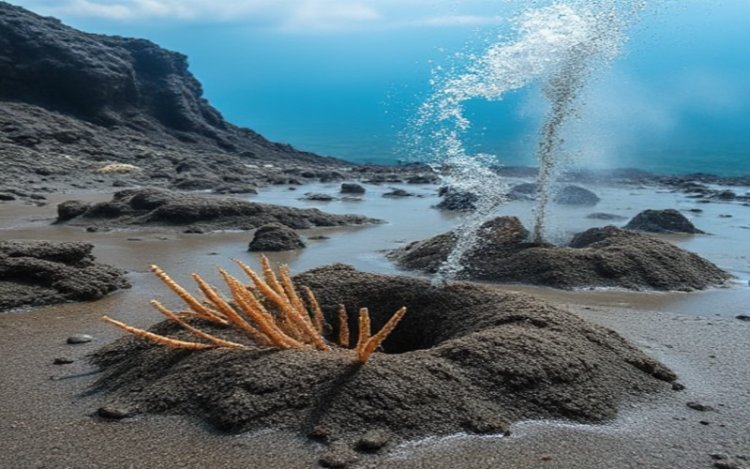
In 2023, scientists from UiT The Arctic University of Norway discovered an extraordinary underwater volcano known as Borealis Mud Volcano. It is located at a depth of 400 meters beneath the surface of the Barents Sea. Since its discovery, the underwater volcano has been gaining attention, and new information about the interaction between geology and marine ecosystems has been found.An interdisciplinary study the team conducted along with REV Ocean finds that Borealis Mud Volcano constitutes an important ecological haven for most marine species found in the region. The volcanic crater floor, though potentially inhospitable to most forms of life for parts of its area, serves as a host to unique varieties of marine organisms in the carbonate crusts which exist in the area. These crusts are thousands of years old and represent hard surfaces supporting anemones, serpulid worms, demosponges, and scattered octocoral colonies.
The carbonate structures are considered important for biodiversity because they offer shelter and feeding grounds for marine species. Large schools of commercially important fish, such as saithe, were found to concentrate around the irregularities in the jagged carbonates. Demersal species such as spotted wolffish, cod, and redfish (Sebastes spp.) also accumulated around the carbonates.Redfish, which are classified as endangered species, have made the presence of this fish even more concerning for scientists. This could be one species that will vanish, leaving with it considerable ecological consequences. Researchers think preserving ecosystems such as the Borealis Mud Volcano is vital since they offer a safe haven for threatened species and play a role in the conservation of marine biodiversity in the Barents Sea.
The research brings into light how the Borealis Mud Volcano supports regional ecological balance. The volcano has conditions that provide support for life in an environment hostile for many species, such as warm temperatures around it. The average temperature at the place is at about 11.5 degrees Celsius, which is 7.5 degrees higher compared to the surrounding seabed.In May 2024, further research on board the research vessel Kronprins Haakon confirmed that liquids carrying methane have leaked from the volcano possibly for thousands of years. Seeping methane would feed into the food web in the local ecosystem and likely influence the singular ecology surrounding the volcanic site.
In addition, it revealed ancient sediments with tiny sea creatures whose lives date to some 2.5 million years old, taking images of what kind of sea life roamed over an enormous timespan of the area's geological landscape.The Borealis Mud Volcano is an extraordinary site where geological and biological components intersect. Such a site provides scientists with the opportunity to study the dynamics within deep-sea environments. The continued exploration of this underwater volcano underlines the importance of conserving such unique habitats. With the increase in the effects of human activities on the Arctic seabed, especially oil and gas extraction, as well as the emerging deep-sea mining industry, proper management of biodiversity and responsible exploitation of marine resources hinge on an understanding and preservation of these ecosystems.
Norway has committed to maintaining 30% of its lands and seas by 2030, which is part of the global targets for conservation. These include spatial measures in conservation efforts directed at preserving representative marine ecosystems, including deep-sea areas. The preservation of these areas, especially those surrounding significant natural features such as the Borealis Mud Volcano, would assist in restoring benthic communities and general recolonization of marine species in the Barents Sea and beyond.The Borealis Mud Volcano is a geological wonder and an important ecological resource. Interdisciplinary cooperation between Norwegian researchers and international partners like REV Ocean is proof of the power of global cooperation in advancing scientific understanding of the oceans and their complex ecosystems.
Source: UiT The Arctic University of Norway, Nature Communications.