Uttar Pradesh has emerged as the country’s second-largest residential rooftop solar market under the PM Surya Ghar scheme, reflecting growing household participation in India’s clean energy transition.
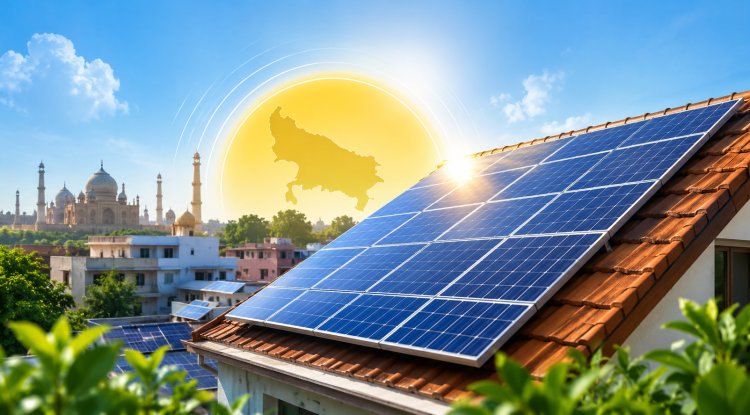
Uttar Pradesh has overtaken Maharashtra to become India's second-largest state for residential rooftop solar installations under the Pradhan Mantri Surya Ghar: Muft Bijli Yojana. While the achievement marks a milestone for the state, its significance extends beyond rankings and installation numbers. It reflects a broader transformation in how electricity is generated, consumed and managed in India.
According to the data collected by the state government, the number of rooftop solar panels installed in Uttar Pradesh is above 674,000, which makes it rank second after Gujarat in the national program. It reflects the growing importance of private individuals in the development of clean energy in India, which used to be provided by power stations.
From Consumers to Energy Producers
The rapid adoption of rooftop solar is changing the relationship between households and the power sector. Instead of being solely consumers of electricity, many households are now generating a portion of their own power requirements.
Such changes have become even more significant for a state like Uttar Pradesh, with high electricity consumption. The reduction in the load on the system may be possible through the increased use of electricity production by households at daytime hours. Another advantage is that distributed solar energy production allows reducing losses during the transport of energy from power stations to consumers.
The progress in this area is faster approvals, streamlined subsidy disbursement and better coordination amongst the agencies that implement this policy. However, the growth can also be credited to the greater realisation among the public about the economic advantages of rooftop solar power systems.
Why Rooftop Solar Matters Beyond Emissions
While there is discussion around solar power for reducing carbon emissions, there are other advantages associated with rooftop solar as well. Firstly, rooftop solar ensures increased energy efficiency by producing energy near its consumption point.
Secondly, by adopting rooftop solar power, the country would be able to achieve energy security by cutting down dependency on conventional power generation systems. This is due to the fact that India depends heavily on imports of fossil fuels.
For households, rooftop solar offers protection against rising electricity costs. While the initial investment is supported through subsidies under the PM Surya Ghar scheme, the long-term benefit comes from lower electricity bills and reduced dependence on grid power.
Small Cities Emerging as Solar Growth Centres
One of the key aspects of Uttar Pradesh’s accomplishment is that the growth is not just happening in the larger urban hubs. Rooftop solar uptake is now also being driven by smaller cities and local marketplaces.
This trend suggests that renewable energy development in India is now gradually transitioning from cities to rural towns. This can be attributed to better financial solutions, installer networks, and government incentives for using solar power.
The development also supports local economic activity by creating demand for solar equipment, installation services, maintenance providers and skilled technicians.
A Key Piece of India's Clean Energy Strategy
India has set ambitious renewable energy targets and is working towards reducing the carbon intensity of its economy. While utility-scale solar parks continue to play a major role, rooftop solar offers a complementary pathway that directly involves citizens in the energy transition.
The 'PM Surya Ghar: Muft Bijli Yojana' scheme is intended to help in achieving this goal by offering financial aid for setting up solar power systems. It is not just about increasing the production of energy through renewable sources but also about ensuring that this process of energy production is more democratic in nature.
Looking Ahead
Uttar Pradesh's rise in the rooftop solar rankings demonstrates that the future of renewable energy may not depend solely on large-scale projects. The growing adoption of rooftop systems indicates that households can become an important part of India's clean energy infrastructure.
The more that households adopt rooftop solar panels, the more likely that the effect may go beyond carbon emission cuts, encompassing improved energy security, minimised transmission losses, decreased strain on the electricity network, and enhanced citizen engagement during the nation’s move toward a green economy.
What's Your Reaction?