Vena Energy secures A$1.4 billion to expand solar and battery projects across Australia, boosting clean energy.
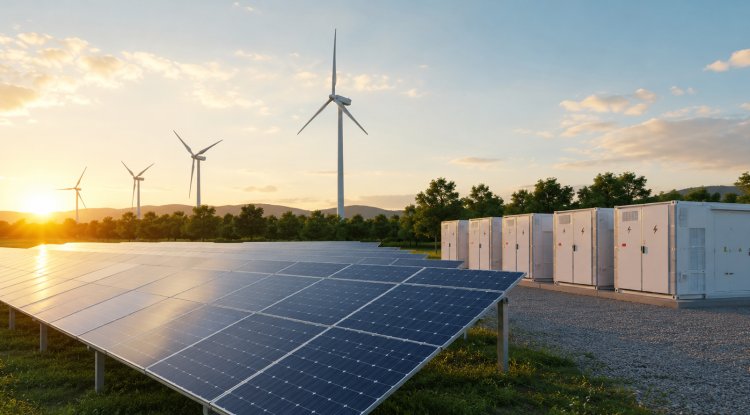
Vena Energy has raised an additional $1400 million in green funding for its portfolio of solar and battery energy storage (BES) projects in Australia to help drive investment in the nation's renewable energy industry. Funding will support operational and under construction assets in South Australia, Queensland and New South Wales, demonstrating continued investor confidence in large scale clean energy infrastructure.
The financing package highlights the increasing significance of battery energy storage combined with renewable electricity generation as Australia makes rapid progress towards a cleaner electricity system. The projects through the funding will be expected to make significant contributions to grid stability and increase generation capacity of renewable energy.
Funding helps finance the solar and battery portfolio.Financing aids funding of the solar and battery portfolio.
The financing has been split into two separate transactions, the new project financing, and refinancing of existing facilities.
The first transaction backs 294 megawatts-peak (MWp) of existing solar power installations, plus 320 MWp of solar projects currently in construction and 408 megawatt-hours (MWh) of battery energy storage capacity under development. These assets are situated in the Tailem Bend precinct (South Australia) and the Wandoan South precinct (Queensland).
The second transaction involves two neighbouring battery energy storage facilities, one with a capacity of 583 MWh and the other of 532 MWh, both of which are currently being developed in NSW. It also features the existing Queensland-based 150 MWh Wandoan South battery energy storage system.
The structure includes assets in various development phases and provides long-term funding to harmonise with their operational performance, while providing support for future development of the project.
The increased importance of battery storage.Rise of battery storage technology.
The new financing demonstrates the growing importance of battery energy storage as part of Australia's transition to renewables. Although solar energy remains a rapidly growing source of energy, its ability to match electricity supply and demand is increasingly vital, especially as there is a growing contribution of renewable energy to the national grid.
Battery systems enable the storage of surplus electricity when it is produced in high volume, during peak hours when the sun is brightest, and then using it when demand is highest, thereby helping to mitigate the intermittency of renewables. They also provide greater grid reliability and less reliance on traditional fossil fuel-based generation.
The deal is an example of how financial institutions are beginning to take battery storage as a key part of renewable infrastructure and not just an adjunct technology.
The Long-Term Investment Strategy is available as a Company Highlight.The Company Highlights include the Long-Term Investment Strategy.
The financing is indicative of Vena Group's capacity to raise long-term capital for green infrastructure projects on a large scale, said Simone Grasso, Chief Investment Officer and Global Head of Vena Nexus.
Australia is an important market in the company's plan to expand in the Asia-Pacific region and the ability of international and domestic lenders to provide support is a reflection of confidence in Vena's project pipeline, its ability to execute and the long-term prospects for renewable energy and energy storage in the region, he said.
The financing was led by a consortium of international and Australian financial institutions comprising of BNP Paribas, Bank of China, DBS Bank, ING Bank, Intesa Sanpaolo under its IMI Corporate & Investment Banking Division, Mizuho Bank, MUFG Bank, OCBC, Sumitomo Mitsui Banking Corporation, Sumitomo Mitsui Trust Bank and Westpac Banking Corporation.
The involvement of several international lenders underscores the continuing institutional appetite for investing in Australia's renewables and the increase in green finance for infrastructure financing.
Environmental Benefits
Vena Energy said the solar assets under the financing will produce enough renewable electricity for the annual consumption of approximately 198,000 Australian households.
It is also estimated that the projects will reduce carbon dioxide emissions by over one million tonnes a year. The company estimates this environmental benefit to be equivalent to the removal of about 228,000 vehicles from the roads annually or 17.5 million trees being planted annually.
In addition, the renewable energy facilities are anticipated to result in water savings of almost 904 million litres per year relative to conventional electricity generation, which will help to conserve water resources in a country where water security is a key environmental issue.
Concentrate on maintaining the stability of the grid.
“This was a major step forward in the company's history of financing its operations in Australia,” said Owen Sela, head of Australia at Vena Energy.
The funding helps the company further expand its solar and battery business and is helping to deliver infrastructure that will help build a more stable grid, deliver more reliable electricity and enable more renewable energy to be integrated into Australia's power system, he said.
Integrating complementary renewable generation and storage projects in the same financing package ensures that the projects are more efficiently managed and increases the long-term bankability of clean energy infrastructure, the company said.
Legal Advisory
Ashurst advised Vena Energy on the transactions and Norton Rose Fulbright and Corrs Chambers Westgarth advised the lending consortium.
The funding represents another significant investment in Australia's renewable energy infrastructure, reflecting the growing importance of integrated solar and battery storage projects in Australia's ongoing energy transition and enhancing the resilience of the country's electricity network.
What's Your Reaction?