Wildlife Recovers in Assam’s Manas National Park Post-Conflict
Manas National Park in Assam is showing strong wildlife recovery after decades of conflict, with rising tiger and elephant numbers. Conservation actions and species reintroductions have restored biodiversity, making Manas a model for post-conflict recovery.
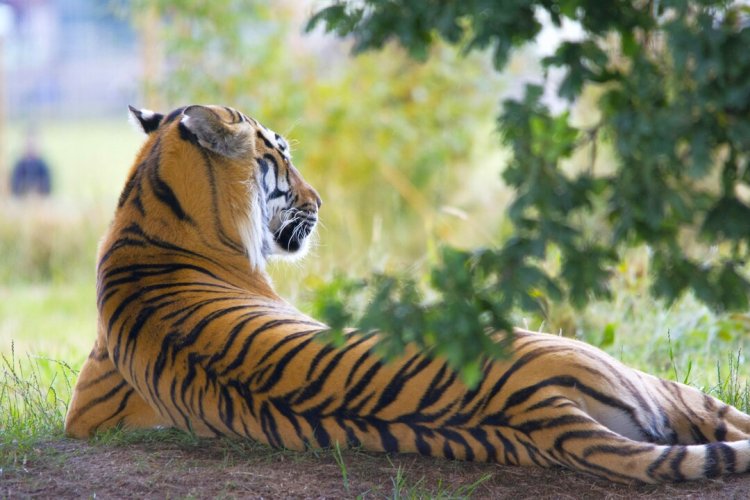
Assam's Manas National Park, once devastated by three decades of insurgency, is now demonstrating amazing turnaround in wildlife population. A new research has discovered growth in tiger, elephant, rhino and other threatened species in the park. Situated along the Indo-Bhutan border, Manas is a World Heritage Site declared by UNESCO and a key location for northeast India's biodiversity conservation.
The tiger population in the park has kept increasing, with a mean rate of 17 percent per annum. It had increased to 57 breeding tigers, with more than 20 breeding females, by 2023. This increase has made Manas a significant source population within the broader Manas-Dooars transboundary landscape.
The research quoted the greatest density of animals among elephants at 9.14 per square kilometer. Elephants remain the most abundant species in the park. The recovery followed decades of war when forest cover and flagship species were severely affected.
During the period between the late 1980s and early 2000s, Manas was suffering from widespread ecological devastation. Banditry and insurgent activity collapsed protection measures. Settlement and agricultural expansion destroyed more than 40 percent of primary forest cover. Wildlife was devastated in large scale, with greater one-horned rhinos and bull elephants being destroyed by poaching.
After the 2003 war which ended and normal governance was reattained by 2020, conservation in the park was started. Some of the methods were species reintroduction, anti-poaching enforcement, habitat protection, and usage of technology such as the Monitoring System for Tigers: Intensive Protection and Ecological Status (M-STrIPES) for monitoring.
The introduction of greater one-horned rhinoceros and eastern swamp deer in 2008 and 2014, respectively, has brought about growth rate increases of 17 percent per year for both species. There has also been stabilizing of wild buffalo, gaur, and sambar populations through sustained conservation management.
The research pointed out the most accurate population estimates of elephants and tigers in the park to date. It helped confirm the effectiveness of targeted recovery programs and science-based monitoring in wildlife recovery. In addition, local community engagement has facilitated protection and increased awareness for conservation.
But the study also found alarming issues with declining prey populations. Hog deer have decreased by 82 percent and wild pigs by 67 percent since 2015. All of these species play key roles in keeping predator populations, like tigers and leopards, controlled. The loss could cause prey species not to recover even if prey habitat expands, a condition described as a "predator pit.".
To solve these issues, the study advised the immediate translocation of wild pig and hog deer and enhanced anti-poaching. It emphasized counter-bushmeat hunting to conserve remaining prey species.
Leopard density within the park was at the equilibrium of 4.77 animals per 100 square kilometres. Sighting of cryptic carnivores like clouded leopards and Asiatic wild dogs decreased throughout the study duration, thus raising issues regarding the long-term survival of these cryptic species.
The research also demanded a shift in existing methods of wildlife surveys. It proposed the use of elephant-back line transects instead of the conventional block counts to provide improved estimates of herbivores and prey, particularly in floodplain grasslands. It could be extended to other protected areas of the eastern Himalayas and northeast India at large.
Manas National Park is now being suggested as an example for rebuilding wildlife in post-war areas. The synergy of rewilding philosophy, application of forest legislations, and monitoring with scientific studies has served to restore biodiversity. The results indicate that the same approach can be applied to other degraded systems for ecological rehabilitation and species conservation.
Source & Credit:
Research by the National Tiger Conservation Authority and Manas Tiger Reserve,
What's Your Reaction?