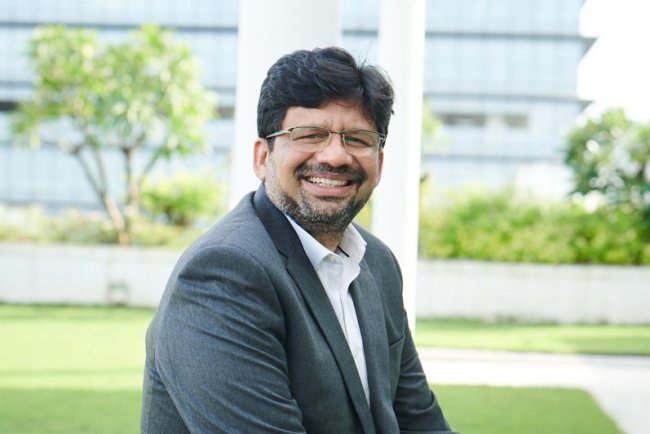
McDonald's for Youth has helped more than 2,500 young people across North and East India enter the formal workforce through first-job opportunities, skills training, and industry partnerships
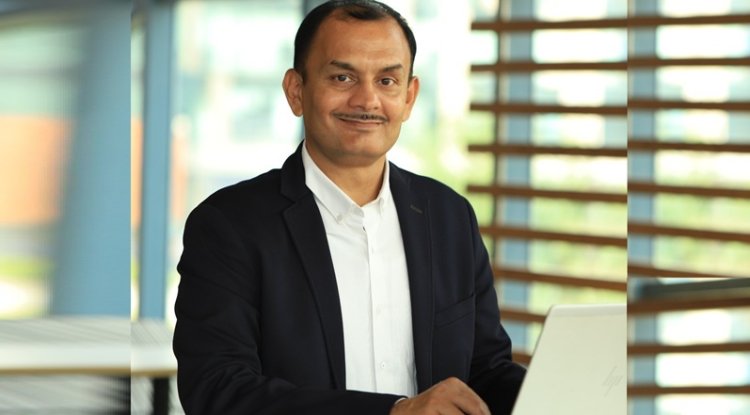
Somewhere in a McDonald's outlet in North or East India, a young employee is closing out a shift, counting a till, maybe training someone newer than them on how to greet a customer. It's an unremarkable moment by design — that's the whole point of a first job. But for a growing number of young people across the region, that ordinary shift represents something much bigger: the first time they've ever been part of a formal workplace at all.
That's the quiet engine behind McDonald's for Youth, a programme that has now helped more than 2,500 young people across North and East India land their first job. Rajeev Ranjan, who runs McDonald's operations across the region as Managing Director, doesn't talk about the number like a marketing statistic. He talks about it like 2,500 separate stories.
More Than a Number
"This milestone is significant because it represents 2,500 individual journeys into the formal workforce," Ranjan says, and it's clear he means it literally rather than as a soundbite. The programme launched with a fairly simple premise — build meaningful employment access for young people who might otherwise never get a foot into organised work. What's struck him, watching it grow, is how far the ripple effects travel past the paycheque itself. Confidence. Financial independence. A different sense of what their own future might look like. People supporting their families, going back to finish an education they'd paused, working their way into leadership roles they hadn't imagined for themselves a year earlier.
What Actually Changes When Someone Gets Their First Payslip
Ask Ranjan what shifts in a young person once they go through the programme, and his answer isn't really about the money — though he's careful not to dismiss how much that matters either. It's about how someone starts to see themselves. For a lot of these young people, this is the first time they've been part of a professional environment of any kind: learning what accountability looks like day to day, what it means to actually function as part of a team, how to deal with a difficult customer without losing composure. Somewhere in that process, he says, something shifts — hesitant young people become noticeably more self-assured, start speaking up more, start setting bigger goals for themselves than they might have a year before. There's a particular kind of dignity, he notes, that comes with earning your own first salary and being able to put something toward your household. Those, he says, are the moments that actually stay with him.
The Training Nobody Expects
Mention McDonald's training to most people, and they picture burger assembly and register drills. The reality, according to Ranjan, is a lot broader than that. Every young person who joins goes through three distinct training tracks. One covers food safety, food quality and the science behind consistency — the operational backbone of the job. Another covers hygiene and sanitation, the unglamorous discipline of running a genuinely safe kitchen. The third, and arguably the one that matters most beyond the restaurant walls, is built around career and personal development — teamwork, communication, leadership, problem-solving, and how to actually create a good experience for another human being standing in front of you.
What makes it stick, in his telling, is that none of it stays theoretical. Every shift becomes a chance to practise those skills in real conditions — a busy lunch rush, an irritated customer, a colleague who needs help catching up. That combination of structured training and daily repetition is what he believes makes the resulting skill set so transferable. Whether someone ends up building a career at McDonald's or moves into hospitality, retail, or customer service somewhere else entirely, the underlying capabilities — discipline, communication, the ability to stay composed under pressure — travel with them. "Our goal is not simply to prepare them for a role at McDonald's," he says, "but to equip our youth with skills that can support their long-term employability."
Closing the Gap Between a Degree and a Job
India's education-versus-employability conversation has grown louder in recent years — plenty of young people finishing their studies with a certificate in hand and still struggling to get hired. Ranjan's read on that gap, from what he's actually observed on the ground, isn't that young people lack talent or drive. It's exposure. Many finish their education having never had a real chance to apply anything in an actual professional setting, and employers today are looking for exactly the things that kind of exposure builds — communication, adaptability, the ability to work with other people toward a shared goal, not just technical know-how on paper. McDonald's for Youth, as he frames it, is trying to close that specific gap by giving young people both a job and structured learning at the same time, rather than asking them to acquire one before the other.
Finding the Young People Who Need It Most
None of this works without reaching the right people in the first place, and that's where partnerships come in. McDonald's works with a network of community organisations — Magic Bus Foundation, Tech Mahindra Foundation, Quess Corp Foundation, Tarraqi, Anudip Foundation, among others — that already have deep roots in the communities the programme is trying to reach. These groups run the outreach, connect candidates who might never see a formal job listing with an actual opportunity, and help bridge a gap that a corporate hiring process alone likely never would. It's less a recruitment pipeline than a genuine ecosystem, built specifically around communities where formal hiring channels don't normally reach.
Where People Go After
Not everyone who joins stays in the restaurant business, and Ranjan doesn't seem to see that as a shortfall of the programme — if anything, the opposite. Some employees build long careers within McDonald's itself; a number of the company's current restaurant leaders started in entry-level roles and worked their way up through the same structure. Others take what they've learned and move into hospitality, retail, or customer service elsewhere. Either outcome, in his view, counts as success, because the underlying goal was never to lock people into one company — it was to build a skill set that holds its value wherever someone's career actually takes them.
A Bigger Role for the Private Sector
Ranjan situates all of this inside a larger conversation about India's demographic advantage — the fact that the country has one of the youngest populations in the world, and the fact that this only becomes an advantage if there are enough jobs, and the right preparation, to match it. He doesn't think that's a problem government or NGOs can solve alone. Private companies, in his view, have a real role to play not just as employers but as active contributors to workforce readiness — and he points to McDonald's Management Trainee Internship Programme, which partners directly with colleges to bring final-semester students in for hands-on industry exposure, with a confirmed job offer waiting at the end of it for those who complete it. Partnerships like that, he argues, are exactly the kind of academia-industry bridge India needs more of if it wants to meaningfully chip away at educated unemployment.
What Comes Next
The company's ambitions for the programme don't stop at 2,500. As McDonald's continues expanding across North and East India, Ranjan sees real room to extend McDonald's for Youth further into tier 2 and tier 3 cities — bringing the same model of employment and structured training to towns that typically see even less access to organised job opportunities than bigger cities do. For any organisation thinking about partnering on that expansion, his bar is fairly specific: groups genuinely rooted in the realities of the young people they serve, with a real, ongoing commitment to the communities they work in, not just a short-term collaboration.
Asked to describe success five years out — not in numbers, but in the kind of impact he'd actually want to see — Ranjan doesn't reach for a bigger milestone. He describes something closer to a shift in identity: a programme remembered not as an employment scheme, but as a platform that helped young people become the best version of what they were capable of — professionals, leaders, entrepreneurs, people who went on to strengthen their own families and, in turn, inspired somebody else nearby to go after the same thing. "The most meaningful measure of success," he says, "is being able to positively influence young lives through opportunity, learning, and growth." For 2,500 people so far, that's already happened. The number, on current plans, is only going to keep climbing.
What's Your Reaction?