A global review finds that wildfires can contaminate drinking water sources months or years after fires are extinguished, as sediment, nutrients and chemicals continue to enter rivers and reservoirs.
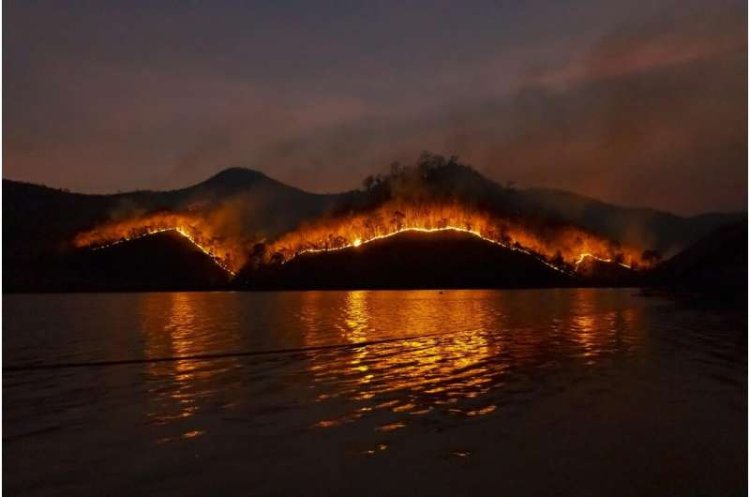
Wildfires can affect drinking water sources long after the flames are extinguished. Research examining wildfire impacts across several regions shows that water contamination can persist for months or even years after a fire, raising concerns for communities that depend on forested watersheds for clean drinking water.
The study reviewed multiple scientific investigations on wildfire impacts on water systems. Researchers analysed 23 studies covering 28 different watersheds to understand how fires change water quality before and after wildfire events. The findings indicate that fires often trigger long-lasting environmental changes that affect rivers, lakes, and reservoirs supplying drinking water.
How wildfires affect water sources
When forests burn, the vegetation that normally stabilises soil and absorbs rainfall is destroyed. Without this natural barrier, rainwater can wash ash, soil, and debris into nearby streams and reservoirs.
This process increases sediment levels and carries nutrients, metals, and organic matter into waterways. These substances can degrade water quality and create challenges for water treatment systems.
Heavy rainfall after fires often accelerates the problem. Burned landscapes are more vulnerable to erosion, which allows contaminated runoff to enter water sources. In some cases, these pollutants move slowly through watersheds, meaning water quality problems can appear long after the fire itself.
Types of contaminants found after fires
Researchers have identified several substances that increase in water bodies following wildfires. These include:
- Sediment from eroded soils
- Nutrients such as nitrogen and phosphorus
- Dissolved organic carbon from burned vegetation
- Heavy metals released from soil and ash
- Chemical residues from firefighting operations
High concentrations of sediment and organic material can make water treatment more difficult and increase operational costs for treatment plants. These materials can also interfere with filtration systems.
Nutrient runoff can stimulate algal blooms in reservoirs. Some algae produce toxins that can threaten aquatic ecosystems and drinking water safety.
Long-term consequences for water systems
Many cities rely on forested watersheds for their drinking water supply because forests naturally filter and regulate water flows. Wildfires disrupt these ecological functions by removing vegetation and altering soil structure.
As a result, water utilities may face long-term challenges managing water quality. Increased sediment and organic matter can overwhelm treatment systems, while repeated fires can further degrade watershed health.
Researchers emphasise that water quality impacts may continue for years after a fire because storms can repeatedly mobilise burned material and transport it into rivers and reservoirs.
Increasing wildfire activity
The issue is gaining attention as wildfire activity rises in many parts of the world. Warmer temperatures, prolonged droughts and changing weather patterns have contributed to longer and more intense fire seasons.
As fires become more frequent, the likelihood that watersheds will experience repeated disturbances also increases. This can amplify the risk to water supplies that depend on healthy forest ecosystems.
Need for long-term monitoring
The research highlights the need for long-term monitoring of drinking water sources following wildfires. Tracking water quality after storms and over extended periods can help identify delayed contamination events.
Scientists also note that some wildfire-related pollutants may not be routinely monitored in water testing programmes. Improved monitoring and watershed management may help reduce risks to drinking water systems in fire-prone regions.
A continuing environmental impact
Wildfires are often viewed as short-term disasters, but their environmental effects can persist long after the flames disappear. Changes to soil, vegetation, and watershed structure can alter water systems for years.
Protecting drinking water sources after fires requires attention not only during emergency response but also throughout the long recovery period that follows. As wildfire activity increases globally, managing these impacts is becoming an increasingly important part of water resource protection.
What's Your Reaction?