A Rutgers University-led study warns that extreme monsoon changes could significantly reduce marine productivity in the Bay of Bengal, threatening regional food security and fisheries. Historical analysis reveals that future climate-driven monsoon variability may disrupt ocean nutrient cycles critical for sustaining marine life.
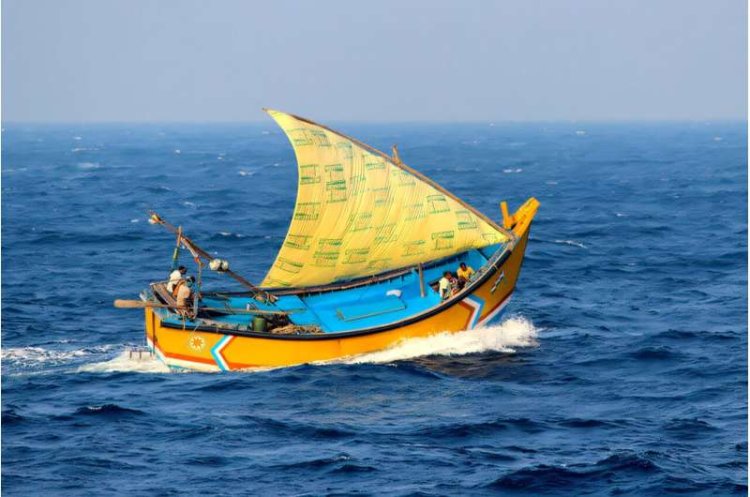
New research by Rutgers University scientists finds that hyper-varying Indian summer monsoons may have severely lowered the Bay of Bengal's marine productivity, which poses enormous risk to regional food security. The study, published in Nature Geoscience, examines how monsoon variability during the past 22,000 years influenced marine productivity with researchers from Rutgers, the University of Arizona, and India, China, and Europe colleagues. Covering less than 1% of the ocean surface worldwide, the Bay of Bengal produces nearly 8% of the world's fishery production, supporting high-density coastal belts that depend on sea resources for food and means of livelihood. The study explains that both excessively strong and weak monsoon in the past caused a 50% reduction in the surface food for sea creatures. These extreme climatic patterns disrupted ocean mixing, which kept necessary nutrients from reaching the upper layers where plankton and marine life develop.
The consequences are particularly worrisome because climate change models have predicted more variable and intense monsoons. These conditions will likely cause increased freshwater runoff into the Bay of Bengal, leading to stratification that blocks the flow of nutrients. Plankton decline would have a cascading impact along the food chain, ultimately on fish stocks and endangering food for millions. Researchers used fossil shells of foraminifera, small plankton that carry a record of environmental conditions, to reconstruct long-term monsoon rainfall variations, ocean temperature, and marine productivity. Sediments on board the research vessel JOIDES Resolution during the International Ocean Discovery Program provided key information that linked marine ecosystem responses to climatic change in the past. Two distinct intervals of collapses in productivity were established by the study: Heinrich Stadial 1 between 17,500 and 15,500 years ago after a cold climate event, and early Holocene between 10,500 and 9,500 years ago, marked by rapid warming and glacial melting.
In both cases, variations in monsoon intensity resulted in too much freshwater cap on top of the oceans or reduced wind-driven mixing, both of which inhibited transport of nutrients to surface water. When nutrient supply is low, plankton populations fall, leading to declines up and down the marine food web. The contrast of ancient records with modern climate forecasts shows sobering parallels, with forecasted futures of warmer surface oceans and stronger freshwater layers mirroring past ones with spectacular decreases in sea productivity. Scientists emphasize that without sufficient wind strength to override ocean stratification, future marine species in the Bay of Bengal may face similar or even more extreme declines.
The study emphasizes the way that learning about past monsoon and ocean interactions can improve prediction in the future and allow for sustainable planning of fisheries and coast resources. Maintaining the marine productivity is important not only for conservation in nature but also for economic sustainability and food security for one of the world's most populous and most vulnerable regions. This research highlights the complex dance between marine and monsoon processes, revealing the ways that anomalies in one system spill over to another.
In an era where global climatic trends trend toward intensifying patterns of weather on the planet, rendering crucial marine ecosystems like the Bay of Bengal as resilient as possible assumes an increasingly growing significance. Policy-makers, researchers, and coastal communities must work together to design adaptive strategies that protect marine food chains, maintain fisheries, and minimize the impact of ocean stratification caused by extreme monsoons. The Bay of Bengal as a premier global source of fishery production underscores the global significance of the research outcomes, extending the applicability of action beyond geographic boundaries. Ocean productivity protection under new climate conditions will require international collaboration founded on scientific research on the past, present, and future dynamics of ecosystems.
Source/Credits:Paraphrased and adapted from Rutgers University and Nature Geoscience (2025).
What's Your Reaction?