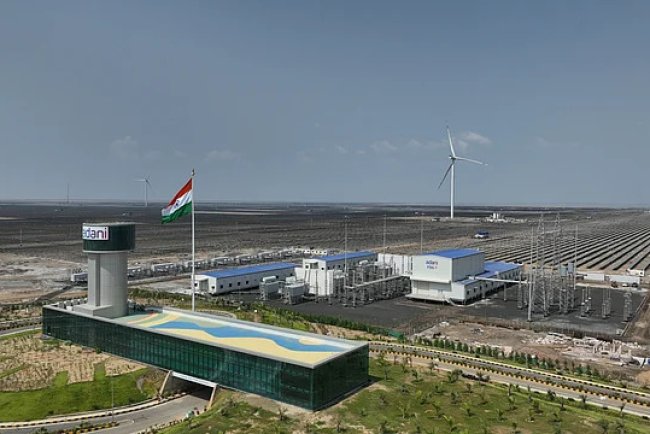
Global clean energy supplied 40% of electricity in 2024, led by China’s record solar expansion. Despite progress, the world remains off track to triple renewable capacity by 2030, risking climate goals. Major nations must accelerate efforts in deployment, policy support, and infrastructure upgrades.
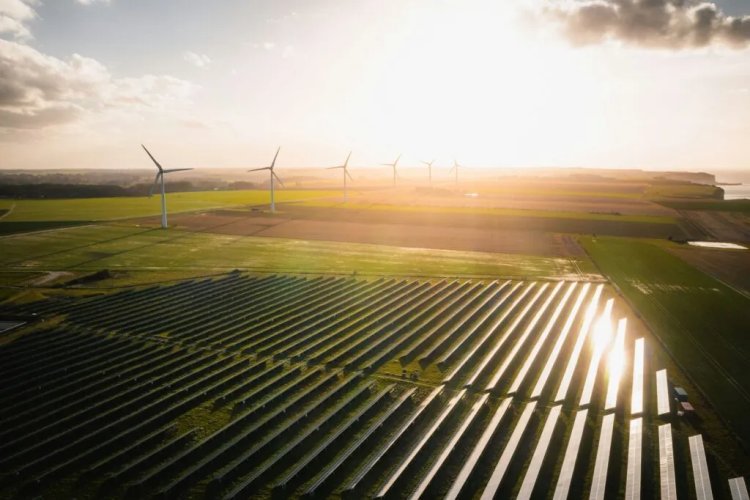
A significant step toward reducing global reliance on fossil fuels was taken in 2024 when clean energy sources account for 40% of world power production. With greater growth in one year than the United States has throughout its existence, China led the way. However, recent trends suggest the globe will fall short of the aim of tripling renewable energy capacity by 2030 despite this growth.
With 216 gigawatts of solar energy added in 2024, China raised its total capacity to almost 887 gigawatts. This expansion lowered solar costs and propelled record deployment of clean electricity all around. Still, other nations have lost ground. For instance, the United States added roughly 40 gigawatts, much lower than China. Policy reversals and weaker worldwide pledges have slowed its shift to clean energy. With Germany in front thanks to aggressive policy support, member states generated about 56 gigawatts in the European Union. India supplied 18 gigawatts, still problems with grid infrastructure and funding persisted. Brazil's significant position is maintained by its decades-long dependence on hydropower, which accounts for over 60% of its power supply.
Though the rate of renewable energy expansion varies from country to country, over 92% of new world electric capacity in 2024 came from renewables—a substantial shift. Nevertheless, this growth falls well short of the mandated path. The world would have to add roughly 1,000 gigawatts of clean energy annually if tripling renewable capacity by 2030 is to be reached globally. In 2024 just half the desired speed—about 500 gigawatts—were added.
Beyond being a climate issue, the shift to clean energy has both a public health and financial element. Electric from fossil fuels still accounts for around 60% of the composition of world energy. Important contributors to both air pollution and climate change are these fuels. According to the World Health Organization, related conditions cause roughly 4.2 million fatalities a year from pollution generated from combustion of fossil fuels. Reducing reliance on fossil fuels could significantly lower these health dangers.
Changing to renewable energy sources like as solar and wind also offers financial benefits. For both homes and businesses, long-run energy technology savings are becoming quite affordable. The clean energy sector also generates jobs. In the United States alone, the solar sector supports over 250,000 jobs. Employment growth in the manufacturing, installation, and maintenance sectors all around will follow the rising spending in renewable energy.
Despite these benefits, some countries still give fossil fuel companies subsidies and infrastructure for the adoption of renewable energy is lacking in many places. Permit delays, slow grid upgrades, and a lack of long-term policy commitments all impede faster growth. Under the present administration, environmental rollbacks and reduced participation in international climate activity also contribute to decelerating momentum in the United States. Though, California and New York are maintaining ambitious clean energy goals and funding solar and wind power to reach 100% clean electricity in the following few decades.
If the 2030 target is to be reached, nations must give grid expansion top priority, drastically increase annual renewable energy installations, and redirect fossil fuel subsidies toward renewable energy. Renewable energy's current global capacity is around 3,500 gigawatt. Achieving the 10,500 gigawatt target by 2030 calls for a consistent and rapid scale-up. Without more money, better policy frameworks, and global cooperation, the target will likely be missed.
In 2024, worldwide electrical consumption was approximately 29,000 terawatt-hours, with clean energy sources generating around 11,600 terawatt-hours. This advancement is a major one, yet it still trails far behind in emissions reduction. The global energy network impedes efforts to limit global temperature rise to below 1.5 degrees Celsius still very reliant on fossil fuels.
In essence, it is not enough to fulfill future objectives even if the increase to 40% clean electricity output is a positive one. To avoid the worst consequences of climate change, reduce public health hazards, and ensure sustainable economic growth, accelerating acceptance of clean energy is essential. Governments should give priority to policy changes, infrastructural development, and financial systems supporting renewable energy. Failure to meet major 2030 climate targets could follow from a lack of rapid action.
Source:
Original reporting by Junior Brown | Published 23 July 2025
Credits: Phys.org | Image via Unsplash
What's Your Reaction?