A study has found that animals influence landscapes by moving sediment, altering waterways and modifying habitats, highlighting their role in Earth's surface processes.
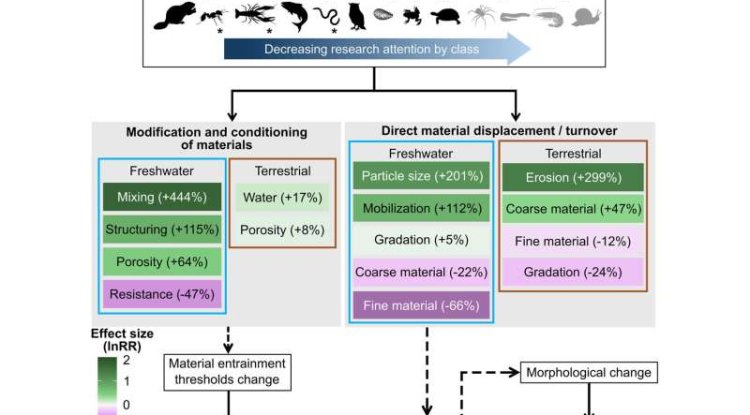
New studies have evaluated how different types of animals influence different types of landforms and habitats on planet earth, and how the role of animals in creating and changing the surface of the world is far more significant than once believed.
The studies revealed that many animal species are changing the surface of the earth in many ways through their activities (burrowing, digging, grazing, building structures, moving sediment). For example, the activities of animals affect how rivers flow, how soil is produced, how coastlines are formed, and how habitats are maintained or destroyed; therefore, animals are an extremely significant part of Earth's surface processes.
Researchers were then able to identify several different animals that impact how the landscape is modified, including beavers, ants, earthworms, fish, and seabirds, and all of these animals can change how water flows, how sediment and organic material are distributed throughout the landscape, and the rate of both soil erosion and soil formation. In some examples, the effects of the animals can last for entire river catchments or hold throughout an entire coastal marine area.
Overall, the movement of material by animals throughout the landscape has an influence on both the functions of ecosystems and the landforms themselves. Beaver dams are examples of how one type of animal can significantly change how a river flows and can also create wetlands. Burrowing animals are another example of how they can change the drainage and structure of soils. In addition, marine species that disturb or relocate the sediments on the seabed can greatly affect coastal processes and nutrient transport.
Researchers have found that there is less research about the role that animals play in changing the landscape than there is about how other natural forces (such as water, wind, ice, and tectonic activity) have played a role in changing landscapes.
Although most landscape change currently occurs because of natural forces, animal activity can still impact landform development and modification.
The findings of this research show that wild animals have an effect on landscape processes across a diverse array of environments, and that when looking at how landscapes have evolved, we should take into account the contributions made by other physical forces and animal contributions to landscape change.
In addition, their research looked at what the decline of wild animal populations will mean for landscape processes. For example, if you assume that the number of animals is directly related to the ability for those animals to help maintain ecological processes and physical processes, then the decline of animals that transport sediments, renaturize water bodies, or change soil would likely alter how landscapes function.
Recognizing the role of animals in the development of landforms will increase our understanding of ecosystem processes and the effects of environmental change. Consequently, future conservation and land management strategies should not only include diversity considerations; they should also consider how animals influence the physical landscape.
What's Your Reaction?