Animals Rival Natural Forces in Shaping Earth’s Landscapes
New research reveals that animals reshape Earth's landscapes on a massive scale, rivalling natural forces like floods. From termites to elephants, species worldwide move vast amounts of soil, impacting ecosystems and topography significantly.
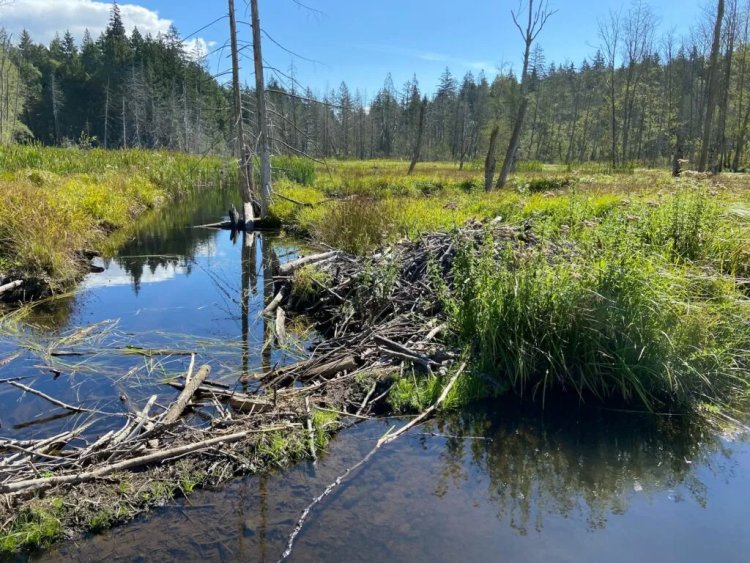
A new scientific study has found that animals around the world are reshaping Earth's surface to a magnitude comparable to natural forces like erosion and floods. Researchers have documented hundreds of species of animals that indeed change landscapes and soil through their ordinary day-to-day behavior and contribute significantly to global geological events.
The research was led by Professor Gemma Harvey at Queen Mary University of London, whose researchers examined animal interactions with land and freshwaters. By examining an incredible range of organisms with measurable earth-moving power, the researchers estimated the overall amount of global energy production consumed by animals for landscape alteration. The researchers estimate that wild animals alone consume around 76,000 gigajoules of energy each year for earth-moving—about the effect of more than half a million large floods.
One notable example from the study is that of the Brazilian termite Syntermes dirus, which built almost 90 million giant mounds in an area of eastern Brazil. The mounds cover an area roughly the size of Virginia, and the quantity of soil moved by these termites is the equivalent of the volume of almost 900 Egyptian pyramids. Other animals like hippos, beavers, salmon, and grizzly bears make significant contributions of their own by creating water channels, constructing dams, agitating riverbeds, and digging land, respectively.
It is not just the large or glaring movements of soil. Small ants, which number about 20 quadrillion worldwide, bring about change through constant burrowing and movement of earth. Through time, even they cause immense change to landscapes and ecosystems.
The research also compares the impact of domesticated animals to that of wild animals. Hoof mammals such as sheep, goats, and cows uproot earth 450 times more often than wild animals. The total annual energy production of domesticated animals is approximately 34.5 million gigajoules, highlighting their profound impact on contemporary landscapes.
Scientists took a conservative estimate that only 1% of the total energy of animals is spent displacing ground, and the true effect may be several times higher. The research challenges the conventional wisdom that physical and climatic processes are the major control of surface change, and places animal activity among the major geological processes.
The results of the study have wide-ranging implications, especially for environmental planning and conservation design. As certain of these burrowing animals are under threat from declining populations as a result of climate change, pollution, and habitat destruction, extinction may bring about significant ecological changes. Species such as tortoises that excavate early burrows to be occupied by other species or beavers that build wetland and pond ecosystems are crucial to ecosystem processes. Their loss might compromise elements that enhance biodiversity and soil and water health.
This loss of natural animal-mediated landscape manipulation may also impact erosion regimes and soils, particularly where such species had previously been in equilibrium. This is the reason why conservation of species ought not to be undertaken simply because they exist but also due to the ecosystem services that they deliver.
The research recommends that land managers and city planners factor in animal behavior during the planning and conservation of nature reserves. Facilitating earth-moving animals' habitats could ensure the natural landscape is preserved and encourages resistance against environmental decline.
With changing technology and increasing data being collected, future studies will be able to provide further light on how animals engage with their world and respond to shifting climates. Scientists anticipate being able to improve on current knowledge on the scale and manner of biological earth-shaping action in the coming years.
This new vision for the animal as landscape-building force contributes richly to our knowledge of natural systems. For many centuries, animals have been underestimated as a geologic force, but now, thanks to this book, they are recognized as full partners in shaping the planet—reshaping terrain, reshaping ecosystems, and keeping the natural balance of the world.
Source and Credit:
Original report by Elena Kryvoshei on 22 July 2025, courtesy of The Independent Observer. Image Credits: Pexels, Unsplash
What's Your Reaction?