AI Transforms Agriculture in India and Beyond
Artificial intelligence is transforming agriculture in India and California, offering climate-resilient solutions through precision farming, robotic weeders, and real-time data insights to boost productivity and sustainability.AI is revolutionising farming in India and California by improving weed control, enhancing crop yields, and supporting climate adaptation. From robotic weeders in the U.S. to soil analytics in India, this technology enables precision agriculture, reduces input costs, and promotes sustainability in the face of climate change.
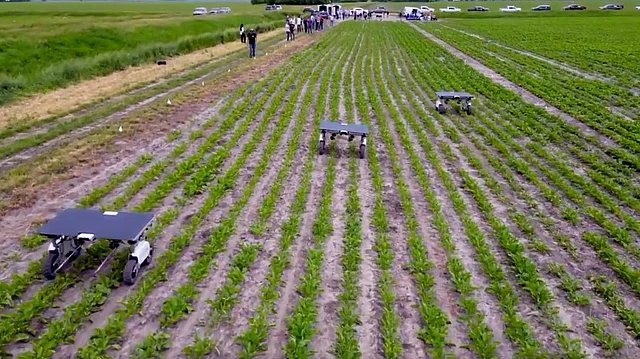
Artificial intelligence (AI) is revolutionising agriculture by addressing challenges like weed management and crop productivity, offering sustainable solutions for farmers in India and California. This technology is reshaping farming practices to meet the demands of a changing climate.
In California, AI-powered robotic weeders are reducing reliance on chemical herbicides, which contribute to environmental degradation. These robots use machine learning to identify and remove weeds with precision, cutting costs and improving soil health. In India, similar AI tools are being adopted to enhance precision farming. Startups are developing platforms that analyse soil data, predict crop yields, and optimise water use, critical for a country where 86% of farmers are smallholders facing climate-induced challenges like droughts and floods.
India’s agriculture sector, heavily reliant on monsoon rains, is under pressure from a 6% decline in summer monsoon rainfall since the 1950s, with central regions seeing a 10% drop. AI is helping farmers adapt by providing real-time data on weather patterns and soil conditions, enabling better decision-making. For example, AI models can forecast pest outbreaks or recommend crop diversification, supporting the government’s Dhan-Dhaanya Krishi Yojana, which aims to boost productivity in 100 low-performing districts.
The adoption of AI aligns with India’s push for regenerative agriculture, which focuses on soil restoration and emission reduction. Budget 2025 includes ₹1,000 crore for the Mission for Aatmanirbharta in Pulses, promoting sustainable crops like tur and masoor. AI supports these efforts by reducing input costs and enabling access to carbon credit markets, benefiting smallholder farmers. However, challenges like high upfront costs and limited access to training persist, requiring policy support to scale adoption.
Globally, AI’s role in agriculture is expanding, with California’s innovations serving as a model for India. Collaborative research and technology transfer could accelerate progress, but India must address data limitations to fully leverage AI. Investments in high-resolution weather and soil data are essential for accurate forecasting and farm-level solutions.
AI’s integration into agriculture offers a path to sustainable food security. By combining technology with policy initiatives, India can enhance farmer resilience and contribute to global efforts to combat climate change.
Source: Outlook Business
What's Your Reaction?