Australia has launched a A$2.3 billion initiative to increase household battery adoption by offering a 30% subsidy for systems connected to solar panels. The plan aims to stabilise power markets, store excess renewable energy, and support the country’s shift to 82% renewables by 2030.
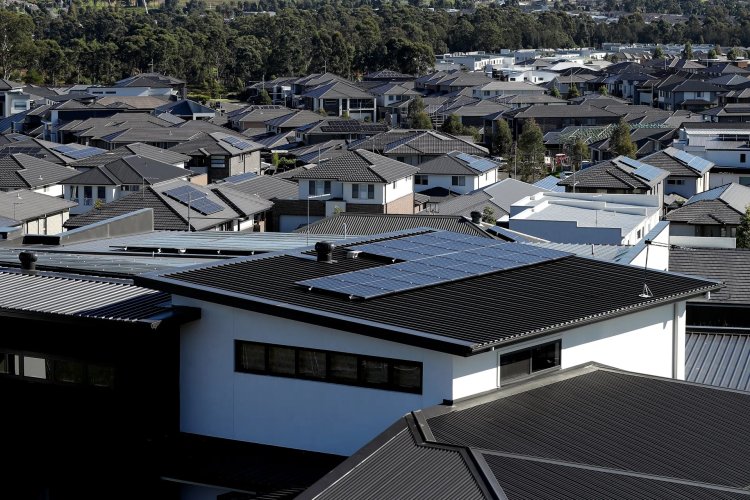
Australia has launched a A$2.3 billion initiative for greater residential battery uptake in an effort to better use renewable power and even out volatility on the power grid. The plan is to stimulate the take-up of roof solar power, which has already become extremely popular across Australia, with almost a third of households using solar panels by 2024. Storage has been lagging behind, with only one in 40 such households using battery systems.
To bridge this chasm, the scheme provides a subsidy that lowers the upfront expense of installing a household battery by about 30 per cent, as long as the battery system is combined with a solar panel. The subsidy will lower the cost of batteries for typical homeowners and will be expected to fuel quick growth in sales in the near term. The discount rate will be reassessed once a year and will steadily fall until the year 2030.
The federal government is trying to balance the national electricity grid by promoting storage of surplus renewable energy during peak production times, which are usually in the middle of the day when solar production peaks. Surplus supply is currently driving wholesale power prices into negatives, only to create sudden jolts in evening hours once solar production subsides. Such price volatility is becoming problematic for both retailers and consumers.
The move also supports Australia's government's broader strategy for energy transition, where it targets to achieve 82 per cent of renewable power generation by 2030 compared to around 40 per cent in 2024. More dependence on household batteries will also help to stabilize the daily power supply and demand and lessen dependence on fossil-based power generation like on old coal generators that still generate most of Australia's electricity.
Small-scale battery systems have lagged behind Australia's wide-ranging advancement of rooftop solar installations, mainly due to their expense of outright purchase and lack of government assistance. The new scheme will overcome both hurdles and allow homeowners to make the most of their solar system. By solar power captured during the day, houses are able to utilize it in the evening or sell it to the grid and hence enhance energy efficiency and economic gain.
There are already existing electricity providers with programs that provide customers with free electricity or even payment for consuming power in excess midday solar production. The step is intended to take up the excess energy produced, but since there are no storage facilities, most households cannot take advantage of the offer. Batteries would enable them to hold on to and utilize their power consumption better, hence avoiding wastage and optimizing return on investment.
Although the initiative is a good step for domestic energy users, it does not go far towards encouraging the larger industries with increasing challenges in making the transition to alternative power. Such industries still rely on coal and look for cheap means of addressing their power needs with increasing power supply shortages and price volatility.
Australia's ageing coal-fired power stations experience high rates of failure, leading to unexpected deficiencies of electricity supplies. Having this in mind, the government faces strong pressure to implement a dramatic turn towards renewable energy, such as an investment in wind and grid-scale storage technologies. While this home battery subsidy targets household uptake, it will not by itself work towards industrial resilience or grid stability at the level of large industry.
However, the declining technology cost of battery, down 86 per cent since 2013, is consistent with the government target of mass deployment of batteries into homes. Demand for home energy storage units will be stimulated by the subsidy policy, which will be to the benefit of energy firms already established in the Australian market and battery manufacturers. Players such as Tesla, who already have strong positions in the home battery market with offerings such as the Powerwall, will be the beneficiaries of an increase in sales as home consumers move to secure the incentives before they start phasing them out.
The program also helps in closing gaps towards cleaning and efficienting Australia's energy supply. Australia has high potential for generating renewable energy from solar and wind resources. Nevertheless, to ensure the maximum utilization of the potential and decrease reliance on non-renewable energy sources, quality storage solutions are crucial.
In essence, the A$2.3 billion investment represents a strategic initiative by the Australian government to stimulate local energy storage, facilitate the adoption of renewable power, and reduce the strain on the national grid. Consumers are to be paid to save energy while stabilizing the wider electricity market as Australia transitions towards its 2030 clean energy goals.
Source: Bloomberg
Credits: Bloomberg, Published July 1, 2025
What's Your Reaction?