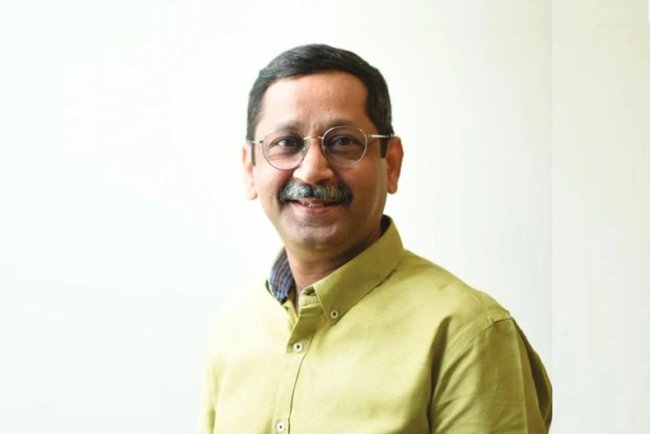
Jadhav, Head of Operations for GMS R&B AMEA and India at Engie, speaks about the evolving role of robotic cleaning and AI, the practical challenges of operating in harsh Indian environments
In the rapidly expanding solar sector, Operations and Maintenance (O&M) has become one of the most competitive and critical battlegrounds. As portfolios grow larger and performance expectations rise, the difference between good and exceptional O&M is now showing up clearly in generation numbers and long-term asset health.
In an interview with ResponsibleUs, Sandeep Jadhav, Head of Operations for GMS R&B AMEA and India at Engie, spoke about the evolving role of robotic cleaning and AI, the practical challenges of operating in harsh Indian environments, and how the industry should think about balancing technology with on-ground execution.
The solar O&M space is getting crowded. What is one thing you do that others simply can’t match on the ground?
Engie’s differentiation lies in combining global operating standards with strong local execution capability. For us, solar O&M is not limited to routine maintenance or reactive issue resolution. It is about protecting long-term asset performance across the full lifecycle of a project. We do this through standardised operating practices, strong safety governance, centralised performance monitoring, and predictive maintenance.
Our Fleet Performance Diagnostic Centre enables portfolio-level visibility, helping teams identify performance deviations early and respond before they impact generation. On the ground, this is supported by skilled field teams, safety-led execution, and technologies such as AI ML based tools to predict failures. The result is an O&M approach focused on consistency, reliability, and long-term performance rather than short-term upkeep.
Many module makers now claim their panels need less cleaning. Is the problem being overstated by solution providers?
The industry is evolving, and improvements in module technology, including anti-soiling coatings, are helping reduce dust accumulation. That is a positive step for overall system efficiency. However, in India, environmental conditions remain highly site-specific. Dust levels, agricultural activity, wind patterns, and seasonal changes can still have a measurable impact on generation if not managed properly. While cleaning frequency may reduce in some locations, cleaning cannot be viewed through a one-size-fits-all lens.
We have deployed robotic cleaning at solar sites to maintain panel performance while reducing water dependence. This reflects our broader O&M approach: use the right technology and the cleaning frequency for the right site conditions, rather than treating cleaning as a standard routine activity.
The question is not whether cleaning is overstated. It is how O&M practices evolve with better module technology, local site realities, and the need to protect generation over the full asset lifecycle.
Robotic cleaning sounds efficient, but what happens when systems fail in remote plants? Is manual backup still unavoidable?
Robotic cleaning improves consistency and reduces manual interventions at sites. But automation does not mean the absence of maintenance. Like any equipment deployed in harsh outdoor conditions, robotic systems need periodic checks, upkeep, and timely troubleshooting to ensure they continue performing as intended. In remote plants, the focus is on planning for technology reliability and operational continuity from the start. The value of robotic cleaning lies in making O&M more efficient, safer, and less resource-intensive over the asset lifecycle.
Your tech reduces water use, but what about energy use and maintenance of the robots themselves? Does that offset some of the gains?
Robotic cleaning should be assessed on its full operational value, not only on water savings. The robots do require energy and periodic maintenance, as any equipment does. But their role is to make cleaning more consistent, less water-intensive, and better suited to remote or water-scarce solar sites. The energy requirement is relatively small compared with the generation value that can be protected when soiling is managed effectively.
The real balance is lifecycle performance. If robotic cleaning helps maintain output, reduce water dependence, improve safety, and support predictable O&M, then the operational gains can outweigh the additional maintenance requirements. The focus should be on deploying the technology where site conditions make that trade-off meaningful.
AI-driven cleaning sounds good in theory. In reality, how often do plant operators actually rely on these insights to make decisions?
AI-driven insights are useful only when they support practical O&M decisions on the ground. In solar operations, the value is not in replacing operator judgement, but in giving teams better visibility into soiling patterns, weather conditions, and performance variation. Plant operators still need to apply site-level experience, because every location behaves differently. What digital tools can do is help teams move away from fixed assumptions and make more informed decisions on when intervention is needed, where performance is being affected, and how to prioritise resources. At ENGIE, we see digital intelligence as a decision-support layer within broader O&M discipline. The outcome we look for is simple: cleaner data, faster visibility, and better-informed action to protect long-term asset performance.
What is the payback period for a typical plant using your system? And are developers seeing real returns or just operational comfort?
Payback varies by asset type, site conditions, and the specific solution being deployed, so it is not defined by a single benchmark. At ENGIE, the focus is on delivering the right combination of solutions across the asset lifecycle — from renewable generation and storage to digital monitoring, energy management, and O&M practices. The objective is to ensure that assets perform reliably, efficiently, and in line with long-term operational expectations. The value for developers is therefore not limited to short-term payback. It lies in consistent performance, operational discipline, and reduced variability over time, which are critical to maintaining asset quality and long-term returns. ENGIE’s approach is to bring together global expertise, technology, and on-ground execution to support outcomes that are sustainable over the full life of the asset.
India has harsh conditions, dust storms, heat, and uneven terrain. How often do your systems need repair or replacement?
Our systems are built specifically for India’s harsh operating conditions, so durability is engineered in rather than tested after deployment. Our systems are selected and deployed based on site realities such as dust intensity, heat exposure, terrain, accessibility, and operating conditions. The focus is on preventive upkeep, periodic checks, and strong O&M discipline so equipment continues to perform reliably over time. In any extreme environment, durability depends less on the technology alone and more on how well it is integrated into the overall maintenance regime. Our approach is to use fit-for-purpose solutions, backed by monitoring, field expertise, and lifecycle asset management
How do you handle resistance from workers who depend on manual cleaning jobs? Is automation creating a new problem here?
Automation in solar O&M is primarily driven by site requirements — particularly in large, remote, or water-scarce locations where manual cleaning can be difficult, resource-intensive, and sometimes unsafe. In those contexts, technologies such as robotic cleaning help improve consistency and reduce operational strain.
At the same time, the transition does change how work is structured. The need for manual, repetitive tasks may reduce in some areas, while demand increases for roles in operations, monitoring, maintenance, and site management. The focus, therefore, is on how the workforce evolves alongside the technology. At ENGIE, the approach is to align technology adoption with workforce capability, ensuring that operations continue to be supported by skill.
As you expand globally, what has been harder than expected, technology adaptation or local regulations?
For a global energy company like ENGIE, every market brings its own learning curve, and that is a strength of the business. Technology and regulation both push us to build better, more resilient solutions. Technology must be shaped around local realities such as climate, terrain, grid conditions, and customer needs. Regulation provides the clarity and direction needed to develop projects responsibly and in line with national priorities. Engie’s advantage is its ability to bring global experience into local contexts. That combination helps us design solutions that are practical, compliant, and built for long-term performance in each market.
What's Your Reaction?