Despite protests, Bawana waste-to-energy plant gets green nod; locals fear pollution and health risks may rise.
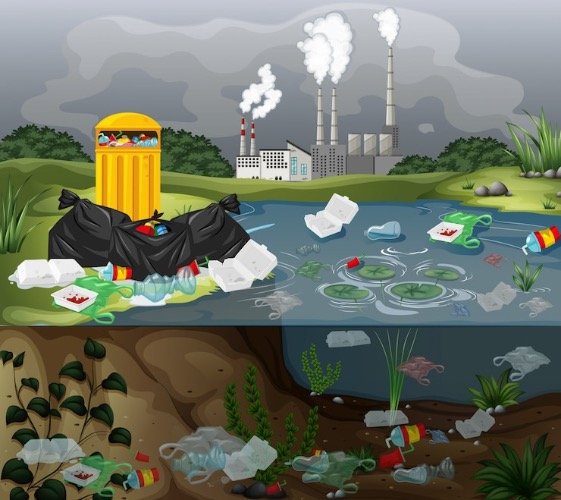
A 30-megawatt waste-to-energy (WTE) plant proposed in northwest Delhi’s Bawana Industrial Area has received environmental clearance from the Union Ministry of Environment, Forest and Climate Change, despite ongoing protests from local residents and growing concerns over pollution and public health. Delhi Pollution Control Committee (DPCC) verified that the clearance was granted on June 18, even as the nearby neighborhoods, especially the residents of the JJ colonies and villages within a 5-km radius, keep complaining.
The plant, spread over 15 acres of land of which six acres has already been defined as a green belt—is planned to burn 3,000 tonnes of municipal solid waste per day to produce power. The plant is set up in the Delhi State Industrial and Infrastructure Development Corporation (DSIIDC) Industrial Area and will be operated by Jindal Urban Waste Management (Bawana) Limited. The site for the project has been leased out by the Municipal Corporation of Delhi.
As per the formal report which provided environmental clearance, the project expenditure has been put at ₹660 crore. ₹91.605 crore will be spent on activities involved in conservation of the environment, and ₹14.155 crore will be kept aside as the recurring annual expenditure involved in such activities. With the commissioning of the plant, the ability to provide employment to 242 people will be generated.
The plant would be supplied with waste from around 12 km away, shipped via road. For the operations, the plant would use around 6.25 lakh litres of treated sewage water and 7,000 litres of fresh water on a daily basis. It has been clarified through officials that it would not be reliant upon groundwater resources. But the greens and locals are not that confident, particularly about the plant being located close to vulnerable water bodies—a natural nullah runs through there, and the Western Yamuna Canal is a mere 32 metres from the boundary of the plant.
For the sake of evading apprehensions of contamination, safeguards such as dumping garbage in a closed pit and special provision for safe handling of fly ash and fuel oil are included in the project plan. But for most of the dwellers of JJ colonies up to 1 km and villages such as Naya Bans, Holambi Khurd, and Sanoth up to 5 km, all such assurances are not good enough.
Air pollution is one of the biggest concerns of the anti-project side. A PM2.5 survey in the region from March to May 2023 showed 46 to 228 micrograms per cubic metre—not even half the national permissible limit of 40 micrograms per year and 60 micrograms per day. "Residents, particularly those around the industrial area, are already tired of pollution," the grant letter was quoted as stating, referring to concerns raised during a public hearing in December 2024. As a response, government officials promised to put ambient air quality monitoring systems at the plant facility to monitor emission and pollution levels.
Follows the ecological issues and then the biodiversity of the place. It has 61 plant and 56 animal species in which three are Schedule I species of the Wildlife Protection Act—the Indian peacock, the small Asian mongoose, and the Shikra bird. There has been a proposal for a wildlife conservation plan submitted to the divisional forest officer for sanction and ₹54 lakh for implementation.
Environmental clearance report also conveys the requirement of robust health care infrastructure in the Bawana area. The suggested measures include developing the primary health care and disease surveillance, i.e., early diagnosis and treatment of communicable and non-communicable diseases. There will be separate funding of ₹55 lakh for medical camps and outreach activities in the Bawana and peripheral villages for 2025-2030.
Even with such precautions outlined and these outreach efforts among local residents, the opposition to the project is intense. At the December public hearing, for example, at which DPCC and district administration officials were present, some villagers complained of persisting health issues, such as kidney and lung problems, they linked to pollution from a current dump site in the village. Residents also cautioned that increased trash burning would only worsen these conditions, comparing directly to the much-despised Okhla WTE plant in South Delhi.
The case has been referred to the courts now. A band 4 km of residents around Sanoth village have moved the Supreme Court. They requested an environmental and health impact assessment report of the project. The court, in response, has sought a detailed report from the Central Pollution Control Board. That still hasn't been done, keeping the fate of the project in suspense.
Meanwhile, the DPCC reported receiving more than 680 public responses on the matter, indicating the scale of public anxiety and interest. While the government and private stakeholders emphasize the role of WTE plants in managing Delhi’s mounting waste crisis, the case of Bawana underscores the ongoing tension between development goals and public health, especially in pollution-burdened urban areas.
With the official sanction now in place, everyone's eyes will still be glued to the Supreme Court's forthcoming judgment and the CPCB report—both of which have the potential to transform the fate of the Bawana waste-to-energy plant.
What's Your Reaction?