Bugatti Tourbillon’s 1,800 HP V16 Hybrid Redefines Hypercar Performance
Bugatti’s Tourbillon hypercar, with a 1,800 HP V16 hybrid, offers unmatched performance and 37 miles of electric range, setting a new hypercar standard.Bugatti Tourbillon’s 1,800 HP V16 hybrid hypercar delivers 276 mph top speed and 37-mile electric range, redefining performance and sustainability.
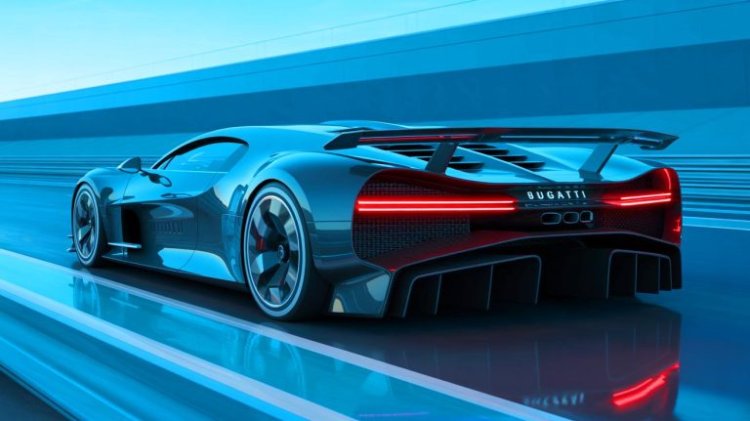
Limited to 250 units, it sets a new benchmark for performance and sustainability in the hypercar segment.
The Bugatti Tourbillon, successor to the Chiron, marks a shift from the quad-turbo W16 engine to a naturally aspirated 8.3-liter V16, developed with Cosworth. The engine, with a cross-plane crankshaft and 90-degree bank angle, produces 1,000 horsepower and 664 lb-ft of torque, revving to 9,000 rpm. Weighing 252 kg, it uses titanium connecting rods and a carbon fiber inlet plenum for efficiency. Three electric motors—two on the front axle and one on the rear—add 800 horsepower, powered by a 24.8 kWh battery, yielding a total output of 1,800 horsepower.
The hybrid system, developed with Rimac, enables all-wheel drive with torque vectoring and an electric-only range of over 37 miles. An eight-speed dual-clutch transmission delivers power, achieving 0-62 mph in 2 seconds, 0-124 mph in under 5 seconds, 0-186 mph in under 10 seconds, and 0-248 mph in under 25 seconds. With a Speed Key, the top speed reaches 276 mph. The powertrain unit, including the engine, transmission, and rear motor, is lighter than the Chiron’s, enhancing agility.
The Tourbillon’s design evolves from the Chiron, retaining Bugatti’s horseshoe grille, C-shaped side lines, and central spine. A carbon-fiber monocoque integrates the battery and air ducts, optimizing strength. Aerodynamic improvements, driven by computational fluid dynamics, include a diffuser that reduces reliance on a pop-up wing, achieving a lower drag coefficient. Butterfly doors and a lower profile enhance ergonomics and aesthetics. The interior, inspired by watchmaking, features analog gauges with over 600 parts, including titanium and gemstones, crafted by Swiss watchmakers. A retractable touchscreen supports Apple CarPlay.
In validation prototype testing since June 2024, the Tourbillon is 90-95% complete, with production starting in 2026. Its hybrid system aligns with sustainability trends, reducing emissions compared to the Chiron’s W16, though fuel consumption data awaits certification. The vehicle’s 3D-printed suspension parts and lightweight construction reflect advanced engineering, balancing performance with efficiency. Bugatti’s collaboration with Rimac, a leader in electric hypercars, underscores a strategic shift toward electrification while preserving the brand’s combustion engine legacy.
India’s luxury car market, growing at 8% annually, could see demand for the Tourbillon among elite collectors, despite its $4.1 million price. The hybrid powertrain supports India’s push for cleaner mobility, though infrastructure for plug-in hybrids remains limited. Globally, the Tourbillon competes with electric hypercars like the Mercedes-AMG’s 2,000 HP coupe, highlighting a trend toward high-performance electrification. Challenges include high production costs and the niche market for hypercars, with only 250 units planned.
Conclusion
The Bugatti Tourbillon’s 1,800 HP V16 hybrid powertrain redefines hypercar performance, blending raw power with sustainable innovation. Its advanced engineering and limited production position it as a collector’s masterpiece, with potential to influence India’s luxury market and global electrification trends.
Source: Sustainability Times
What's Your Reaction?