MoEFCC and NBA roll out a five-year programme to integrate biodiversity into local planning and financing across key ecological regions.
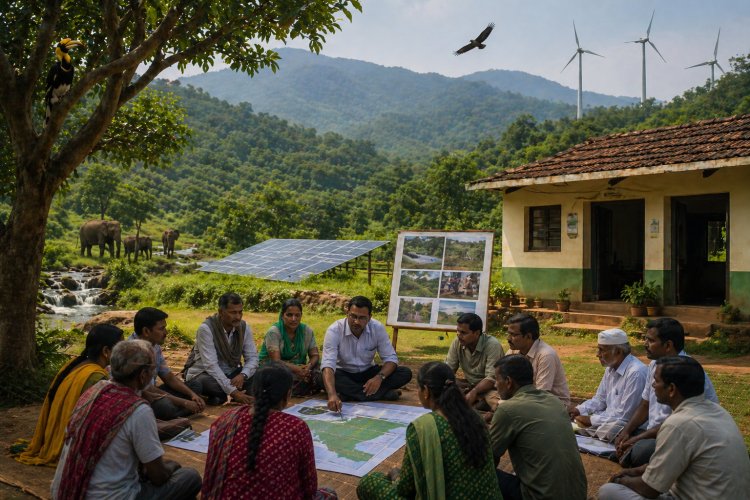
As part of their efforts to enhance governance of biodiversity on the local front, both the Union Ministry of Environment, Forest and Climate Change (MoEFCC) and the National Biodiversity Authority (NBA) have launched an ambitious five-year initiative entitled “Strengthening Institutional Capacities for Securing Biodiversity Conservation Commitments.” The program will be executed in collaboration with the Global Environment Facility (GEF) and the UN Development Program (UNDP). It has been allocated a budget of USD 4.88 million.
Another key consideration that affects the company’s strategy of growth is the rate of development of transmission infrastructure. As renewable power production expands, efficient transmission and absorption of the produced energy has become one of the key obstacles that must be considered in terms of investments in this sector.
A delay in the development of the required infrastructure could affect the schedule of the projects and their profitability. This is why it becomes necessary to concentrate on execution rather than speed.
One of the main objectives is to mainstream biodiversity concerns within local development planning processes. This will be done by reinforcing the role of PRIs and BMCs, as well as fostering coordination among various stakeholders like forest departments, local bodies, etc.
Another objective of this project will be looking into various financial instruments for supporting conservation activities. These will include Access and Benefit Sharing (ABS), CSR financing and even small green enterprises that may offer some kind of livelihood linked to conservation.
Another component focuses on documenting practices and building institutional capacity so that experiences from the selected regions can be applied in other parts of the country. There is also an emphasis on improving participation from women, Scheduled Castes and tribal communities in both governance and livelihood-related activities.
The implementation plan takes a decentralised strategy, with local agencies at the forefront of its design and implementation. The program has been designed to conform to larger national and international initiatives, such as India’s National Biodiversity Strategy and Action Plan (NBSAP) for 2024-2030, national climate targets through the Paris Agreement, and the global 30x30 initiative.
What's Your Reaction?