The UK Climate Change Committee has urged faster electrification and clean energy adoption, highlighting the need to reduce household energy costs and strengthen climate action.
The transition towards a zero-emission society is often discussed in the abstract using climate indicators, long-term deadlines and global agreements. But a major assessment by the United Kingdom's foremost climate advisory group has clearly shifted the focus back to the everyday economic impact on households. A noticeable slowdown in the adoption of clean energy technologies is costing working families and contributing to higher energy bills, according to an extensive annual assessment by the country's independent watchdog, the Climate Change Committee. For the government, the expert panel is calling for an “aggressive and urgent” response, according to reports, and states that the most effective way to protect the public from the ups and downs of global markets is to increase the pace of electrification across the country.
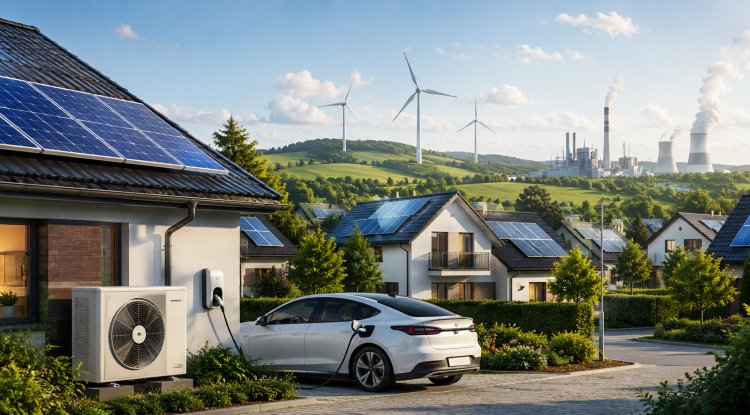
The need for such emergency action can hardly be more pressing for millions of households in Britain. The world has been hit by multiple and substantial energy commodity shocks following geopolitical turmoil linked to the Iran conflict, with the pricing of fossil fuel-based energy commodities hitting the public very hard during periods of sharp increases. The reality on the ground is illustrated by the committee's new data, which shows that total energy expenses for households using conventional petrol cars and gas boilers have increased at nearly four times the rate of households that have made the switch to EVs and heat pumps. By contrast, a modern household with a dynamic time-of-use tariff, an active EV charging plan and a residential solar PV installation and an electric heat pump could save a whopping £1,200 per year – and up to £1,900 annually on heavily exposed rural sites.
The independent watchdog points to the fact that the shift to date is still hindered by an uneven, highly fragmented implementation process across the various sectors of the economy, even though the financial benefits are significant and obvious. On the other hand, the UK has made significant progress; total GHGs have fallen by 1.8 per cent in the last calendar year and the UK is comfortably on track to meet its mid-term carbon budget commitments four and five. The trend of EVs in passenger vehicles is continuing to show strong gains as well, with almost one in four new car sales across the country now being clean, battery electric vehicles. In addition, the government has recently secured a historic amount of new renewable energy resources via competitive government auctions, and important land restoration efforts such as peatland recovery saw a 26 per cent increase.
But the watchdog cautions that this good trend is being seriously undermined by an alarming lack of electrification of domestic and industrial buildings. Efficient electric heat pump installations in older, existing homes increased by a paltry seven per cent over the past year when compared with the previous year's 56 per cent. At the same time, the overall proportion of clean electricity used in heavy industrial production declined marginally. Nigel Topping, chair of the Climate Change Committee, told reporters that the pace of the shift to clean power just isn't fast enough, and that the government's promised unconditional backing to reduce the costs of early adoption is critical for protecting the national economy from volatile fossil fuels while returning money to the pockets of families.
The committee has shared a number of very specific recommendations for action by parliament to fill this operational shortfall and reach the country's remaining target of 42 per cent emissions reduction by 2030, which is needed to meet international climate targets with certainty. A top priority of these structural changes is the need to completely revise the existing tax system for domestic electricity use and eliminate any policy costs and legacy green taxes from electricity prices, thus reducing the cost of clean electricity permanently and making it more competitive than fossil fuel alternatives. The panel is also urging significant growth in the availability of low-cost public charging stations to eliminate obstacles to EV adoption and provide fiscal support for low-income households to switch from gas boilers.
Importantly, the business community and industrial groupings such as the influential Confederation of British Industry support the watchdog's recommendations and have emphasised the need for political stability to enable the creation of the massive amounts of private funding needed to establish a new and improved grid. The government can provide the long-term certainty that domestic enterprises so desperately need by streamlining the permitting process for electricity transmission and by speeding up connections to the grid for commercial electricity generation. Finally, the committee's report is unequivocally clear that the clean energy transition is not just an environmental goal; it is an imperative economic and financial priority that will determine the financial well-being of households in Britain in the future.
What's Your Reaction?