A coalition of US states has challenged California’s plastic waste reduction law, arguing it oversteps state authority while environmental groups support its efforts to curb plastic pollution.
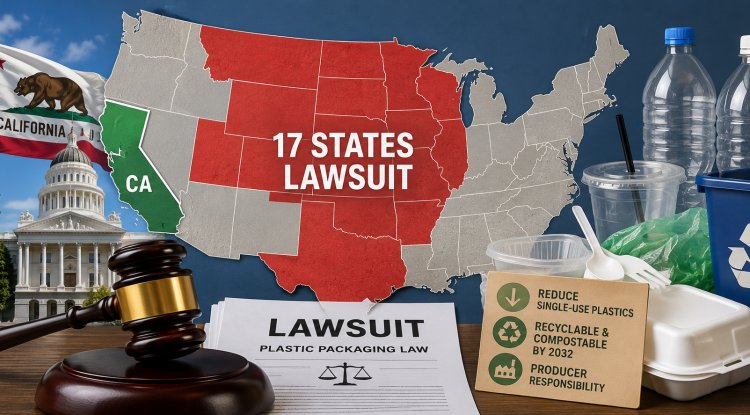
California Plastic Waste Law Faces Multi-State Legal Challenge Over Commerce Authority

The ongoing debate over the extent of state power and the regulation of national commerce has become a major constitutional issue. A group of 13 states is challenging California's new environmental policies in an unprecedented legal attack on the state's rules to reduce plastic waste. According to Reuters, 17 states -- all represented by Republican attorneys general -and the National Association of Wholesaler-Distributors are suing in a Sacramento federal court. The lawsuit alleges that California is trying to set an example for the rest of the nation on commercial norms by compelling out-of-state manufacturers to revamp the packaging and shipping of common consumer goods.

The bill at the heart of the controversy is the Plastic Pollution Prevention and Packaging Producer Responsibility Act, which was enacted after Democratic Governor Gavin Newsom signed it into law in 2022. The law, which officially goes into effect on May 1, 2026, introduces requirements for any company that wants to operate in California's large consumer market. The key requirements of the bill include:

  • Gradually reduce single-use plastic packaging and food-service items by 25 per cent.
  • By 2032, all remaining single-use packaging provided in the state must be fully recyclable and/or compostable.
  • Take financial responsibility for the life cycle of their packaging waste to support a major shift in the recycling infrastructure, supervised by the state.

The plaintiffs, led by Nebraska Attorney General Mike Hilgers, argue that it is an unconstitutional overreach, while environmental organizations have praised the framework as an important step to curbing plastic pollution. The lawsuit specifically states that the law infringes on the U.S. Constitution's Commerce Clause, which gives the federal government—not states—the authority to regulate trade between states. California, the world's fifth-largest economy, has internal requirements that effectively act as national requirements, as otherwise it would result in a logistical nightmare for a manufacturer with U.S. consumers in the Midwest.

The coalition is also raising the alarm on the financial impacts on day-to-day life, which goes beyond the constitutional debates on state sovereignty. If companies have to implement these strict design modifications, they could incur hundreds of millions of dollars to redesign automated manufacturing lines, buy more expensive bio-compostable options and adjust shipping networks across the globe, the plaintiffs warn. Industry groups say these corporate expenses will ultimately be passed along to the grocery store checkout line, increasing the cost of essentials such as food, baby products and feminine hygiene products. Higher costs could particularly affect working families, especially those at the bottom of the economic ladder, if California's requirements are not met, Nebraska Attorney General explained.

The suit also attacks the special administrative enforcement system created by the California legislature. The state gives the unelected private nonprofit producer responsibility organisation, the Circular Action Alliance, the power to enforce compliance rules to manage this major regulatory change. The legal challenge claims that out-of-state companies are being compelled into this private collective by effectively having to pay “vast fees,” or, as critics put it, “an annual tribute” to be able to continue to sell their products in California. The nonprofit coalition and California's main recycling agency, CalRecycle, are both designated as primary defendants in the case.

The court battle reflects a far more significant, ongoing dispute in the American economy. Federal environmental laws have faced challenges in a divided Congress, and states are beginning to pursue their own regulatory approaches to enact their own, more aggressive, localized market reforms. As illustrated by the current multi-state suit, however, it can make for a lot of conflict when such powerful economic muscle is applied in one state to alter national manufacturing practices, especially when other states are pursuing different economic and regulatory strategies. The federal court's decision will have a lasting impact on state authority to regulate the flow of plastics, as the ruling will balance the environmental need to eliminate plastics with the protections afforded by the U.S. Constitution's clause guaranteeing free-flowing interstate commerce.

Share: