India is converting imported coal-based power plants to use domestic coal, aiming to reduce fuel import dependence and strengthen energy security.
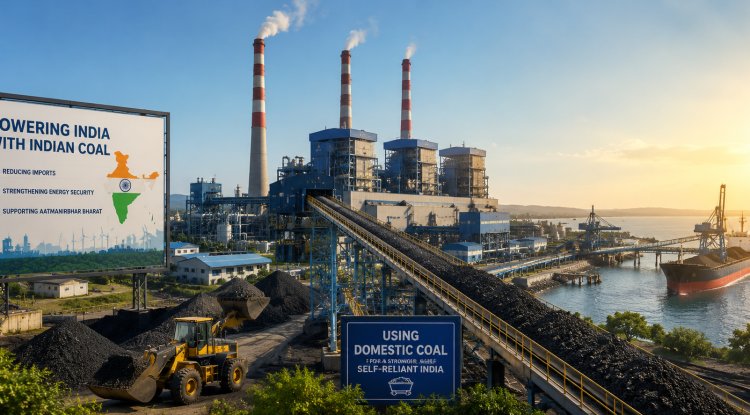
Major industrial economies are facing the need to radically shift the way they manage their domestic resources, balance their budgets and secure their electricity grids against external economic shocks as the global energy transition accelerates. In a significant operational move that is a step towards reducing dependence on imported coal for India, South Asia's largest economy, the country is now getting involved in a major push to use domestic coal in power plants that were earlier dependent on imported coal. Government and industry sources said that more than half of the operational capacity of these specialised coastal facilities has been converted to use locally sourced fuel supplies. The change reflects efforts to reduce exposure to seaborne commodity price volatility.
Historically, India's efforts to reduce thermal coal imports had faced significant constraints due to an intrinsic imbalance in industrial infrastructure. The country's imported coal-fired power plants, with a total capacity of 18.7 gigawatts, were designed to burn high-quality, low-ash coal usually imported from abroad such as Indonesia, South Africa, and Russia. The operators tried to burn lower-quality domestic coal in these systems, but the system was not able to handle the significantly higher ash content, resulting in inefficiencies and technical strain. But the high prices of overseas shipping and a national requirement to cut import bills have led to a gradual adaptation of the generation units by plant operators in the country. Now utilities are successfully using a mix of fuels, using up to 70 per cent local coal.
The transition is already underway, as seen in shipping and generation statistics. India has been able to switch on a total of 5.7 gigawatts of capacity from domestic coal in these import-dependent stations so far this year, and technical trials are now underway to ramp up the local fuel switch to add an additional 4.3 gigawatts of capacity. This has led to a decline in seaborne imports from primary suppliers as a direct consequence of this domestic substitution. Indian imports from Indonesia witnessed a decline of 21 per cent year-on-year across the first four months of the year, while imports from South Africa dropped by 68 per cent over the same period, industry experts tracking data noted. In all, total thermal coal imports to the nation fell to the lowest level since 2016–17, at 65 million metric tons during January to May.
The significant contribution of India's renewable energy growth is what makes this resource realignment notable. In the normal course of economic growth, with an annual increase of 10 per cent in coal-fired power generation as India recorded this past May to satisfy peak electricity demand, a nation would be compelled to seek additional foreign fuel sources to make up the difference. Rather, a huge surge in domestic renewable electricity has served as an important pressure valve for the country's energy system. The grid has been able to free up a significant amount of domestic coal, as it can produce higher volumes of clean solar and wind energy during the daytime. This new capacity is readily available and can be immediately directed away from central inland utilities and towards coastal plants that were earlier dependent on foreign coal supplies.
In order to prevent this infrastructure transformation from coming to a halt because of logistical hindrances, the central government has provided strong administrative support. The Ministry of Coal has implemented a "doorstep supply" arrangement specifically for imported-coal plants, ensuring that a precise quality and quantity of local fuel is supplied to maintain smooth plant operations without interruption. These power plants have already reserved 16 million metric tons of domestic coal for their operational needs. The move is aimed at improving energy resilience through technical engineering and supply-chain coordination, reducing dependence on imported fuel while strengthening domestic capabilities.
What's Your Reaction?