COP 30 in Brazil Poised to Shape Global Climate Action
COP 30 in Belém, Brazil, will bring world leaders together to negotiate stronger climate commitments, assess the first Global Stocktake, finalise carbon market rules, and increase adaptation funding. The summit coincides with the 10th anniversary of the Paris Agreement and will highlight the Amazon’s role in global climate stability.
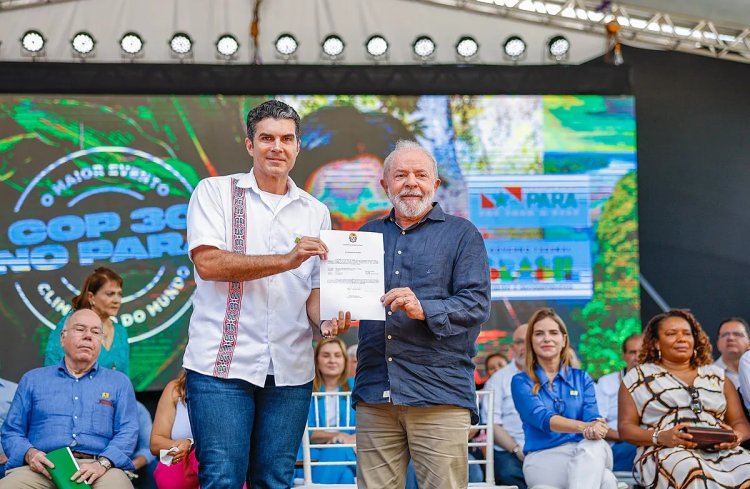
From 10 to 21 November 2025 in Belm, Brazil, COP 30—the 30th United Nations Climate Change Conference—will take place. Coming at a crucial moment in the world climate agenda, this meeting marks the tenth anniversary of the Paris Agreement. With the globe keenly observing to see if more coordinated and more powerful response on climate change will result, the conference is projected to gather leaders, negotiators, scientists, and activists from practically every nation.
Reducing greenhouse gas emissions, developing strategies for adapting to worsening climate effects, and completing regulations for worldwide carbon markets will be the three main priorities for delegates. The effects of these discussions are enormous. For decades, choices taken in Belm may affect international cooperation, economic planning, and climate policy as well as legislation. This year's conference is particularly important since it will officially examine the first Global Stocktake, a tool created under the Paris Agreement to track group progress toward the objective of keeping world temperature increase below 1.5C. The results of the Stocktakes are shocking; current activities and commitments are inadequate to satisfy the objective.
Countries are under pressure in reaction to provide new and more daring Nationally Determined Contributions, or NDCs 3.0. These proposals should specify practical actions for phasing out fossil fuels, increasing renewable energy generation, safeguarding ecosystems, and supporting each country's biodiversity plan. The difference between current activity and the accepted climate targets will only grow without these increased commitments, which will make it more difficult to prevent the most serious effects of climate change.
Strategically and symbolically chosen Belm is the host city. Found in the state of Par, it is regarded as the doorway to the Amazon rainforest, an ecosystem essential for controlling the temperature of the earth. Amazon's stores contain enormous quantities of carbon dioxide and encourage a special network of biodiversity. Still, deforestation, farming growth, and unlawful mining all threaten it. Organisers want to show how urgent it is to save the forest by holding the conference here. This also helps connect global goals for the environment with the real-life problems that poor areas experience. The Brazilian government has said it wants to use the platform to promote world cooperation and create momentum for quantifiable, long-term activities.
Improving country's climate policies will be among the most urgent concerns. Many of the current NDCs are inadequate, hence COP 30 is expected to encourage governments to embrace more ambitious goals. These goals should go beyond general commitments by providing precise timetables and plans for lowering emissions, increasing energy efficiency, and preserving vital habitats. This will also entail including adaptation plans for many poor nations that consider the present and future hazards presented by climate change.
The Global Goal on Adaptation, a part of the Paris Agreement meant to assist groups in adapting to shifting environmental circumstances, will also be highlighted. Millions of people are already suffering from growing sea levels, more frequent extreme weather events, and extended dry spells. Belm's negotiators will be responsible for turning this aim into concrete actions, especially for the most vulnerable countries bearing the brunt of climate-related consequences. Communities run the danger of being overrun by catastrophes, which can cause displacement, financial losses, and food security threats without clear adaptation plans.
Finance will come up often, especially the need for money to help people change. To handle climatic hazards, emerging countries have often asked richer nations for more money. Although substantial amounts have been committed throughout the years, delivery has sometimes been erratic or delayed. COP 30 seeks to complete a more open and fair mechanism for allocating funds so that those most impacted by climate change have the means necessary to adapt and recover. The result on this point might decide whether developed and poorer nations can restore trust, a relationship sometimes tense in past climate talks.
Carbon markets will likely be one of the more complex, but critical, issues being discussed. In principle, a well-constructed global carbon market can mitigate costs associated with decreasing emissions by allowing countries and businesses to buy and sell emissions credits. Without strong rules and oversight, however, emissions credit systems risk inaction or backlash – loopholes are easier to exploit than real emissions reductions. By establishing a strong set of robust rules to guide carbon markets, adopting a set of standards around carbon markets could be one of the big wins from COP 30, create more space, a more legitimate and inclusive approach toward decarbonisation, with accountability in the mix.
Beyond the negotiations, COP 30 is also an opportunity to address structural barriers that inhibit countries from meeting their climate targets such as lack of access to clean energy technologies, insufficient renewable energy supporting infrastructure, and still-existing policies that favour fossil fuel development. If considered and actioned, addressing structural barriers, could help align national policies with the global objective of limiting temperature increase; while fostering innovation and investment in viable alternatives.
There's a lot on the table. Climate scientists tell us that every degree of warming raises risks around extreme weather, crop failures and ecosystem collapse. For communities in low-lying coastal areas, small island countries and hot drought-affected areas the threshold between 1.5 degrees Celsius of warming and 2 degrees Celsius of warming can be the difference between losing housing and livelihoods, and a way of life altogether. The decisions made in Belém will help determine how state and other governments set environmental regulations, how industries adapt to a new regime and how societies adapt to a changing climate.
If COP 30 were to yield strong outcomes, it helps facilitate: cleaner air, increased renewable energy investments, shift in agriculture to sustainable practices and increases in green jobs. For vulnerable communities, this may provide improved climate risk mitigation measures through disaster preparedness or improved access to funding, or stronger international support in climate risk management. These outcomes not only would support tackling climate change, but demonstrate that some cooperation is still possible in an increasingly fractured world.
On the other hand, risks of failing are equally apparent. Should we not make meaningful progress, confidence in the international climate process could erode further, making it even more difficult to mobilise political will and resources needed for the future. The next few years are critical and COP 30 provides an opportunity to set the course towards a safer and more sustainable planet.
While it is yet to be seen how much common ground can be found in Belém, there is no doubt about the urgency of the moment. Science has laid out the pathway ahead; the question is whether world leaders will take it. The outcome of COP 30 will signal to people everywhere whether the global community is prepared to turn words into action.
What's Your Reaction?