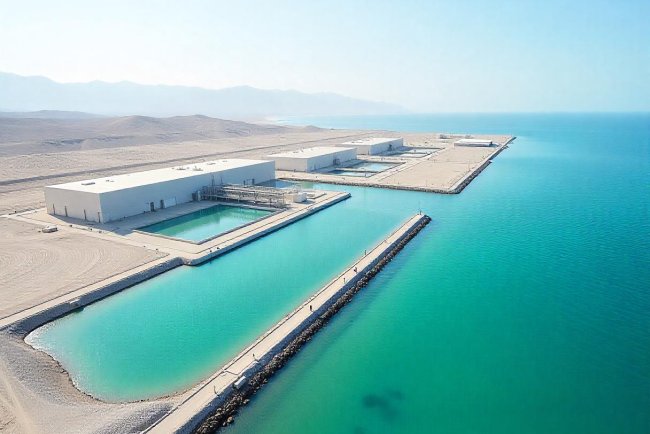
Data Centres Shift to Dry Cooling Amid Rising Global Temperatures
Global data centres are shifting from liquid to dry cooling systems in response to rising temperatures and growing water scarcity. The transition reflects a trade-off between water conservation and energy efficiency, driven by the rising demand of AI and climate concerns.

With climate change happening at an accelerating pace and water shortages poised to become a serious concern, the worldwide data centre industry is facing a pivotal change in its cooling technology approach. Historically based on liquid-cooled technology, numerous operators are increasingly converting to dry cooling technology as a cleaner, more sustainable option, especially in water-sensitive locations.
Data centres form the central digital infrastructure of the contemporary age, and their ecological footprint is under growing pressure. Cooling water forms a critical operational factor that contributes to both water and power usage. As artificial intelligence (AI) drives high-performance computing demand, heat density in data centres is increasing, putting more pressure on the cooling systems already in place.
Liquid cooling technologies have been the go-to solution for ages due to their high efficiency in handling high computer loads. Such systems are usually two distinct loops: the Technology Cooling System (TCS) and the Facility Water System (FWS). The TCS is a closed loop with liquid—most likely water or refrigerant—passing through it to cool computer hardware without water loss. This allows it an exemption from most but the most stringent water use regulations. The FWS involves external cooling and will usually be treated water. The issue with this cycle is excessive water loss that takes place through heat discharge, particularly through evaporative cooling towers.
Evaporative cooling is still an energy-efficient operation and is utilized in the majority of the globe. It functions by running hot FWS water over surfaces to cool it through evaporation. Even though there has been improvement in recent years that minimizes the consumption of water, the process still leads to significant water loss—most notably on hot and dry days. Yet another technique, adiabatic or direct evaporative cooling, sprays water to cool air or liquid instantly. Beneficial in arid regions like Phoenix, Arizona, so is this similarly being reevaluated with deteriorating water scarcity and regulatory requirements.
Dry cooling systems are being touted as the alternative wherever water saving is a top agenda item. These systems never depend upon water for cooling and reject heat utilizing only air. Outdoor air coolers and liquid coils without evaporation are utilized. It is advantageous in that it does not discharge any water at all, an argument very suitably dressed to water-stressed conditions. But dry cooling has its own shortcomings. It takes a high fan power to handle large masses of air, and due to the cube law, doubling the fan rate has the potential to double energy consumption to as much as eight times. Thus, dry cooling tends to be less energy efficient compared to water-based systems.
Although it has this disadvantage, dry cooling is gaining popularity because it is water-saving. Water-energy balance is turning into a trade-off that is quickly becoming one of the top issues of data centers with more places enforcing strict policies regarding water usage. In this regard, focus is centered on minimizing the use of water even at the expense of increased use of energy.
It is one indication of a larger trend throughout the tech sector: performance vs. sustainability. As data centres shift to support increasing AI and cloud load, operators have to weigh between cooling options that ensure uptime and system reliability and minimizing the environmental footprint.
Cooling technology will remain at the forefront of building the future of green data centre operations. As temperatures continue to rise globally and natural resources are put under more pressure, the transition to dry cooling technology is a significant step towards mitigating the environmental impact of digital infrastructure.
Source: KnowESG (via TechTarget)
What's Your Reaction?