Delhi Air Quality Plunges, GRAP 3 Curbs Reimposed
Delhi-NCR Underlocks GRAP-3 Limitations Amid Deteriorating Air Quality
New Delhi, January 30 2025- The Commission for Air Quality Management reinstated stage 3 of the Graded Response Action Plan (GRAP) in Delhi-NCR on Wednesday as air quality had degraded. The limits since 29 January were surpassing the degrading pollutants' levels that would put more constriction on building works, vehicular and other emission sources.
This is after a two-week-long break from curbs channeled under the GRAP-3 that received some relaxations since January 17 following improvements in air quality. Pollution once again has registered a growth, and tight restrictions have been readmitted to rein in the spurt.
Recent Air Quality Details
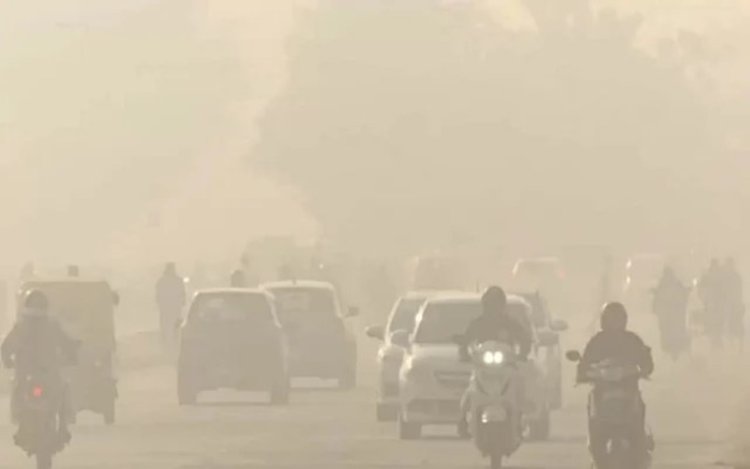
Till January 30 at 8:30 AM, AQI of Delhi stands at 381, which falls under the severe category. Lousy meteorological conditions prevail in the form of low wind speed, temperature oscillation, and high accumulation of pollutants due to which degraded air quality is believed.
The other index which witnessed the sharp rise was the ventilation index, which says that this system was unable to ventilate the pollutants into the atmosphere. This index decreased very drastically to 3,000 m²/s on January 30 and on January 31 was reported to even decrease up to 1,000 m²/s and on February 1 was predicted to slightly improve up to 2,500 m²/s. The less this index remains then the harder for the pollutants reach the atmosphere thus, this cycle continues to escalate.
meteorological Outlook Influence
According to the IMD and AQEWS, weather is not going to support the dispersal event in the next two days.
30 January: Wind speed will be lesser than 6 km/hr in the morning, however, it may increase up to 8-10 km/hr in the afternoon. It is going to dip down to less than 4 km/hr during night. Shallow fog accompanied with smog conditions are likely.
31 January: Light wind is expected to blow at less than 4 km/h in the morning, increase in the afternoon, and then subside at night. The smoggy and misty conditions are expected.
February 1: The weather condition would remain more or less the same; winds would be relatively weak during the morning time as well as during the evening time. Chances of slight rain during the night and at the late hours of the evening are also in view, and thus its influence on the quality of air can not be rejected either.
AQI over Delhi will probably remain in "poor" to "very poor" categories during the next six days from February 2, thus implying an extended air pollution alert.
Controls under GRAP-3
Controls under GRAP Stage 3 are source-oriented and inhibit further deterioration of air quality. The main activities include:
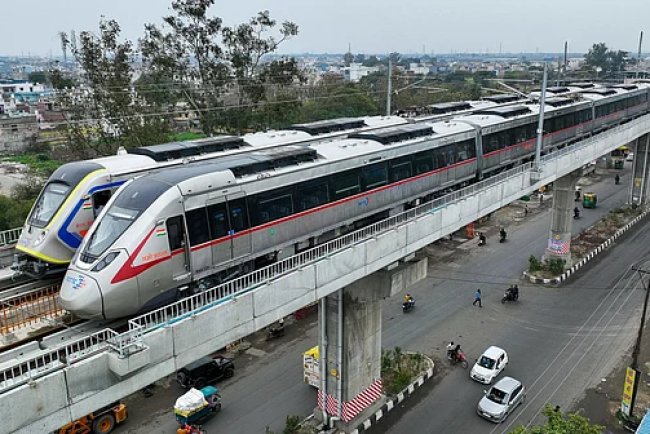
Construction and demolition activities banned: Non-essential projects are not banned, such as the construction of metro lines and national highway development projects.
Four-wheelers, BS-III petrol, BS-IV diesel : BS-III petrol fourwheelers, BS-IV diesel fourwheelers will be banned in Delhi-NCR districts. This does not apply to disability.
Prohibition of Diesel Vehicles Not on Essential Use : Medium and Heavy Goods Vehicles working on diesel motive power by standards BS-IV or earlier norms are not allowed to enter into Delhi.
Industries and Power Generation : Industrial polluters which operate using non-cleaner fuels have check on their activity.
These exceed stage 1 and stage 2 measures with stringent industrial emissions control, the effort to repress dust as well as prohibits open waste burning.
Reasons behind the Increasing Pollution Levels
There are numerous reasons as to why pollution levels are increasing:
Slow Wind Speed: Weak wind prevents it from blowing and dispersing its chemicals far from the ground.
Temperature Inversion : Cold air near the ground prevents the more energized pollutants to reach the surface to disperse.
Vehicular Emissions: Delhi has a heavy traffic flow that contributes largely to the pollution through diesel vehicles.
Residues of Stubble Burning: Although the intensity of stubble burning has decreased; however, its secondary effect is still felt.
Local source of pollution. Industrial smoke and dust during construction, and other open burning wastes also add fuel to this decaying situation.
Governance
Public response
Apart from this, the curbs on the outdoor activities, public transport, and diesel engines, the government asks people to enforce the pollution curbs to the maximum level. The level of industry compliance and enforcement measures to control dust at construction sites are also under the monitoring by the Delhi governments.
Long-term alternatives would be greener energy resources, stringent guidelines regarding emissions caused by vehicles and, more precisely, planned and integrated urban planning. All such long-term policies will definitely address the repetition of the Delhi-NCR pollution affair in the city.
As far as action against the scenario is concerned, GRAP-4 will be implemented by the government when air quality is not up to the mark. Restrictions include closing the schools, putting under some restriction all those non-essential industries which are allowed, and a complete blanket banning of vehicles. Of course, this would depend on proper implementation and effective adherence by the public.
It will be "very poor" in Delhi till February 1, so it would be advisable to take precautions and use masks for people, avoid outdoor exposure mainly for children and elderly people.
Source: Commission for Air Quality Management (CAQM), India Meteorological Department (IMD), Air Quality Early Warning System (AQEWS)
What's Your Reaction?