Lapland experienced its warmest summer in over 2,000 years in 2024 due to human-caused climate change, according to a Finnish study using tree rings and modern data. The Arctic region is warming four times faster than the global average, raising concerns about ecological damage, heatwaves, and recurring extreme summers.
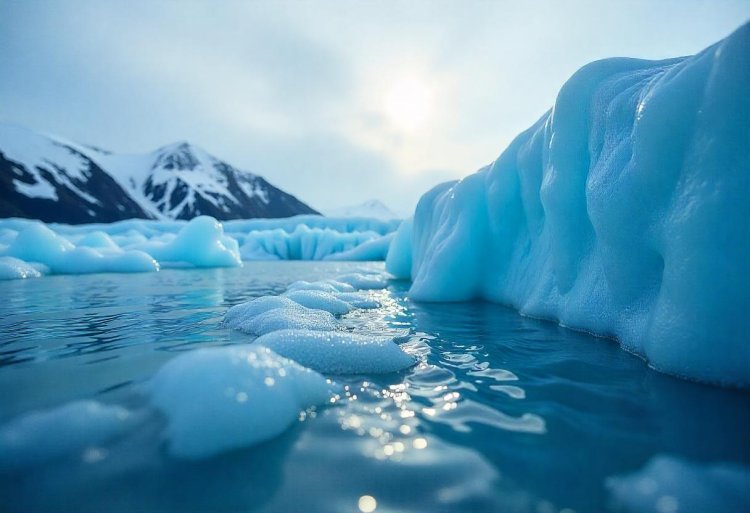
Lapland, which covers the northern regions of Finland, Sweden, and Norway, experienced its warmest summer in over 2,000 years in 2024, according to a Finnish Meteorological Institute and Natural Resources Institute Finland report. Researchers said the regional summer average temperature was a record high due to human-induced climate change. The study was published in the npj Climate and Atmospheric Science journal.
Through observation and dendroclimatology (tree-ring chronology), scientists identified that 2024's summer shattered all previous last-millennial records of temperature within the area. June-August average temperature during 2024 was up to 15.9°C and 0.4°C greater than in 1937, which had earlier been the record temperature. All this was observed in Sodankylä, a fundamental meteorological observing station in north Finland. The research method used was to integrate long-term reconstructions from tree rings with instrumented meteorology to measure the anomaly accurately in an historical context.
Some of the 2024 felt warmth was caused by human climate change, the study reported. Using attribution models of the climate, scientists estimated that in the absence of human-induced warming, it would have been a 1-in-1,400-year type event in the pre-industrial climate. But due to present levels of global warming, these types of summers now would happen every 16 years. It also mentioned that based on present rates of emission, by the year 2050, the summers which would be recurring events would be every four years.
The warming trend is worst for the Arctic region as temperature rises are occurring at a rate approximately four times the global mean rate since 1979. The regional amplification has led to detectable environmental changes like more heatwaves, intensity and frequency of forest fires, and vegetation expansion over tundra. Not only do these alter ecosystems, but they also have far-reaching impacts on local communities and biodiversity.
The researchers warned that the pace of ongoing warming is pushing northern Fennoscandia outside its normal extent of fluctuation. Impacts are especially pressing because the area holds vulnerable Arctic ecosystems. The expansion of tundra to shrublands alters carbon processes and jeopardizes the climate-stabilizing capacity of these systems. In addition to changes in ecosystems, high temperature and dryness add to the prospect of forest fires and unusual weather events, affecting infrastructure, agriculture, and indigenous sustenance.
The Lapland temperature anomaly also demonstrates on a larger scale how quickly the global climate system is changing. Tree.rings highly responsive to interseasonal temperature change provided long-term context by indicating that even in earlier warmings during early Medieval and Roman periods, no Lapland summer ever came close to the extent of warmth in 2024. This implies that current warming is not part of a natural oscillation but is predominantly caused by high levels of greenhouse gases in the air.
The research employed regional climate models when testing various scenarios through a comparison of existing temperatures and historically reconstructed temperatures and modeled projections. The findings reveal the magnitude of climatic change already in motion and underscore the importance of curbing global greenhouse gas emissions in not wanting to suffer through progressively harsher summers in the future.
Since the Arctic ecosystem is changing at a quick pace, researchers demand more observation and climate adaptation measures tailored to high-latitude ecosystems. Seasonal predictability disruption and rising thermal stress on vegetation and animals are the prime concerns, with cascading effects on water cycles, permafrost stability, and food security.
This research adds to emerging scientific consensus that the subpolar and polar regions are coal mine canaries of planetary climatic upheaval. Further studies of temperature regimes in Lapland's subpolar area will continue to be needed in learning about the direction of climate change, and as a way of informing attempts to mitigate and adapt globally.
Source and Credits:
Copyright 2025 AFP | Data provided by Finnish Meteorological Institute, Natural Resources Institute Finland | Published in npj Climate and Atmospheric Science, DOI: 10.1038/s41612-025-01046-4
What's Your Reaction?