The Delhi government has launched a ₹15,000 crore EV policy featuring purchase incentives, stricter registration rules, and an expanded charging network to accelerate electric mobility and reduce air pollution by 2030.
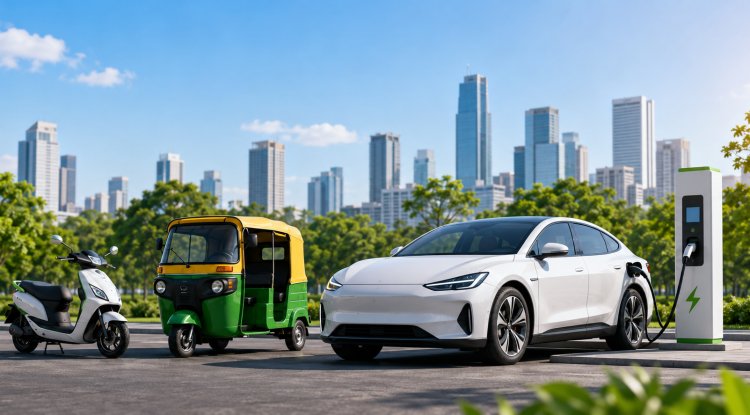
The Delhi government has announced EV policy with a budget of ₹15,000 crores that will ensure better mobility for the city till 2030. The initiative will be implemented from July 1, 2026, as a solution to the issue of pollution in Delhi, given the fact that one-third of emissions in the city come from commercial goods carriers, while the rest, i.e., 46 per cent, come from two-wheelers and three-wheelers.
The policy is introducing a tiered incentive system to help speed the transition from conventional fuel vehicles. The purchase incentives for two-wheelers start at ₹30,000 in the first year and drop to ₹10,000 by the third year. Three-wheelers could get up to ₹50,000, while N1 commercial truck owners can get up to a ₹1 lakh subsidy in the first year. There are also incentives for owners of BS-IV or lower-emission vehicles – up to ₹10,000 for two-wheelers, ₹25,000 for three-wheelers, and up to ₹50,000 for N1 trucks.
The policy has strict regulatory requirements: Only e-3-wheelers and N1 trucks will be allowed to be registered from January 1, 2027; and from April 1, 2028 onwards, only electric two-wheelers will be allowed to be registered. School bus operators will need to have at least 10 per cent of their buses electric within two years.
The Delhi government is seeking to address the critical need for charging infrastructure, with a plan to place 32,000 charging stations over four years, with funding made available through the PM e-Drive initiative and the state. A dedicated online portal will also be set up to streamline incentive disbursal and improve transparency.
On one hand, the policy has been viewed favourably by environmental organizations and, on the other, auto and transport operators have expressed concerns regarding income loss while the transition is underway and the pace of charging station deployment. Remarkably, no subsidy has been extended for hybrid vehicles so far, and they are strongly encouraged to go all-electric instead of hybrid.
What's Your Reaction?