Denmark backs a major CCS project to capture 1.25 million tonnes of CO2 annually from cement production.
Denmark has awarded a notable carbon capture and storage (CCS) contract worth up to 16.5 billion Danish crowns (approximately $2.6 billion) to Aalborg Portland. This project highlights one of Europe’s largest industrial climate investments. The agreement, signed with the Danish Energy Agency, aims to significantly lower emissions from the country’s largest carbon dioxide emitter while speeding up progress toward national climate goals. This development places carbon capture and storage, cement industry emissions, industrial decarbonisation, CCS technology, and Denmark's climate goals at the heart of the country’s long-term emissions reduction plan.
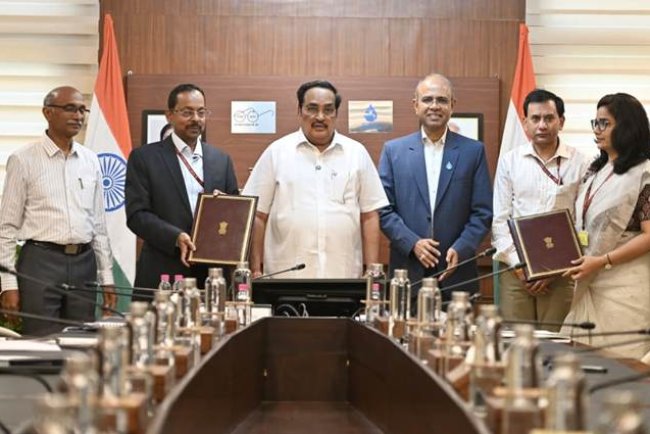
Under the agreement, Aalborg Portland will receive subsidies starting in 2030 to support the capture, transport, and permanent storage of carbon dioxide produced during cement manufacturing. The project expects to capture up to 1.25 million tonnes of CO2 each year, making it one of the most important industrial carbon reduction efforts in Europe and a key contributor to Denmark’s broader climate ambitions.
Large-Scale Carbon Capture Project Planned
The subsidy framework provides Aalborg Portland with 875 Danish crowns for every tonne of carbon dioxide that is captured and stored permanently. Based on the planned capture volume, the company could receive up to 1.1 billion Danish crowns annually over a 15-year period.
This initiative marks a significant step in Denmark’s plans to tackle emissions from sectors that are hard to decarbonise through electrification alone. By providing long-term financial certainty, the government aims to make large-scale carbon capture projects financially viable and promote investment in technologies that can lower industrial emissions.
Aalborg Portland is Denmark’s largest single source of carbon dioxide emissions. Therefore, the success of the project is crucial for the country’s environmental objectives. The company’s planned capture capacity would account for more than half of Denmark’s national target to capture 2.3 million tonnes of CO2 each year starting in 2029.
Cement Production Remains a Major Climate Challenge
Cement manufacturing is known to be one of the toughest industries to decarbonise. Unlike many sectors, where cleaner energy or fuels can cut down emissions, cement production generates significant emissions from chemical reactions that occur during the transformation of limestone into clinker, a crucial component of cement.
These process emissions are unavoidable under traditional production methods and present a significant challenge for governments and industry leaders. Globally, cement production is responsible for about 8% of industrial carbon dioxide emissions, underscoring the scale of the problem.
Consequently, carbon capture and storage has increasingly become an important tool for lowering emissions from existing cement plants while alternative technologies and low-carbon building materials are still being developed.
Industrial Partnerships to Deliver the Project
The Aalborg Portland project will benefit from several industry partners who specialize in different parts of the carbon capture value chain. French industrial gases company Air Liquide will provide the carbon capture technology, while Harbour Energy will manage the transport and storage of the captured carbon dioxide.
This collaboration reflects a growing trend in the CCS sector, where industrial emitters work with specialized technology providers and storage operators to handle the technical and logistical challenges of large-scale carbon management projects.
Aalborg Portland Chief Executive Officer Soren Holm Christensen called the agreement a major milestone. He stated that the project is among the largest industrial carbon capture efforts currently planned in Europe.
Supporting Denmark’s Climate Ambitions
The project is set to play a significant role in helping Denmark meet its legally binding climate targets. The country has committed to reducing greenhouse gas emissions by 70% compared to 1990 levels, which is one of the most ambitious climate goals in Europe.
Reaching that target will require substantial emissions reductions across various sectors, including heavy industry, transport, agriculture, and energy production. Given the few options available for reducing emissions from cement, policymakers view carbon capture as a necessary part of the transition.
The Aalborg Portland project, therefore, represents more than just an industrial investment; it is a key element of Denmark’s broader strategy to tackle emissions from hard-to-treat sectors while keeping industrial competitiveness.
Debate Over the Role of Carbon Capture
Despite increased government support, carbon capture and storage remains a contentious topic among policymakers, environmental activists, and industry experts. Supporters contend that CCS is vital for achieving global climate goals, especially in industries where emissions cannot be eliminated by renewable energy.
Critics, however, question the technology’s high costs, lengthy development times, and reliance on ongoing public funding. Some argue that significant investments in CCS could delay the shift to alternative production methods.
The Aalborg Portland project is now at the center of this debate. Its performance will be closely watched by governments, investors, and industry leaders in Europe seeking practical solutions for industrial decarbonisation.
If successful, the initiative may boost confidence in carbon capture as a viable approach for reducing emissions in the cement sector. However, if it fails to deliver the expected results, scrutiny over the use of public funds for large-scale CCS projects could increase and impact future climate policy decisions across the region.
What's Your Reaction?