The Day feels less like a call to act and more like a check on what is already moving. India’s next step will depend on whether these pieces can come together in a way that is both practical and lasting
There is a sharper tone to this year’s Earth Day. The language has shifted. It is less about pledges and more about alignment. How policy, industry and infrastructure move together is now the real test.
For Akshay Kashyap, Managing Director of Greenfuel Energy Solutions, the transition cannot afford to be scattered. “The conversation must move beyond intent to alignment,” he says. In India’s case, that means balancing climate goals with energy security and economic needs.
He argues against copying global playbooks without context. The focus, instead, should be on what works locally. In the near term, that includes scaling fuels like CNG, LNG and biofuels, while continuing to invest in green hydrogen and homegrown innovation. The bigger task, he adds, is getting all parts of the system to move together. Faster approvals, real-world pilots and stronger coordination will decide whether progress sticks.
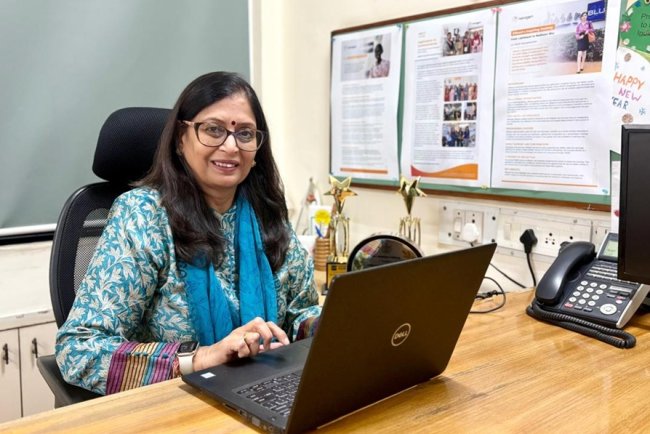
That sense of grounding runs through other voices as well. Prashant Singh, Founder and CEO of Blue Planet Environmental Solutions, sees this moment as a turning point. Sustainability is no longer sitting outside business decisions. It is now tied to growth, energy use and how resources are handled.
India, with its expanding cities, has a chance to build systems that recover value instead of just managing waste. Singh points to a shift from basic waste handling to integrated models that improve efficiency and create long-term returns. Companies that make this part of their core operations, he says, will be better placed as expectations around transparency rise.
The idea of joining the dots comes up strongly in the work of Suranjana Ghosh, Head of Marico Innovation Foundation. She points out that environmental challenges rarely exist in isolation. Air pollution, agriculture and livelihoods often feed into each other.
Crop residue is a clear example. Burnt in fields, it adds to pollution. Used differently, it can become fuel or raw material. “The problem is not lack of ideas,” she says. “It is about connecting them.” Her work with startups shows that solutions exist across sectors, but scaling them needs stronger links between markets, partners and on-ground testing.
Energy remains a central piece of the transition. Suhas Donthi, CEO and President of Emmvee Group, points to the steady rise in non-fossil power. Nearly half of India’s installed electricity capacity now comes from cleaner sources, with solar leading the push.
Government schemes are helping expand rooftop solar, turning consumers into producers. But Donthi flags the next challenge. Building capacity is one part. Strengthening domestic manufacturing and expanding infrastructure will decide how far the shift can go.
There is also a rethink on how clean energy is deployed. Sandesh Naik, CFO at AB Energia Solutions, points to growing pressure on land and water. As space tightens, solutions like floating solar are gaining ground.
By using water bodies, these projects avoid competing for land and can help reduce water loss. Globally, the numbers are still small, but the potential is clear, especially for countries with large unused water surfaces.
At the industry level, reliability is now front and centre. Siddharth Bhatia, Managing Director and CEO of Oyster Renewable, says companies are moving beyond basic adoption of renewables. The need is for a steady, round-the-clock supply.
Hybrid systems that combine solar, wind and storage are starting to fill that gap. For industries, this is less about ticking a sustainability box and more about ensuring operations do not stop.
Across these perspectives, the shift is clear. Sustainability is no longer being treated in silos. Waste, energy, agriculture and industry are part of the same story now. The harder part lies ahead. Turning working ideas into systems that run at scale.
This Earth Day feels less like a call to act and more like a check on what is already moving. India’s next step will depend on whether these pieces can come together in a way that is both practical and lasting.
What's Your Reaction?