A stronger El Niño combined with rising climate variability could weaken India’s monsoon, intensify heatwaves, and increase risks to agriculture, water resources, and food security.
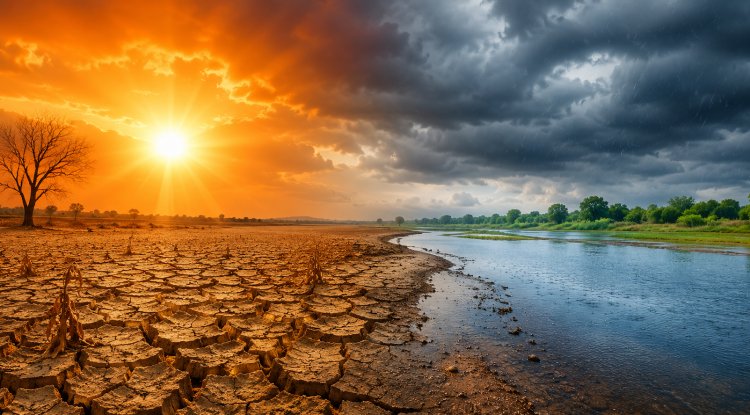
India is bracing for a potentially severe drought season, with climate scientists forecasting that a more powerful El Niño could affect monsoon patterns, intensify heatwaves, and impact water availability across much of the country.
Climate scientists are predicting that a stronger El Niño event could affect monsoon patterns, potentially increasing water scarcity in large parts of India as well as heatwaves, and India is preparing for a potentially severe drought season.
The periodic warming of the waters in the Pacific Ocean, known as El Niño, is known to affect weather patterns over the Indian subcontinent, particularly by reducing rainfall. Early signs indicate that the monsoon may be weaker or more unevenly distributed this year, potentially leading to drought in water-stressed and agricultural areas, officials and climate scientists say.
Global warming along with changes in the weather patterns has been put forward as the possible causes that can aggravate the impacts of El Niño. The monsoon rains account for around 80% of the total rain in India, and lack of rains during the monsoons can lead to further problems such as reduced agricultural production and decreased ground water levels.
Weather officials are closely monitoring rainfall patterns and heat deviations. Below-normal precipitation is forecast across some central and southern states, with long dry spells and warm daytime temperatures. Some parts of northern India have already been hit by heatwaves, adding to pressure on water and power supplies.
Reservoirs in major river basins have received lower inflows of water. Consequently, water conservation and reduction in demand for water has been called for in advance. In some districts, plans have been initiated for water rationing in view of the need for water for drinking, irrigation, and livestock.
If there is any impact on the agricultural output, then food security would become a concern and price increases of grains may be expected in such conditions of drought, according to experts. Farmers are particularly vulnerable to water shortages as low soil moisture and heat can affect the crops including rice, pulses, and oilseeds. During droughts in the past, there have been emergency relief packages for farmers.
Climate scientists emphasise that the impact of an El Niño event is not felt uniformly everywhere and that there can still be localised "flash floods" amid below-average seasonal rainfall. However, with overall climate variability on the rise, India now faces greater uncertainty from one season to the next.
Citizens and farmers are being encouraged by government agencies and state governments to implement conservation measures, adopt more efficient irrigation technologies, and use drought-resistant methods. Accurate climate forecasting, increased water storage facilities, and improved community awareness are now being emphasised to prepare for the possibility of water shortages.
These predictions of dryness are a stark reminder of the growing challenge of coping with climate extremes, such as heatwaves and changing rainfall patterns, in a warming world, particularly for India as it prepares to tackle these new and evolving conditions.
What's Your Reaction?